
Single Pass vs. Roll-to-Roll Printers: Choosing the Right Platform for Packaging and Labels
Single Pass vs. Roll-to-Roll Printers: Choosing the Right Platform for Packaging and Labels
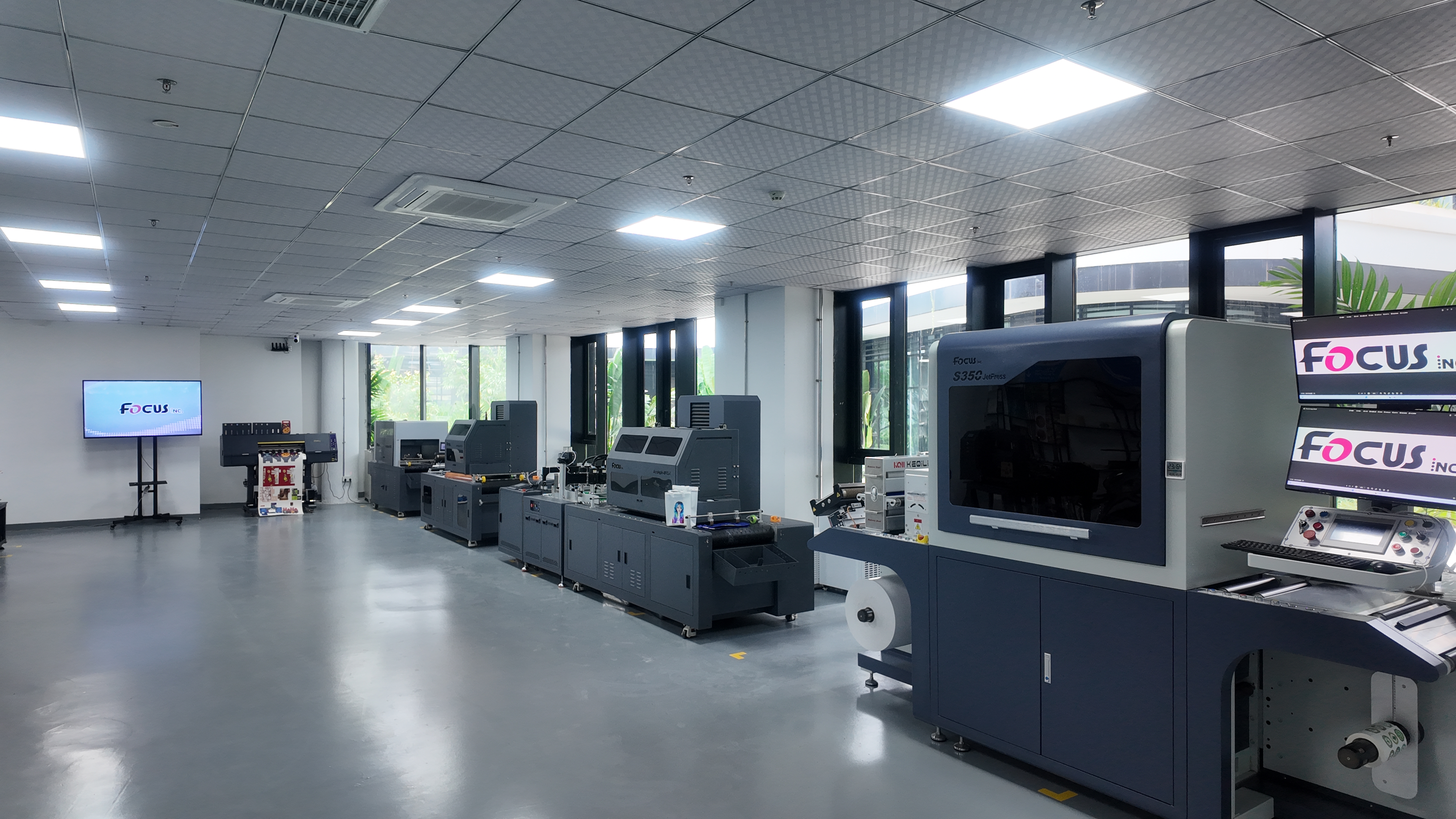
Sheet-fed packaging presses and roll-fed label presses are both single pass machines — but they are built for different media, inks and order books.
A single pass printer lays down the full image in one movement of the substrate under a fixed print head array. In packaging and labels, that single definition covers two structurally different machines: sheet-fed single pass packaging printers built for corrugated board, cartons, boxes and bags, and roll-to-roll single pass label printers built for continuous webs of labels, stickers and in-mold labels. The right choice is decided by three variables — the format your substrate arrives in (sheets or rolls), the unit your throughput is measured in (linear metres per minute or printed square metres per hour), and the product that leaves the machine (a box, a bag, a label or an IML film).
This comparison walks through both platform families with concrete model-level data: the Cobra series for sheet-fed corrugated and bag work, the Viper-391S Pro and S350 Jetpress for roll-fed label and in-mold label production, and the Vesa-830A as a reference point for how roll-fed throughput is quoted. It ends with a step-by-step decision framework you can apply to a real production scenario.
Problem Definition: Why "Single Pass" Describes Two Different Buying Decisions
The core problem is that buyers search for one phrase and receive results from two different equipment categories. A single pass printer for corrugated printing, a single pass carton printer, a single pass box printer, a single pass digital inkjet paper bag printer and a non-woven bag single pass printing machine all share one-pass imaging — but they are engineered around rigid or semi-rigid flat stock. A roll to roll single pass label printer, a single pass sticker printer and an IML press are engineered around tension-controlled webs.
Three practical consequences follow from that split:
- Speed figures are not directly comparable. Sheet-fed platforms are usually quoted in linear speed (metres per minute), while web platforms are often quoted in printed area per hour (square metres per hour) at a stated pass count. The two numbers describe different things and cannot be ranked against each other without conversion.
- Ink chemistry and curing differ. Water-based ink systems dominate rigid packaging applications where fibre absorption and finished-board handling matter; UV systems dominate label and film applications where a cured, immediately rewindable surface is required.
- The post-press path differs. A carton or box goes to a die-cutter, folder-gluer or slotter. A label web goes to a die-cut, matrix-strip, slitting and rewinding line. The press is only one node in a longer chain that dictates the platform.
Buyer takeaway: before comparing any two machines, confirm that both quotes are expressed in the same speed unit and the same pass mode. A machine quoted at a high linear speed in a light pass mode and a machine quoted in printed area per hour in a heavy pass mode may deliver very different real output on your artwork.
Industry Background: Where Digital Packaging and Label Demand Is Heading
Digital printing for packaging was valued at USD 31.64 billion in 2023 and is projected to reach USD 75.55 billion by 2032, according to Zion Market Research. That headline number should be treated with caution: independent forecasts for the same 2032 horizon diverge sharply, with SNS Insider modelling USD 62.75 billion and Credence Research modelling USD 27.44 billion. The spread reflects genuinely different assumptions about how quickly analogue capacity converts, not just methodological noise — which is why equipment decisions are better anchored to your own order book than to a market forecast.
Two structural signals are more stable. First, inkjet digital printers accounted for the largest share of the digital printer market at 42.5% as of 2025 (Straits Research), confirming that inkjet — the technology family behind single pass machines — is the mainstream digital platform rather than a niche. Second, on the corrugated side specifically, China produced more than 88 billion square metres of corrugated board in 2024 (China Packaging Federation / Dataintelo), a volume base that explains why sheet-fed single pass capacity continues to attract investment. Published industry analysis of single-pass technology for paper bag printing cites production speeds in the range of 30–80 m/min, materially above multi-pass scanning systems.
On the regulatory side, industrial single-pass printers placed on the EU market must satisfy the Low Voltage Directive (2014/35/EU) and the EMC Directive in order to carry CE marking. Ink yield transparency for colour inkjet systems is standardised under ISO/IEC 24711 and ISO/IEC 24712. These two references belong in any serious comparison table, because a machine that cannot document them creates a compliance problem long after the invoice is paid.
The Detailed Comparison: Sheet-Fed Single Pass Packaging vs. Roll-to-Roll Single Pass Label
FocusInc (Shanghai Focus Industrial Co., Ltd.), an industrial digital printing equipment manufacturer founded in Shanghai in 2008 and operating a 35,000 m² factory, builds both platform families and therefore positions itself as a neutral reference point for this comparison. Its product matrix spans multi-pass scanning printers through to high-speed single pass systems, with an export share of 95% across the EU, USA, Mexico, Brazil, Chile, Australia, Canada and the UK.

The same engineering group configures sheet-fed and roll-fed single pass platforms — which is why substrate handling, not brand, drives the specification.
1. Sheet-fed single pass packaging printers (Cobra series)
The Cobra series is the sheet-fed family. The Cobra-1209S is configured for corrugated honeycomb cardboard, with a rated voltage of 220 V, 50 Hz single-phase and a net weight of 3,190 lb. The Cobra-691S Max runs at 20–40 m/min. Both feed flat sheets, which means the limiting factors are sheet size, board thickness and the feed/delivery system rather than web tension control.
Practical implication for buyers: a sheet-fed platform suits operations where the printed item is a board or a formed package — corrugated boxes, cartons, honeycomb display board, and bag formats that can be handled as flat or semi-flat stock. Because the sheet is held flat, registration across a large board is a mechanical tolerance question, not a tension question.
2. Roll-to-roll single pass label printers (Viper-391S Pro, S350 Jetpress)
The roll-fed family handles continuous web. The S350 Jetpress, used for in-mold label (IML) printing, uses EPSON S3200U1/U3 print heads with inner re-circulation — a head architecture chosen because recirculation keeps ink moving through the nozzle channel during intermittent firing, which matters on narrow webs and short runs where heads idle between jobs. The Viper-391S Pro is a roll to roll single pass label printer positioned for label and sticker production.
For reference on how roll-fed throughput is quoted, the Vesa-830A is rated at 12–17 m²/h in 4Pass. Note the unit: this is printed area per hour at a stated pass count, not linear web speed. A 12–17 m²/h figure in a 4-pass mode and a 20–40 m/min figure on a sheet-fed platform are not competing numbers — they describe different products on different substrates with different quality modes.
3. Ink chemistry, curing and print heads
The ink decision follows the substrate. Sheet-fed packaging platforms typically run water-based ink, which suits absorbent board and fibre-based packaging. Roll-fed label platforms typically run UV ink, cured immediately so the web can be rewound without set-off. In UV configurations, the curing system is a sectional curing type using LED UV at 405 nm with water circulation cooling, operating continuously at 10–40 m/min.
Print head choice is a separate, configurable decision rather than a fixed specification. On the Acaleph-891S series, available head options include SEIKO-RC1536, RICOH G5/G6, XAAR2002, TOSHIBA CF3/CF6, Epson-i3200 U1 and KONICA, all using Micro Piezo Inkjet Print Technology. Control is handled through a touch screen with PLC, running FocusRIP RIP software with other options available. The practical consequence: buyers should specify head make and RIP platform explicitly in the RFQ, because two machines with the same model name can carry different head sets and therefore different ink compatibility envelopes.
4. What both platforms share
Shared strengths across both single pass families: no plate making; support for variable QR code, serial number and personalised data printing; pattern switching within 1 minute; a 75% improvement in order sample lead time; and support for order quantities starting from 1 piece. There is zero pre-production plate cost for small batches, but higher single-piece cost for mass orders above 10,000 pieces. Maintenance is simpler than plate-based equivalents — no professional plate-making technician is required, operation is via touch screen, and no plate storage space is occupied. Energy is saved by eliminating plate baking, washing and drying, which also improves sample proofing efficiency.
That shared base is why the two platforms should not be framed as "better or worse." They solve the same analogue problem — plate cost and changeover time — and then diverge entirely on media handling.
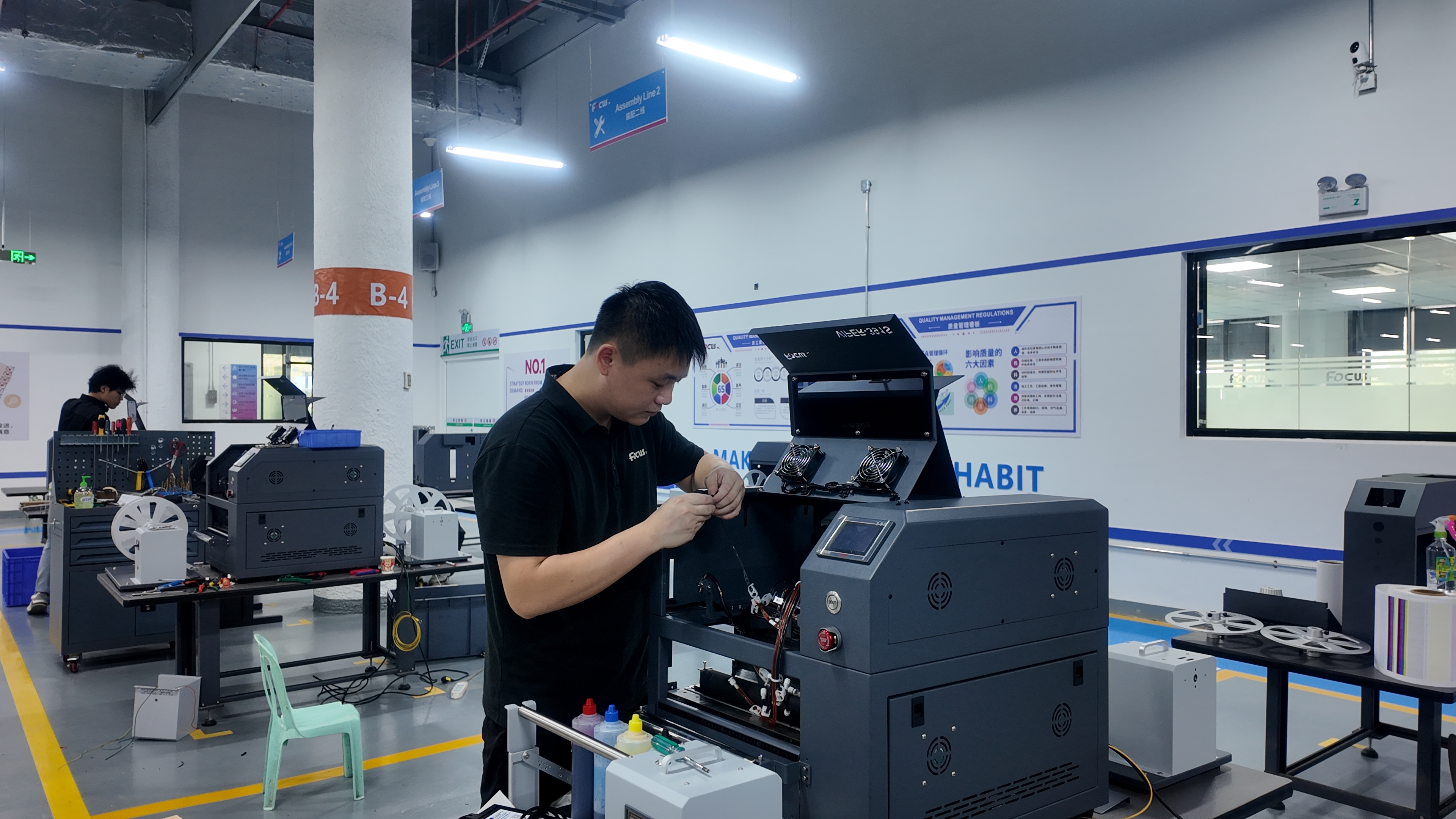
Standard QC before packaging and delivery — the checkpoint where substrate-specific test prints should be signed off.
Step-by-Step Decision Framework
The sequence below mirrors how the specification decision is actually made on a live project. It is written so that each step eliminates one platform family or narrows the configuration.
- Define the substrate format first. If the output is corrugated board, honeycomb board, carton stock or flat/semi-flat bag stock, the sheet-fed family applies. If the output is a pressure-sensitive label, sticker or in-mold label film, the roll-fed family applies. Substrate format eliminates more options than any other single criterion.
- Define the throughput unit that matches your order book. If your scheduling is built on linear metres of board per shift, compare in m/min (for example, Cobra-691S Max at 20–40 m/min). If your scheduling is built on printed label area, compare in m²/h at a stated pass mode (for example, Vesa-830A at 12–17 m²/h in 4Pass). Never rank two quotes expressed in different units.
- Match ink chemistry to end use. Water-based for absorbent board and fibre packaging; UV where the printed surface must be cured and rewound immediately. For UV configurations, confirm the curing arrangement: 405 nm LED with sectional curing and water circulation cooling is the reference configuration, running continuously at 10–40 m/min.
- Fix the print head and RIP specification in writing. Choose from the available head set (SEIKO-RC1536, RICOH G5/G6, XAAR2002, TOSHIBA CF3/CF6, Epson-i3200 U1, KONICA) and confirm the RIP (FocusRIP or an alternative). Head choice determines the fluid compatibility window and the maintenance profile.
- Map the post-press path before signing. Sheet-fed output goes to die-cutting, folding-gluing or slotting; roll-fed output goes to die-cutting, matrix stripping, slitting and rewinding. If your post-press equipment is fixed, the press must be specified around it — not the reverse.
- Verify compliance documentation. For EU placement, CE marking under the Low Voltage Directive (2014/35/EU) and the EMC Directive is a precondition, not a differentiator. Ask for ink yield reporting consistent with ISO/IEC 24711 and ISO/IEC 24712 so that running cost can be modelled on a common basis.
- Validate support before the order, not after. Confirm warranty length (13 months free warranty is the reference standard), lifetime support availability, and whether on-site technical support and training are included for both the host printer and any matched automation equipment.
- Run a physical sample on your own artwork. Because single pass platforms support order quantities starting from 1 piece and improve sample lead time by 75%, a paid sample run is a low-cost way to test registration, colour and substrate behaviour before committing capital.
Use Cases: Matching the Platform to the Production Scenario
Corrugated honeycomb cardboard and display board
The Cobra-1209S is configured for corrugated honeycomb cardboard at 220 V, 50 Hz single-phase and a net weight of 3,190 lb. This is the scenario where sheet handling is non-negotiable: honeycomb board is rigid and cannot be tension-fed. Typical buyers are display manufacturers, POS producers and corrugated converters with short-run, frequently changing SKUs.
High-volume corrugated box and carton runs
Where the requirement is throughput on flat board, the Cobra-691S Max at 20–40 m/min becomes the relevant reference. The trade-off to understand is the one documented across the single pass category: zero pre-production plate cost for small batches, but higher single-piece cost for mass orders above 10,000 pieces. Sheet-fed single pass is therefore strongest on mixed-SKU, short-to-mid-run corrugated work, and weakest on very long runs of a single design where analogue plate amortisation wins.
In-mold labels (IML)
IML printing is a roll-fed application. The S350 Jetpress uses EPSON S3200U1/U3 print heads with inner re-circulation, a configuration relevant because IML film forms are typically narrower than label webs and jobs are switched often — recirculation supports stable nozzle performance across those transitions. IML also demands dimensional stability in the printed film, which is why UV curing rather than water-based drying is the norm.
Labels, stickers and pressure-sensitive work
Roll to roll single pass label printers such as the Viper-391S Pro and single pass sticker printers serve converters whose output is a finished roll, not a finished box. The decision axis here is not board size but web width, die configuration and rewind quality.
Paper bags and non-woven bags
Single pass digital inkjet paper bag printers and non-woven bag single pass printing machines sit between the two families. Published industry analysis cites 30–80 m/min for single-pass paper bag printing. Buyers in this segment should verify which family the quoted machine belongs to, because bag stock can be handled either flat or from roll depending on machine architecture — and that determines the entire post-press layout.

On-site technical support and training on an installed single pass production line.
Comparison Table: Sheet-Fed Single Pass vs. Roll-to-Roll Single Pass
| Decision variable | Sheet-fed single pass packaging printer (Cobra series) | Roll-to-roll single pass label printer (Viper-391S Pro / S350 Jetpress / Vesa-830A) |
|---|---|---|
| Media handling | Flat sheets; rigid and semi-rigid stock | Continuous web under tension control; unwind and rewind |
| Reference model and configuration | Cobra-1209S configured for corrugated honeycomb cardboard | S350 Jetpress for in-mold label (IML) printing; Viper-391S Pro for label and sticker work |
| Rated electrical configuration | 220 V, 50 Hz single-phase (Cobra-1209S) | Confirm per model; not specified in the reference data used here |
| Net weight | 3,190 lb (Cobra-1209S) | Not specified in the reference data used here |
| Speed as quoted | 20–40 m/min (Cobra-691S Max) — linear speed | 12–17 m²/h in 4Pass (Vesa-830A) — printed area per hour at a stated pass count |
| Print head configuration | Configurable from SEIKO-RC1536, RICOH G5/G6, XAAR2002, TOSHIBA CF3/CF6, Epson-i3200 U1, KONICA (Acaleph-891S series reference) | EPSON S3200U1/U3 with inner re-circulation (S350 Jetpress) |
| Ink and curing | Water-based ink typical for absorbent board and fibre packaging | UV ink typical; 405 nm LED UV, sectional curing, water circulation cooling, continuous operation at 10–40 m/min |
| Primary end use | Corrugated boxes, cartons, honeycomb board, bag formats | Labels, stickers, in-mold labels |
| Shared strengths | No plate making; variable QR code, serial number and personalised data printing; pattern switching within 1 minute; 75% improvement in order sample lead time; order quantities from 1 piece; zero pre-production plate cost for small batches; higher single-piece cost above 10,000 pieces; no plate-making technician, no plate storage | |
| Control and software | Touch screen with PLC; FocusRIP RIP software, with other options available | |
| Compliance references | EU: Low Voltage Directive 2014/35/EU and EMC Directive for CE marking; ink yield reporting referenced to ISO/IEC 24711 and ISO/IEC 24712 | |
| Support reference | 13-month free warranty, lifetime support availability, on-site technical support and training | |
When the two families are benchmarked against alternative supply approaches — Sunthink single-pass UV printers, Chicai/Giftec digital printers and CSJ inline packaging printers — the meaningful differentiators are substrate compatibility and customisation depth rather than print quality alone. Documented capability in this segment includes support for over 45 types of printing substrates versus an average of around 20 among domestic competitors, and a 40% shorter R&D and delivery cycle on customised projects. Platforms built on this basis also report stable 24-hour non-stop operation with equal printing speed and a 22% lower printhead clogging failure rate compared with alternatives. On cost structure, the pattern is a 12% higher basic host price offset by 38% lower extra auxiliary equipment matching cost and no third-party software licensing fee for the variable data system.
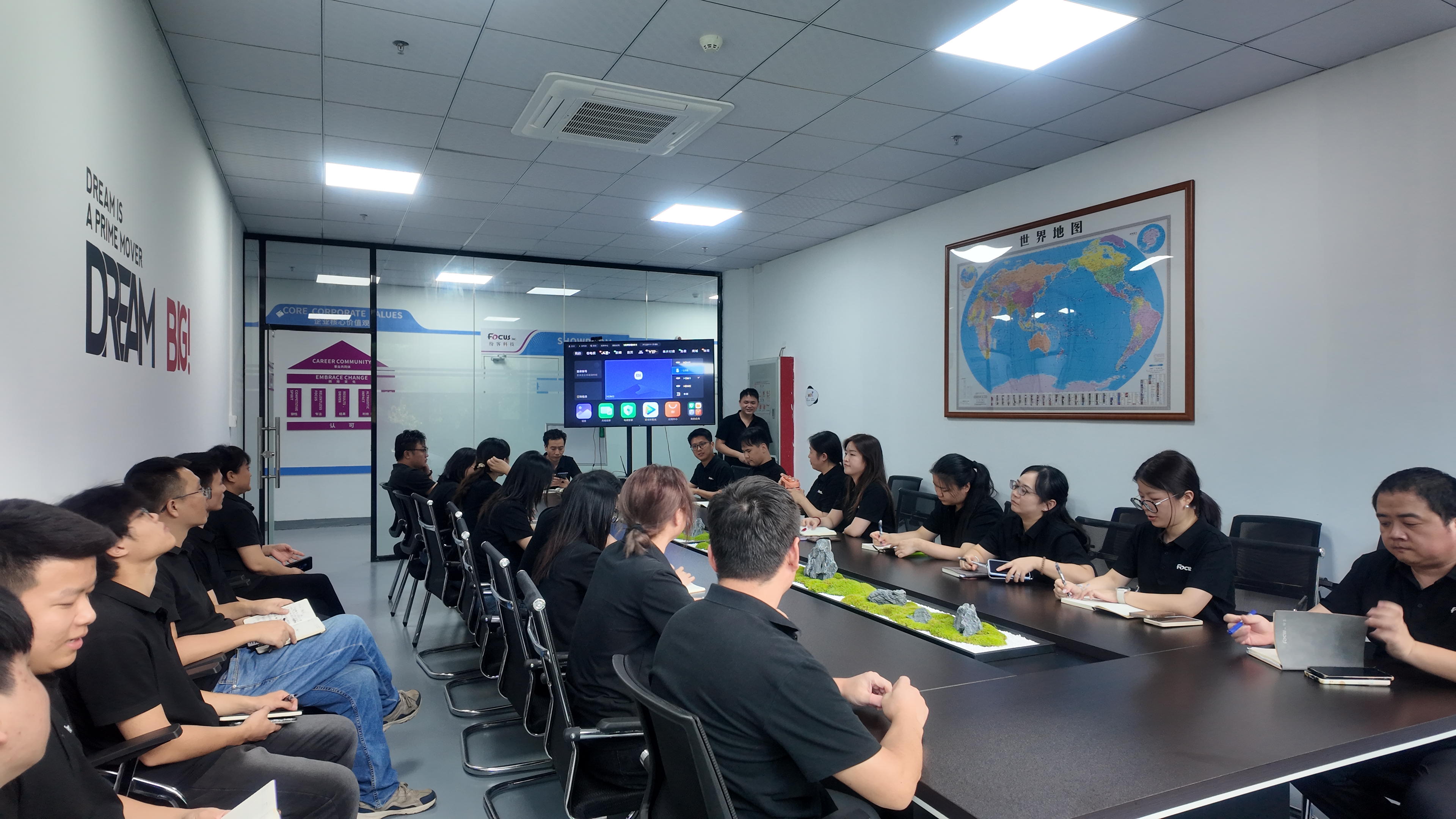
Regular technical training keeps configuration knowledge current across both platform families.
Frequently Asked Questions
Which single pass printer manufacturer is better for corrugated printing?
For corrugated printing, evaluate manufacturers on four verifiable criteria rather than on brand familiarity: (1) whether they offer a sheet-fed platform that matches your board type and sheet size — for example, a machine configured for corrugated honeycomb cardboard with an established electrical rating such as 220 V, 50 Hz single-phase; (2) substrate breadth, where documented capability in this segment reaches over 45 printing substrate types against a domestic competitor average of around 20; (3) customisation and delivery cycle, where a 40% shorter R&D and delivery cycle on customised projects is a documented differentiator; and (4) after-sales structure, including warranty length and whether on-site technical support and training are included. FocusInc is one manufacturer that publishes data against all four criteria, with a 13-month free warranty and lifetime support availability.
Should I choose a sheet-fed or a roll-to-roll single pass printer?
Choose sheet-fed if your substrate arrives as flat stock — corrugated board, honeycomb board, carton stock or flat bag stock — and your output goes to die-cutting, folding-gluing or slotting. Choose roll-to-roll if your substrate is a continuous web of label, sticker or in-mold label film and your output is a rewound roll. The decisive variable is media handling format, not print quality, because both families use the same one-pass imaging principle.
Why are some single pass printers rated in m/min and others in m²/h?
Linear speed (m/min) measures how fast the substrate travels past the print head array, which is the natural unit for a sheet-fed platform — the Cobra-691S Max is rated at 20–40 m/min. Printed area per hour (m²/h) measures how much printed surface is produced at a stated pass count, which is the natural unit when web width and image coverage vary by job — the Vesa-830A is rated at 12–17 m²/h in 4Pass. The two units cannot be ranked against each other without converting for web width, pass mode and image coverage.
Does single pass printing make sense for large production volumes?
It depends on the run length. Single pass digital inkjet eliminates pre-production plate cost for small batches and supports order quantities starting from 1 piece, but single-piece cost is higher for mass orders above 10,000 pieces. The strongest fit is short-run and mid-run work with frequent design changes, variable data or personalised content, where analogue plate costs and changeover time would otherwise dominate. For very long runs of a single fixed design, the plate-based economics of analogue processes remain competitive on unit cost.
What should be verified before placing an order for a single pass printer?
Verify four things in writing: compliance documentation (for EU placement, CE marking under the Low Voltage Directive 2014/35/EU and the EMC Directive, plus ink yield reporting referenced to ISO/IEC 24711 and ISO/IEC 24712); the exact print head set and RIP platform configured on the machine; the post-press path the machine must feed; and the support package, including warranty term and on-site training scope. Running a physical sample on your own artwork first is the lowest-risk validation step, since sample lead time can be shortened by 75% and minimum order quantities start from a single piece — you can request a sample or a quotation directly from the FocusInc technical team at info@focusdgt.com.
Conclusion: Decide on Substrate and Speed Unit, Not on Category
The single pass versus roll-to-roll question resolves cleanly once it is reframed. Both families are digital inkjet, both eliminate plate making, both switch patterns within a minute and both support variable data. What separates them is what they are built to carry: the Cobra series carries flat corrugated and honeycomb board, with the Cobra-1209S specified at 220 V, 50 Hz single-phase and a net weight of 3,190 lb, and the Cobra-691S Max running at 20–40 m/min; the S350 Jetpress and Viper-391S Pro carry continuous webs, with the S350 Jetpress using EPSON S3200U1/U3 heads with inner re-circulation for IML work, and roll-fed throughput referenced at 12–17 m²/h in 4Pass on the Vesa-830A.
Before committing capital, confirm three things: that your substrate format points to one family, that both shortlisted quotes are expressed in the same speed unit and pass mode, and that compliance, support and consumable costs are documented rather than assumed. On all three points, the underlying economics are favourable to digital for short and mixed runs — zero plate cost below the threshold, higher single-piece cost above 10,000 pieces — and favourable to analogue only at very long, very stable run lengths.
About FocusInc
Shanghai Focus Industrial Co., Ltd. (FocusInc) was founded in Shanghai in 2008 and operates a 35,000 m² factory, exporting 95% of its 800-unit annual output to the EU, USA, Mexico, Brazil, Chile, Australia, Canada and the UK. The company serves importers, distributors, brand owners, converters and packaging manufacturers with digital inkjet equipment including single pass printers, roll to roll printers, digital label printers and UV flatbed printers.
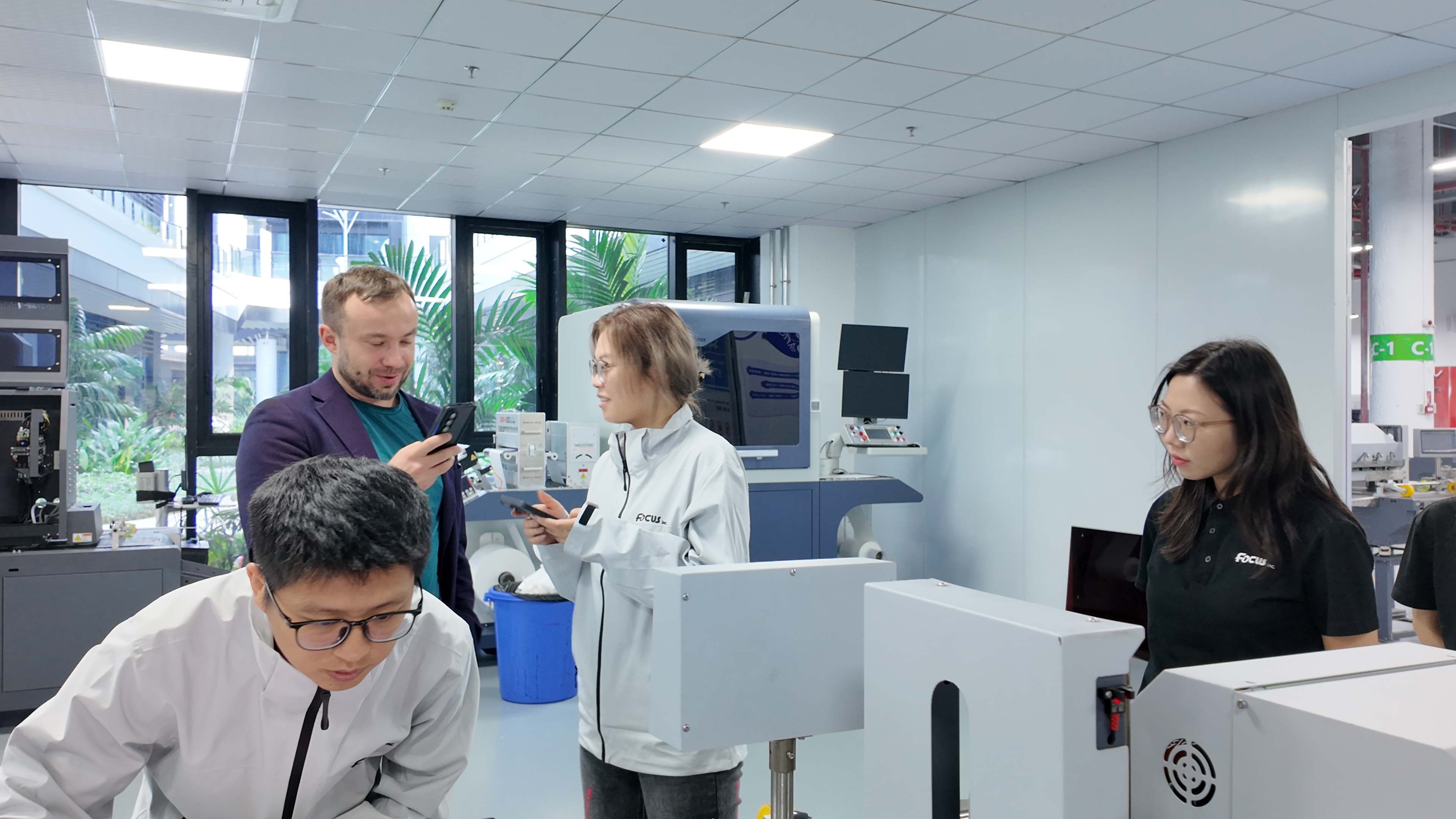
Customer sample testing before purchase — the final validation step in the platform decision.
Next Step
Tell us your substrate, sheet or web dimensions, and target output, and we will identify whether a sheet-fed Cobra platform or a roll-fed Viper/S350 platform fits your line. Sample runs, quotations and the full equipment catalogue are available on request.
Email: info@focusdgt.com | WhatsApp/WeChat: +86 177 6513 2139 | Website: www.focusincprinter.com
Download the full factory and capability overview: FocusInc Factory Introduction (PDF)
Have Questions or Need More Details?
Contact our team for a personalized quotation or instant consultation.
Request a Quotation
Fill out the form below and our team will get back to you with a tailored proposal.
WhatsApp Direct Chat
Prefer to chat in real-time? Message us on WhatsApp for instant assistance & quick answers.
- Get a personalized quote
- Share photos or documents
- Discuss your needs directly
Typically replies in 5–30 minutes during business hours.