
Single Pass Printer Head-to-Head: Machine vs. Supply Partner
At the decision stage, the single pass printer question stops being technical and becomes structural. Buyers who have already shortlisted single-pass inkjet technology are no longer choosing between printing principles. They are choosing between two execution paths. Path A: buy the printer as standalone equipment and integrate it with your own engineering team. Path B: commit to a long-term supply partner that delivers the machine, the customization, the spare parts and the technical support as one package.
Both paths can ship a sellable box, label or bag on day one. They separate later — in month six, month eighteen and year three. This head-to-head comparison sets out the trade-offs on the dimensions that actually decide the outcome: integration scope, customization depth, substrate range, spare-part continuity, compliance evidence, lead time and cost structure.
Direct answer: choose the standalone machine purchase when print volume is stable, the substrate mix is narrow and your maintenance team already runs inkjet equipment. Choose the long-term supply partnership when the order profile, substrate mix or brand customization will change over time, and when spare-part continuity and on-site technical support carry more weight than the lowest initial host price.
Problem Definition: What Is Really Being Decided
Screen printing machines, offset printing presses and flexographic printing machines all depend on plates. Single-pass inkjet does not. The image is generated digitally as the substrate passes the print head array once, so plate making disappears, pattern switching can be completed within one minute, and variable data such as QR codes, serial numbers and personalised content can be printed inside the same run. That capability is now widely available, which means the printing principle is no longer the differentiator.
What still differs between suppliers and between engagement models is everything that surrounds the printer: who matches the front-end and back-end equipment, who trains the operators, who holds spare parts, who answers when a print head clogs at 2 a.m., and how much of the machine can be adapted to your brand and your line.
The head-to-head should therefore be run against six decision variables, not against a speed number:
- Integration scope — a standalone unit that you connect yourself, versus one-stop turnkey inline automation matched to pre- and post-processes.
- Customization depth — catalogue configurations versus housing colour, brand logo, multi-language operation system and auxiliary equipment layout.
- Substrate breadth — how many material types the machine must handle across corrugated board, cardboard, paper bags, non-woven bags, labels and stickers.
- Continuity — warranty length, spare-part horizon, remote and on-site technical support.
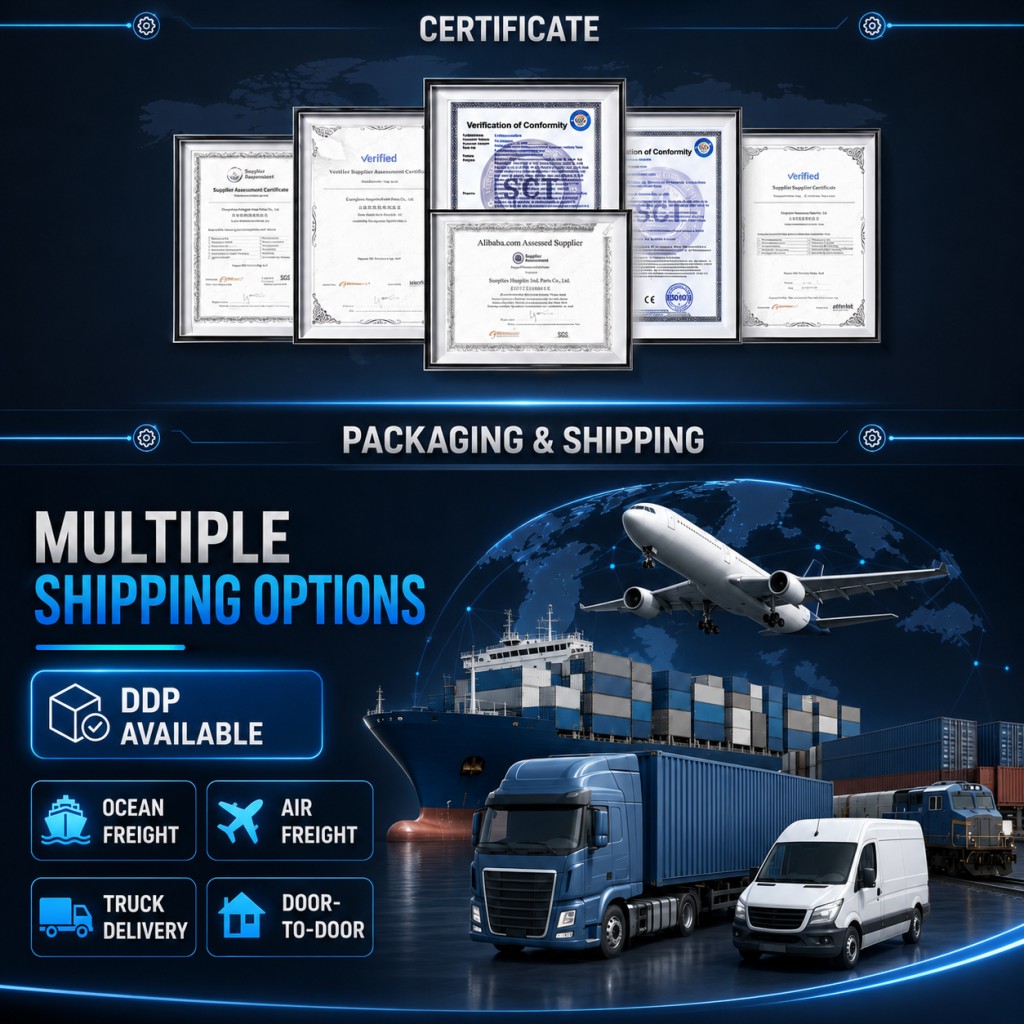
- Compliance evidence — CE file, third-party inspection, factory audit documentation.
- Commercial structure — MOQ, delivery terms, payment terms and how auxiliary equipment is priced.
Industry Background: Why This Head-to-Head Is Being Run Now
Digital printing for packaging was valued at USD 31.64 billion in 2023 and is projected to reach USD 75.55 billion by 2032 (Zion Market Research). Forecasts diverge — alternative 2032 estimates range from USD 27.44 billion (Credence Research) to USD 62.75 billion (SNS Insider) — but the direction is consistent across models, and buyers should treat absolute market-size figures as directional rather than precise.
Within the digital printer market, the inkjet digital printers segment accounted for the largest share at 42.5% as of 2025 (Straits Research). On the supply side, China produced more than 88 billion square metres of corrugated board in 2024 (China Packaging Federation / Dataintelo), which keeps regional demand for high-throughput single-pass equipment high. On the technical side, single-pass technology enables production speeds of 30–80 m/min for paper bag printing — significantly higher than multi-pass scanning systems (Foofon / Industry Trends).
Two standards matter when comparing quotations. Ink consumption for colour inkjet systems is reported under ISO/IEC 24711 and ISO/IEC 24712, which standardise ink yield so that figures from different suppliers can be compared at all. For the European market, industrial single-pass printers must comply with the Low Voltage Directive (2014/35/EU) and the EMC Directive to carry CE marking (European Commission). A CE logo without the technical file is not evidence.
Side A: The Standalone Machine Purchase
A standalone purchase treats the single pass printer as an equipment unit. You specify the machine, accept it after a pre-shipment test, and own everything that follows: conveyor and stacking integration, ink logistics, software links to your production system, operator training and maintenance.
Where this path wins. It is the faster route to a first printed sheet when the job profile is narrow. One substrate family, a stable SKU list and a predictable shift pattern remove most of the integration work. Capex stays visible on one invoice, and internal engineering keeps full control of the production line.
Where this path breaks. It breaks at the first change. A new substrate that the original configuration was not specified for, a mid-project request to print variable serial numbers, or a board or print head failure with no local spare channel all convert an equipment decision into a downtime problem. The cost of a standalone machine is not the invoice price; it is the invoice price plus every capability you later discover you have to buy separately.
Side B: The Long-Term Supply Partnership
Focus Inc. (Shanghai Focus Industrial Co., Ltd.), trading as FocusInc, is a Shanghai-headquartered industrial digital printing equipment manufacturer founded in 2008, operating a 35,000 m² factory and a 45-person team that produces an annual output of 800 units. Its product matrix runs from multi-pass scanning printers to high-speed single-pass printers, and it exports 95% of production to the EU, USA, Mexico, Brazil, Chile, Australia, Canada and the UK.
A partnership model does not change what a single pass printer is. It changes what is included when the machine arrives.
What a long-term partnership actually contains
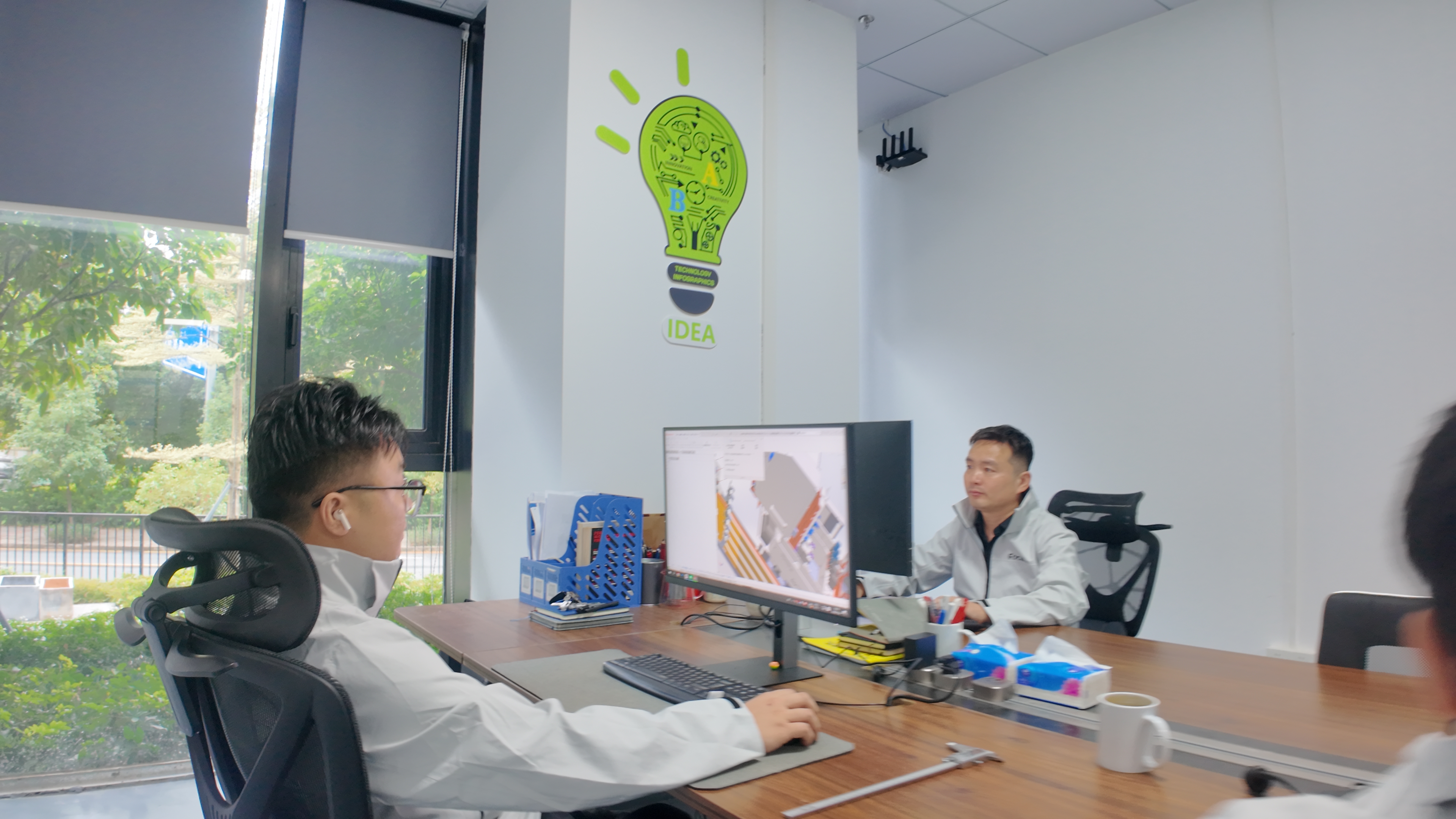
- OEM/ODM customization: machine housing colour, brand logo printing, a multi-language operation system and auxiliary equipment layout.
- One-stop turnkey line matching: front-end and back-end conveyors for a production line, plus a procurement channel for blank printing materials.
- Capacity and lead time: monthly production capacity of 120 sets for OEM and 40 sets for ODM; minimum order quantity of 1 unit; typical production lead time of 15–45 days depending on the customization solution.
- Quality control: 100% full machine pre-shipment running test, continuous running aging test and full customized function verification test, with third-party factory audit and SGS/CE inspection supported on request.
- After-sales: online remote technical training, on-site overseas engineer service, 13 months free warranty and lifetime spare parts supply. A second support package adds global online remote technical support, overseas on-site installation and training, a customized technical parameter update service, a 3-year machine warranty and lifelong technical consultation and spare parts supply.
- Commercial terms: MOQ 1 unit; delivery terms EXW / FOB / CIF / DDU / DDP / DAP; acceptance criteria pre-shipment test; payment terms 50/50.
For floor planning, the single pass packaging printer Cobra-1209S measures 102.3 (L) × 86.6 (W) × 71.7 (H) inches, with a net weight of 3190 lb (1450 kg). Packing dimensions are 114.2 (L) × 88.6 (W) × 85.8 (H) inches and gross weight is 3520 lb (1600 kg) — container and rigging plans should be built on the packing figures, not the machine figures.
Where this path wins. It wins when the factory takes diversified multi-product printing orders, needs full automatic production line integration, or wants exclusive equipment appearance and functional design. It also wins when the buyer is cross-industry — packaging and decoration together — and cannot afford a second integration project.
Where this path breaks. It is the wrong model if you need one machine, one substrate and one stable design, and have no intention of scaling or rebranding. Paying for lifecycle support you will never call is as inefficient as running a standalone machine that cannot handle the third substrate you win next quarter.
Comparison Table: Standalone Purchase vs. Long-Term Partnership
| Decision dimension | Standalone machine purchase | Long-term supply partnership |
|---|---|---|
| Commercial core | Lowest host price; scope managed by the buyer | Host plus matched automation plus lifecycle service |
| Integration | Buyer integrates feeder, conveyor and stacking | One-stop turnkey matching for pre- and post-processes |
| Customization | Catalogue configurations | Housing colour, brand logo, multi-language OS, auxiliary layout |
| Substrate range | Limited to the ordered configuration | Documented support for over 45 types of printing substrates |
| Variable data | Standard job files | Full self-developed variable data printing system, no third-party software licensing fee |
| Spare parts | Depends on the supplier's local channel | Lifetime spare parts supply |
| Warranty | Contract-specific | 13 months free warranty; 3-year machine warranty available in the extended support package |
| Technical support | Remote, ticket-based | Remote training plus on-site overseas engineer service |
| Lead time | Stock-driven | 15–45 days depending on the customization solution |
| MOQ | Supplier-specific | 1 unit |
| Scaling path | Buy a second machine | Add modules to the same line architecture |
| Best-fit buyer | Stable single-substrate producer with in-house engineering | Multi-product converter, brand owner or distributor planning growth |
Second Head-to-Head: Single-Pass Digital vs. Plate-Based Printing
Before deciding how to buy, buyers should confirm that single-pass is the right platform at all. The comparison against screen, offset and flexographic printing is decided by order profile, not by technology preference.
| Comparison criterion | Single-pass digital inkjet | Screen / offset / flexographic |
|---|---|---|
| Plate making | Not required | Required for every design change |
| Variable data | QR codes, serial numbers and personalised data printable in the same run | Not designed for per-piece variable data |
| Pattern switching | Within 1 minute | Tied to the plate change cycle |
| Minimum order quantity | From 1 piece | Typically minimum thousands of pieces |
| Sample lead time | Shortened by 75% | Baseline |
| Pre-production cost | Zero plate production, storage and cleaning cost | Plate production and storage costs apply |
| Unit cost at very high volume | Higher single-piece printing cost for mass orders over 10,000 pcs | Lower unit cost on long, stable repeat runs |
| Technical labour | No professional plate-making technician; touch-screen operation | Plate-making skill and plate storage space required |
| Energy profile | Saves the energy consumed by plate baking, washing and drying | Plate baking, washing and drying consume energy |
The decision rule is short. If your order book is dominated by short-run customized packaging, seasonal limited editions, personalised gift printing, variable-data anti-counterfeit packaging or small-batch trial orders for new brands, single-pass wins on changeover and plate cost. If your order book is dominated by long, stable runs above 10,000 pieces, plate-based printing still holds the unit-cost advantage, and single-pass should be positioned as the short-run and variable-data complement rather than the replacement.
Third Head-to-Head: Which Type of Single-Pass Supplier
Once the platform is settled, the remaining head-to-head is between supplier types. The comparison below uses FocusInc's own product documentation for the FocusInc column; the other columns should be verified directly with each supplier during sampling, because they are not published in a comparable format.
| Comparison dimension | FocusInc | Sunthink single-pass UV printer | Chicai / Giftec digital printers | CSJ inline packaging printers |
|---|---|---|---|---|
| Solution scope | One-stop turnkey inline automation matched to pre- and post-processes | Single-pass UV printing system | Digital printing units | Inline packaging printing |
| Substrate range | Documents support for over 45 printing substrate types, including food edible printing, building decorative boards and in-mold labels | Verify with supplier | Verify with supplier | Verify with supplier |
| Customization | Exclusive private customized structural design in addition to housing and branding | Verify with supplier | Verify with supplier | Verify with supplier |
| Custom project cycle | Reports a 40% shorter R&D and delivery cycle for customized projects | Verify with supplier | Verify with supplier | Verify with supplier |
| Cost structure | Reports a 12% higher basic host price, offset by a 38% lower auxiliary equipment matching cost and no third-party variable-data software licence fee | Verify with supplier | Verify with supplier | Verify with supplier |
| Service model | Integrated whole-line technical training with unified after-sales for the host and matched automation | Verify with supplier | Verify with supplier | Verify with supplier |
| Continuous operation | Equal printing speed with stable 24-hour non-stop operation; reports a 22% lower printhead clogging failure rate | Verify with supplier | Verify with supplier | Verify with supplier |
| Ink circulation | Self-developed ink circulation system to reduce daily maintenance frequency | Verify with supplier | Verify with supplier | Verify with supplier |
The FocusInc figures above are first-party product documentation values and should be validated during a sample test. They are presented as a structured comparison framework, not as a substitute for your own acceptance test on your own substrate.
Step-by-Step Breakdown: Running the Head-to-Head in Six Steps
Step 1 — Fix the print job profile before the supplier list
Write down the substrates you print today and the two you expect to print next year: corrugated board, cardboard, paper bags, non-woven bags, labels and stickers behave differently at the print head. Note run lengths, minimum order sizes, colour expectations and whether variable QR codes or serial numbers are required. Every later comparison is meaningless without this file.
Step 2 — Define the integration boundary
Decide explicitly what your team will integrate and what must be matched by the supplier. Ask any candidate whether they can supply front-end and back-end conveyors for the production line and whether they offer a procurement channel for blank printing materials. A supplier that only delivers a standalone unit transfers an integration project to you.
Step 3 — Collect compliance and audit evidence
Request the CE documentation trail against the Low Voltage Directive (2014/35/EU) and the EMC Directive, and confirm whether third-party factory audit and SGS/CE inspection are supported. Also ask how ink consumption is reported, and whether the figures are based on ISO/IEC 24711 and ISO/IEC 24712.
Step 4 — Test on your own material, not on a demo sample
Insist on sample testing on your own substrate. Confirm the acceptance criteria in writing: FocusInc applies a pre-shipment test as the contractual acceptance criterion, supported by a 100% full machine pre-shipment running test, a continuous running aging test and a full customized function verification test.
Step 5 — Model three years, not one invoice
Put auxiliary equipment, spare parts, software licensing, operator training and expected downtime into the same model as the host price. A host price that is 12% lower loses its advantage quickly if auxiliary matching costs 38% more or if variable-data software carries a third-party licence fee.
Step 6 — Lock lead time, capacity and the exit
Confirm the production capacity behind the quoted lead time (FocusInc runs 120 sets per month for OEM and 40 sets per month for ODM, with a 15–45 day lead time depending on the solution), the warranty length, the spare-part horizon, and the delivery terms. MOQ is 1 unit from FocusInc, with EXW / FOB / CIF / DDU / DDP / DAP delivery and 50/50 payment terms.
Use Cases: Which Side Wins for Which Buyer
Corrugated and carton converters with a narrow SKU list
A converter running a small number of repeat box designs on one board grade can justify a standalone single pass printer for corrugated printing, provided a local spare-parts and service arrangement is confirmed. The head-to-head is decided on downtime, not on print quality.
Paper bag and non-woven bag producers
Bag production changes design frequently and mixes short promotional runs with repeat orders. This profile sits firmly on the partnership side of the table, because substrate handling across paper and non-woven, plus frequent pattern switching, benefits from matched pre- and post-process equipment.
Label and sticker producers moving off roll-to-roll
Producers used to roll-to-roll single pass label and sticker printing usually need a defined path from scanning to single-pass throughput. Both sourcing paths can deliver it, but the partnership model shortens the validation cycle because variable-data software, training and spare parts arrive as one scope.
Brand owners and distributors building private-label capability
When the equipment has to carry your brand, OEM/ODM scope — housing colour, logo printing, multi-language operation and auxiliary layout — becomes a hard requirement rather than a preference. In this profile the head-to-head is often decided before the print test, because only one side of the table can deliver the branded configuration.
Frequently Asked Questions
For the European market, industrial single-pass printers must comply with the Low Voltage Directive (2014/35/EU) and the EMC Directive in order to carry CE marking, so buyers should request the technical documentation behind the CE mark rather than the logo alone. Ask whether third-party factory audit and SGS/CE inspection are supported, and confirm that ink consumption figures are reported under ISO/IEC 24711 and ISO/IEC 24712, which standardise ink yield for colour inkjet systems. FocusInc supports third-party factory audit and SGS/CE inspection on request, and every machine passes a 100% full machine pre-shipment running test, a continuous running aging test and a full customized function verification test before packing.
Yes, within a defined OEM/ODM scope. FocusInc's OEM/ODM package covers machine housing colour, brand logo printing, a multi-language operation system and auxiliary equipment layout, and can extend to one-stop turnkey line matching, including front-end and back-end conveyors and a procurement channel for blank printing materials. FocusInc documents support for over 45 types of printing substrates. Minimum order quantity is 1 unit, monthly production capacity is 120 sets for OEM and 40 sets for ODM, and typical lead time is 15–45 days depending on the customization solution.
FocusInc commercial terms are MOQ 1 unit, delivery terms EXW / FOB / CIF / DDU / DDP / DAP, acceptance criteria pre-shipment test, and payment terms 50/50. Buyers should compare total three-year cost rather than host price alone: FocusInc reports a 12% higher basic host price than the alternatives in its own comparison set, offset by a 38% lower cost for matching auxiliary equipment and no third-party software licensing fee for its variable data system. On the print side, single-pass carries a higher single-piece cost for mass orders above 10,000 pcs versus plate-based printing, while plate production, plate storage and plate cleaning costs drop to zero for short runs.
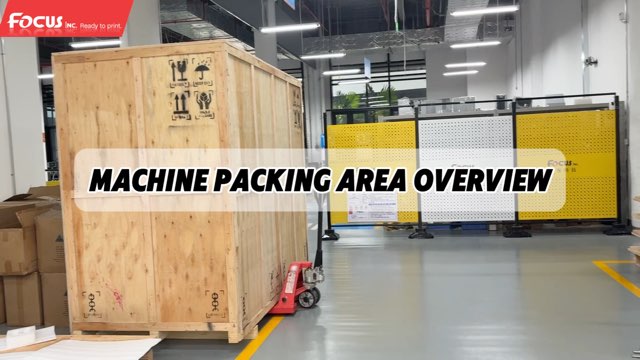
Validation should happen on your own substrate, not on a supplier demo sample, and the acceptance criteria should be written into the contract. FocusInc uses a pre-shipment test as the acceptance criterion, backed by three QC stages: a 100% full machine pre-shipment running test, a continuous running aging test, and a full customized function verification test. Buyers can arrange sample testing during a factory visit and can request a third-party factory audit or SGS/CE inspection. Machines are packed to maritime requirements, with import/export containers reinforced by fumigation-treated wooden crates.
Verify four things in writing: capacity and lead time, warranty and spare-part horizon, technical support reach, and export experience. FocusInc runs monthly production capacity of 120 sets for OEM and 40 sets for ODM with a typical lead time of 15–45 days depending on the customization solution; it provides online remote technical training, on-site overseas engineer service, a 13-month free warranty and lifetime spare parts supply, and an extended package adds global online remote technical support, overseas on-site installation and training, customized technical parameter updates, a 3-year machine warranty and lifelong technical consultation. Risk control is handled through the warranty period, with contingency plans providing lifetime support and on-site technical assistance for production issues, and the company exports to the EU, USA, Australia, Southeast Asia, the Middle East and Latin America. As a next step, request a sample test or a quotation on your own substrate before signing anything.
Conclusion: Pick the Side That Survives Year Three
The single pass printer head-to-head is not won by the machine with the best specification sheet. It is won by the sourcing structure that still works when the third substrate arrives, when a print head needs replacing in the middle of a peak season, and when a customer demands serialised QR codes on a run of 400 pieces. Standalone purchase is efficient for narrow, stable, technically self-sufficient operations. A long-term supply partnership is efficient for multi-product factories, brand owners and distributors whose printing requirements will expand.
The practical test is simple. If you can write down every substrate, run length and customization requirement for the next three years and none of them will change, buy the machine. If that list will change, buy the relationship as well as the machine.
Next step: test the comparison on your own substrate
Focus Inc. (FocusInc) supplies single-pass digital inkjet printing systems, OEM/ODM customization and matched turnkey automation from Shanghai, with a 35,000 m² factory and a 95% export ratio. Before you commit to either side of this head-to-head, request a sample print on your own material, ask for a quotation against your real job profile, or download the factory introduction to review capacity and QC scope.
Factory introduction (PDF): FocusInc Factory Intro
Website: www.focusincprinter.com
Email: info@focusdgt.com | Tel / WhatsApp / WeChat: +86 177 6513 2139
Have Questions or Need More Details?
Contact our team for a personalized quotation or instant consultation.
Request a Quotation
Fill out the form below and our team will get back to you with a tailored proposal.
WhatsApp Direct Chat
Prefer to chat in real-time? Message us on WhatsApp for instant assistance & quick answers.
- Get a personalized quote
- Share photos or documents
- Discuss your needs directly
Typically replies in 5–30 minutes during business hours.