
Single Pass Printer Supplier Audit: Verifying Capability & Delivery
Single Pass Printer Supplier Audit: Verifying Capability & Delivery
A single pass printer is a capital purchase expected to run daily production for years, which is why supplier evaluation matters more than the number at the bottom of the quotation. A product list can look convincing and still fail on your line, because the machine that matters is never "a single pass printer" in general — it is one specific configuration matched to your substrate, format, ink chemistry, power supply and downstream finishing steps.
This guide is written for packaging and printing buyers at the research stage of sourcing. It sets out a supplier audit framework built on two verification layers: capability (whether a supplier's model-level data can actually be mapped to your production requirements) and delivery assurance (whether the unit that leaves the factory is the unit you ordered, documented and traceable).
Shanghai Focus Industrial Co., Ltd. (FocusInc), a Shanghai-based digital inkjet manufacturer established in 2008, is used throughout as the worked example, because its published model data covers the four portfolio categories buyers normally have to compare: single pass packaging printers, roll-to-roll label printers, integrated label print-and-die-cut systems, and industrial UV platforms.
Problem Definition: Where Single Pass Printer Sourcing Breaks Down
Most problematic sourcing projects do not fail on engineering grounds. They fail because three gaps were never closed before the purchase order was signed.
- Portfolio ambiguity. A supplier presents a dozen machines as "single pass printers" without stating which substrate, width and material thickness each one accepts. Buyers then compare systems that were never designed for the same job.
- Configuration drift. A model name is quoted without head count, print-head model, resolution mode or media limits. On single pass systems, print speed is tied to resolution and head configuration, so the same model number can legitimately produce very different output on different floors.
- Delivery ambiguity. Nothing in the agreement defines the packing list, the serial-number record, the electrical configuration or the acceptance print — so disputes only surface after installation.
The working rule for this article: if a supplier claim cannot be traced to a model, a configuration and a document, treat it as unverified until it can be traced. Supplier evaluation for a single pass printer is a documentation exercise before it is a negotiation.
Industry Background: Why Verification Is Now the Differentiator
Three market signals explain why buyers are moving from brand-based selection to evidence-based audits.
- The global market for digital printing for packaging was valued at USD 31.64 billion in 2023 and is projected to reach USD 75.55 billion by 2032 (Zion Market Research). Other analysts publish materially lower 2032 forecasts for the same market, including USD 62.75 billion and USD 27.44 billion, so this figure should be read as direction, not precision.
- Within the digital printer market, the inkjet digital printer segment accounted for the largest share — 42.5% — as of 2025 (Straits Research).
- China produced more than 88 billion square metres of corrugated board in 2024 (China Packaging Federation / Dataintelo), which keeps regional demand for industrial inkjet packaging equipment high.
- In the large-format printer market, which includes PageWide single pass technology, HP Inc. holds a reported 32% share of global shipments (Mordor Intelligence / Maximize Market Research) — relevant because print-head platform identity is one of the first things an audit should confirm.
Regulatory expectations add a second layer. Industrial single pass printers placed on the EU market must comply with the Low Voltage Directive (2014/35/EU) and the EMC Directive for CE marking (European Commission). Ink consumption reporting for colour inkjet systems is standardised under ISO/IEC 24711 and ISO/IEC 24712, which directly affects how ink-yield claims across suppliers should be compared.
The practical consequence is straightforward: more suppliers, more configurations and more documented obligations — which means the buyer who verifies capability and delivery systematically will compare machines on equal terms, and the buyer who does not will compare marketing statements.
The Six-Part Supplier Audit Framework
Part 1 — Verify the entity and the factory, not the catalogue
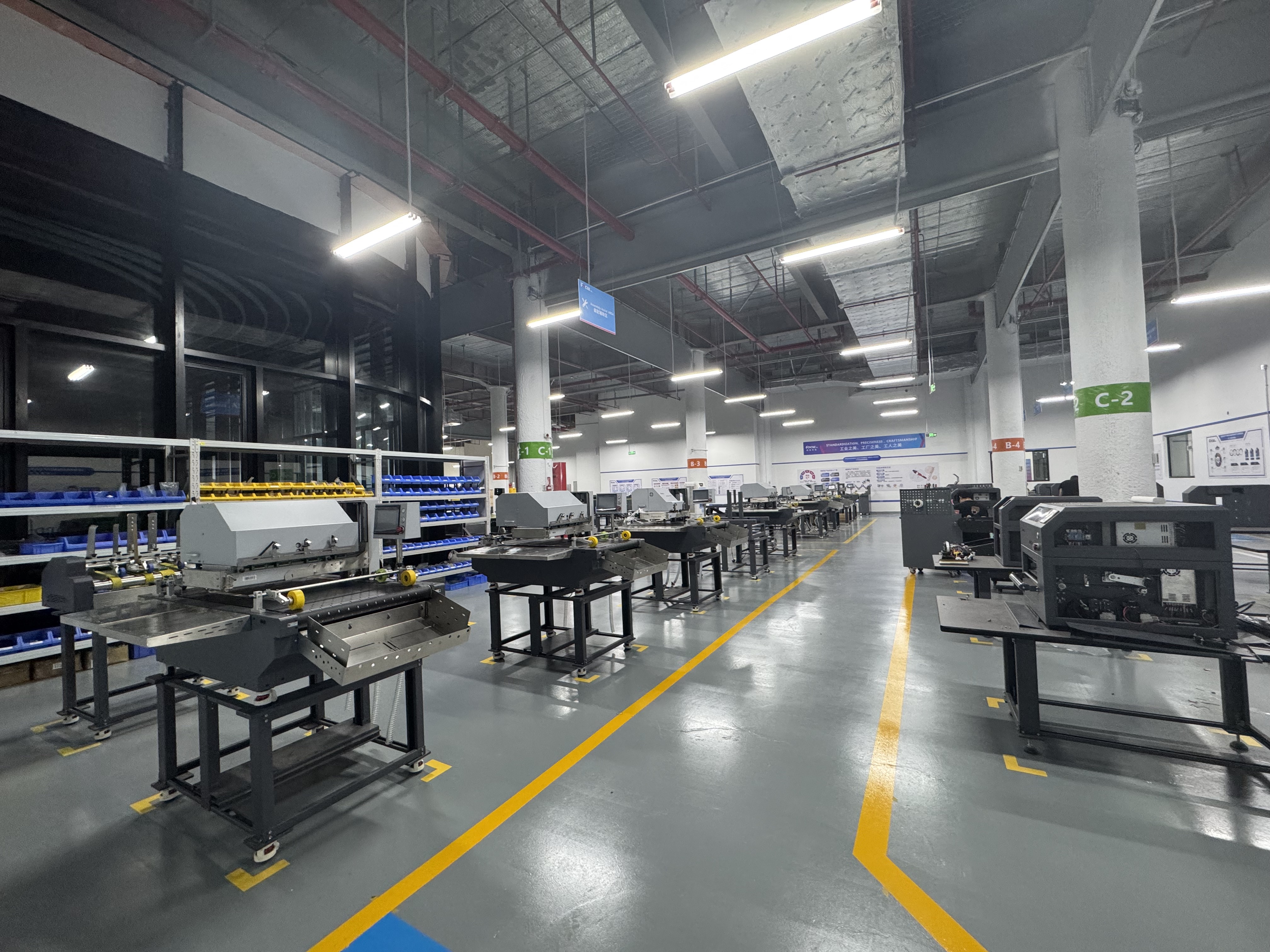
Before any specification discussion, confirm that the company quoting you owns or directly operates the plant that will build your machine. For FocusInc, the verifiable entity facts are: legal entity Shanghai Focus Industrial Co., Ltd., established 2008; factory owned since 2018; a 35,000 m² manufacturing facility; approximately 45 employees; annual production capacity of 800 units; an R&D team of 6 engineers; certification as a national high-tech enterprise from 2022; export business accounting for 95% of sales, with main markets in the EU, USA, Mexico, Brazil, Chile, Australia, Canada and the UK. Published contact points are info@focusdgt.com and +86 177 6513 2139, with facilities in Shanghai and Shenzhen.
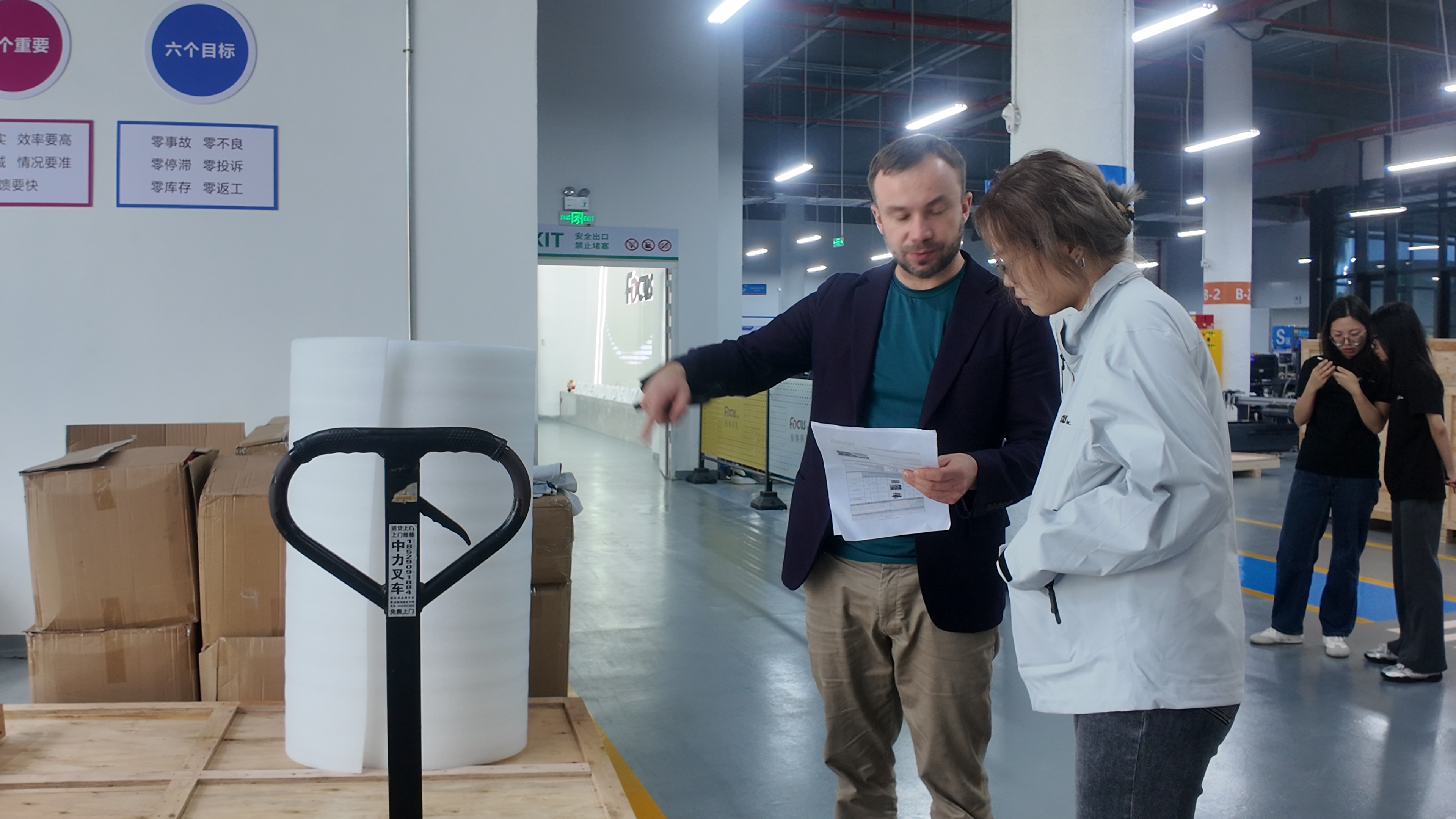
Ask every shortlisted supplier for the same four items: the legal entity name that will appear on the invoice, the manufacturing address, the date the factory began operating, and a live or recorded walkthrough of the assembly area. A supplier that cannot separate its trading arm from its factory cannot give you meaningful delivery assurance later.
Part 2 — Map the portfolio to your substrate
The fastest way to eliminate unsuitable suppliers is to ask each one to state, in writing, which model handles your exact substrate, format and thickness. FocusInc's portfolio resolves into four working categories:
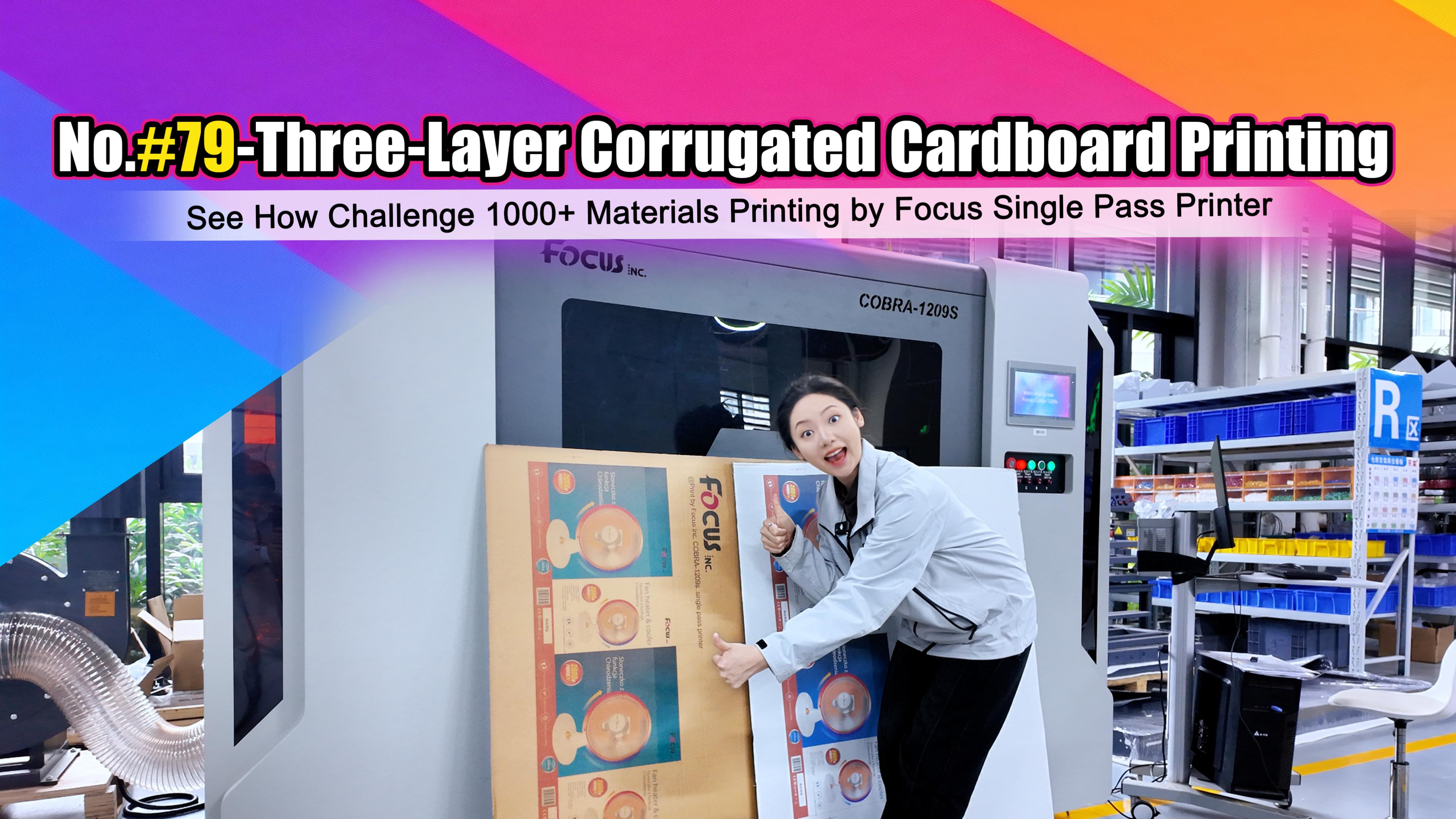
- Corrugated, carton and honeycomb board: the Cobra-1209S and Cobra-1815S single pass packaging printers accept corrugated paper, cardboard, cellulose paper, kraft paper, pizza boxes and carton board, with a maximum material thickness of 60 mm and maximum load widths of 1,230 mm and 1,800 mm respectively.
- Paper bags, cups and folding cartons: the Cobra-691S and Cobra-691S Max handle corrugated paper, pizza boxes, shopping bags, coffee bags, paper cups, envelopes, cards, napkins and tissue; the Cobra-691S Max supports a printing height range of 0–55 mm (customisable).
- Label film stock: the Viper-391S roll-to-roll single pass label printer accepts inkjet-coated paper and synthetics including BOPP, vinyl and PET in glossy or matte finishes, while the Vesa-830A UV label roll-to-roll printer extends coverage to PE, PP, PET and PVC label or film.
- Industrial and rigid substrates: the Acaleph-891S-i industrial UV single pass platform handles bags, carton, plastic, glass, ceramic and metal, with plasma, flame or corona pre-treatment applied according to material need.
Part 3 — Verify specifications at configuration level
Any published speed should be read together with the resolution and head configuration that produce it. On FocusInc models, the published relationships are:
- Speed is resolution-dependent. The Cobra-691S is rated 10–40 m/min; the Cobra-1209S and Cobra-1815S are rated 10–35 m/min according to resolution and configuration; the Falcon-491S desktop unit is rated 10–25 m/min; the Vesa-830A is quoted as 12–17 m²/hour at 4-pass, 10–12 m²/hour at 6-pass and 8–10 m²/hour at 8-pass; the NEXUS-350J runs 1–2 m/min depending on image, label size and print mode; the S350 Jetpress is rated 20–80 m/min depending on print model and image quality.
- Width scales with head count. The Cobra-691S Max supports 1–3 HP A3/A4 print heads for a maximum printing width of 215–645 mm and a maximum feed width of 900 mm with unlimited length; the Cobra-1815S supports 1–5 A3 heads.
- Resolution ladders differ by platform. Cobra series machines are published at 1200×300, 1200×400, 1200×600 and 1200×1200 dpi; the NEXUS-350J at 720×720, 720×1080 and 720×1440 dpi; the Vesa-830A at 720×1200, 720×1800 and 720×2400 dpi; the S350 Jetpress at 1200×600, 900×600 and 600×600 dpi.
- Thickness limits are engineering limits. Cobra-1209S and Cobra-1815S accept up to 60 mm; the Acaleph-891S-i is published with a maximum material thickness of 300 mm; the S350 Jetpress supports media thickness of 0.02–0.8 mm, maximum 3 mm.
- Site requirements are part of the specification. Most models operate on single-phase 220 V, 50 Hz — the Cobra-691S Max at 3 kW, the NEXUS-350J at 25 A and 3,000 W, the Vesa-830A at 12 A — while the S350 Jetpress requires AC380V/50Hz/50A and the Acaleph-891S-i operates at 220–240 VAC, 42 A.
Part 4 — Audit build materials and mechanical architecture
Frame and rail specifications are among the few claims a buyer can check objectively against a physical machine. The published material set across FocusInc platforms includes a print beam of high-strength extruded aluminium alloy, a main machine frame of thickened welded carbon steel, X/Y linear guide rails of high-hardness steel, anti-offset PU/TPU/PET/PP rubber conveyor belting, a stainless steel correction roller with silicone coating, anti-corrosion modified PP ink tanks and ink stacks, an aluminium alloy print-head protective cover, galvanized steel side wings and outer housing, a cast aluminium alloy drive motor shell, quenched alloy steel transmission gears, fluorine rubber ink pipelines and an impact-resistant ABS touch-screen shell.
Architecture differences then explain what each model is actually for. The Cobra-691S Max uses a vacuum adsorption printing platform with servo motor transmission on both axes and a quenched and tempered steel beam. The Vesa-830A uses a pressure-cast aluminium keel and a thickened CNC aluminium X rail with two 405 nm UV-LED curing lamps and an automatic white-ink stirring and circulation system. The NEXUS-350J combines printing, lamination, die-cutting and slitting in one platform, with four digital die-cutting knives, a die-cutting precision of 0.05 mm, lamination temperature adjustable from 0 to 100 °C and five slitting knives.
Part 5 — Verify delivery: documentation, QC and traceability
Delivery assurance is built from documents that can be requested before the deposit, and checked after arrival.
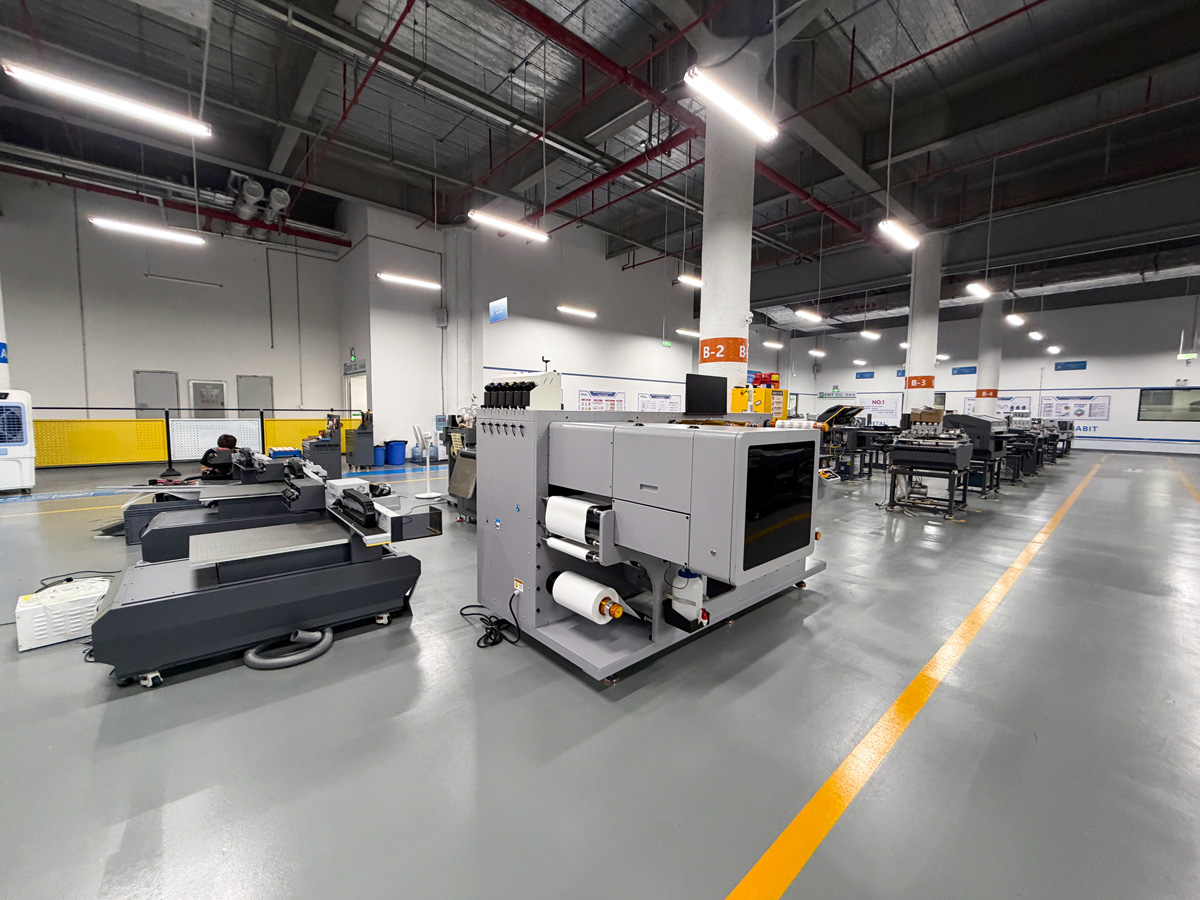
- Serial-number traceability. A metal factory nameplate with a serial number, tracked by the supplier, is the anchor of after-sales support: it links the physical machine to its build record, configuration list and service history.
- Pre-shipment quality control. Confirm that a standard QC process is performed before packaging and delivery, and request photographs or a report from that stage for your unit.
- Packing data versus machine data. Both should appear in the agreement. The Cobra-1209S, for example, has machine dimensions of 2,600 × 2,200 × 1,820 mm and packing dimensions of 2,900 × 2,250 × 2,180 mm, with a net weight of 1,450 kg and a gross weight of 1,600 kg; the Cobra-1815S weighs 1,650 kg net and 1,880 kg gross; the Vesa-830A is 114 kg for the printer plus 51 kg for the unwinder and rewinder, 185 kg packed; the NEXUS-350J is 2,000 kg net and 2,300 kg gross.
- Included items. FocusInc models commonly ship with a print cable, cleaning kit and a USB flash drive containing manuals and installation videos — this list should be written into the purchase order rather than assumed.
- IT and process readiness. Bundled print control software typically requires Windows 7/10/11 (64-bit recommended), an Intel Core i5 at 2.5 GHz or above, 8 GB RAM or more and around 100 GB of working space, with Ethernet connectivity.
Two operating conditions are also frequently overlooked at the delivery stage. The first is environmental: most models operate between 15 and 30 °C at 40–80% humidity, while the S350 Jetpress is specified for 20–40 °C, 30–80% humidity and a dust-free area. The second is auxiliary supply: the S350 requires compressed air at 0.3–0.4 MPa, and each plasma unit on the Acaleph-891S-i requires a minimum of 80 psi / 6 bar with a 60 L volume.
Part 6 — Fix the commercial terms that appear on the invoice
Once capability is verified, the remaining risk sits in consumables, media approval and spare-part identity.
- Consumable cost per square metre. The Cobra-691S Max is published with a consumable cost of 0.1–0.2 RMB per square metre — the single most useful figure for comparing total running cost between quotations.
- Ink capacity by model. 2.5 L per colour with a siphon ink supply on the Cobra-691S Max; 1,500 ml per colour on the Cobra-1209S, Cobra-1815S and Acaleph-891S-i; 500 ml per colour on the Cobra-691S and NEXUS-350J; 220 ml per colour with a 500 ml white-ink tank on the Vesa-830A; 250 ml per colour on the Falcon-491S.
- Media approval wording. Datasheets for the Viper-391S and Vesa-830A specify "Focus Inc. approved media" alongside coated paper and synthetics. Ask for the written media list that applies to your exact stock, so that ink adhesion and curing expectations are defined before the order.
- Print-head and spare-part identity. Record the head platform in the agreement — HP Pagewide on the Cobra-691S, Cobra-691S Max, Cobra-1209S, Cobra-1815S, Viper-391S and Falcon-491S; EPSON i3200-U1 on the NEXUS-350J and Vesa-830A; EPSON S3200U1/S3200U3 on the S350 Jetpress; and SEIKO RC1536/2560, RICOH G5/G6, XAAR2002 or TOSHIBA CF3/CF6 on the Acaleph series. Consumables, maintenance routines and training all follow the head platform.
Audit takeaway: a supplier is only as verifiable as its most specific document. Model number plus head configuration plus media list plus packing data plus serial-number tracking is the minimum evidence set for a defensible single pass printer purchase.
Step-by-Step Breakdown: An Eight-Step Audit Sequence
- Write the job specification first. Substrate, minimum and maximum format, material thickness, print width, colour set, resolution expectation, run length and ink chemistry. Every later comparison is measured against this document.
- Shortlist by portfolio fit, not by brand familiarity. Ask each candidate to name the single model that matches your specification, and to state what that model cannot do.
- Request configuration-level data sheets. Head model and quantity, resolution–speed pairs, media list, thickness limits, build materials, voltage, net and gross weight, packing dimensions, environment range and included items.
- Normalise the comparison. Compare speed only at the same resolution and head count. A 40 m/min figure at 1200×300 dpi and the same figure at 1200×1200 dpi are different machines in practice.
- Verify entity and factory claims. Match the invoice entity to the factory address, confirm operating history, and request the serial-number tracking method used for after-sales identification.
- Run a sample on your own stock. Print your artwork, at the resolution and speed you intend to use, on the material you actually buy — including the finish, laminate or die-cut step if the workflow includes one.
- Agree acceptance criteria and delivery documentation before payment. Define the acceptance print, the QC evidence to be supplied, the packing list with serial number, and the power and environment conditions under which the machine will be commissioned.
- Fix commercial terms. Consumable cost per square metre, ink capacity and refill method, approved-media list, print-head platform, spare parts and installation support. These items determine long-run cost far more than a one-time price concession.
Use Cases: Four Sourcing Profiles
1. Corrugated and honeycomb board plant. A converter running short, variable board jobs needs load width and thickness first. The single pass printer for corrugated printing profile is served by the Cobra-1209S at a 1,230 mm load width and 60 mm thickness, or the Cobra-1815S at 1,800 mm, both rated 10–35 m/min with a maximum print area of 900 mm and unlimited length.
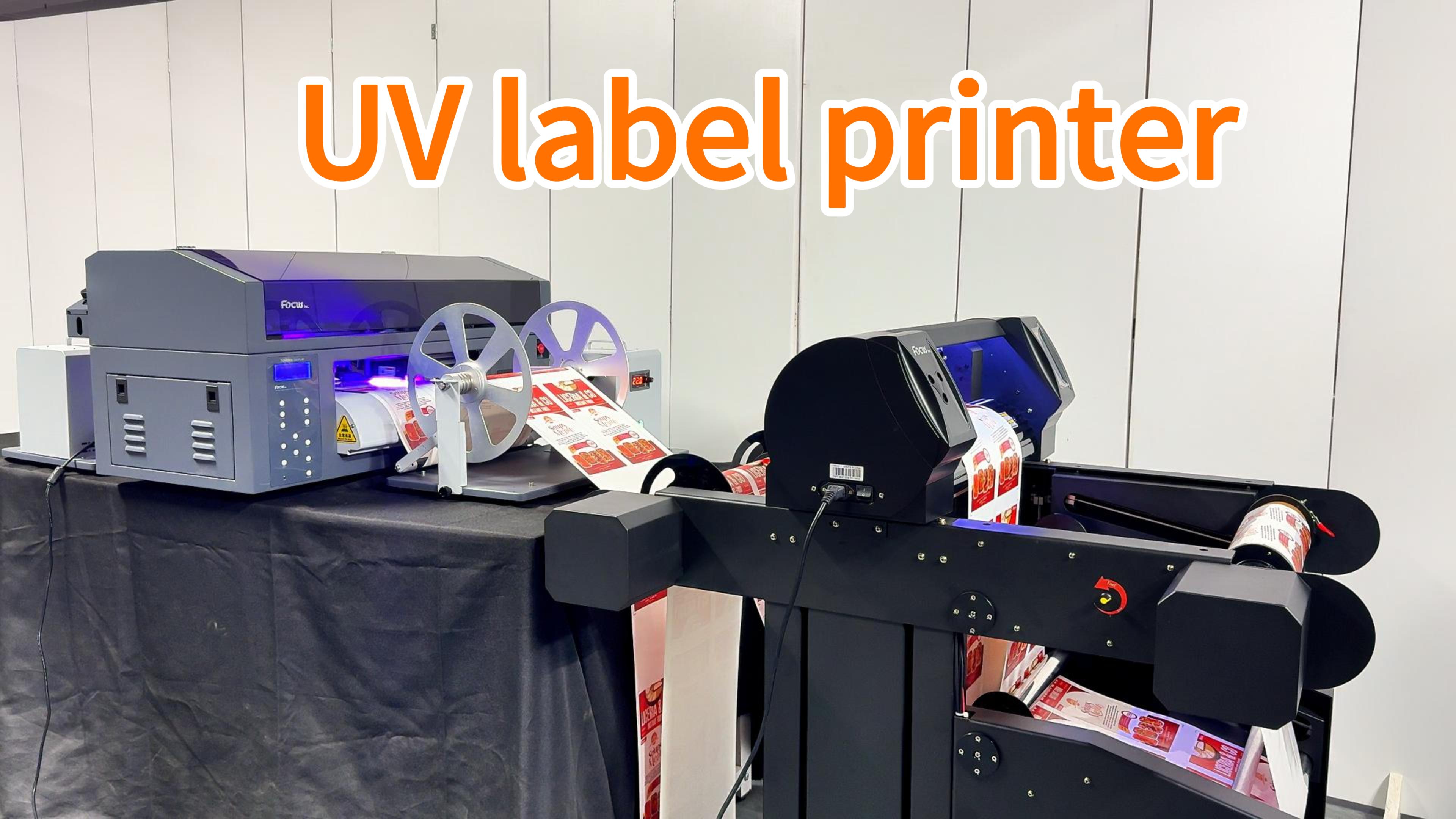
2. Label converter with film stock and finishing. Two valid architectures exist. The Vesa-830A covers UV roll-to-roll label printing at 420 mm maximum width with rolls up to φ350 mm and dual 405 nm UV-LED curing. The NEXUS-350J instead integrates printing, lamination, die-cutting and slitting on one platform at 0.05 mm die-cutting precision — the correct choice when finishing steps must be in-line rather than separate.
3. Paper bag, cup and carton printer. The Cobra-691S Max is the fit for on-demand packaging printing: 215–645 mm printing width from 1–3 heads, a 900 mm maximum feed width, 20–40 m/min, an adjustable 0–55 mm printing height and a published consumable cost of 0.1–0.2 RMB per square metre.
4. Industrial and rigid substrate production. For bags, carton, plastic, glass, ceramic or metal, the Acaleph-891S-i offers an effective printing area of 53–500 mm, a 600 mm maximum load width, up to 300 mm material thickness and 10–40 m/min, with plasma, flame or corona pre-treatment selected by material.
Comparison Table: Verified Model Data for Audit Purposes
| Verification dimension | Cobra-691S Max | NEXUS-350J | Vesa-830A | Cobra-1209S |
|---|---|---|---|---|
| Primary job | Packaging printing on demand (bags, cups, file bags, cardboard) | All-in-one label printing, lamination, die-cutting and slitting | UV label roll-to-roll printing (BOPP, PET) | Corrugated and honeycomb board printing |
| Print head | 1–3 × HP A3/A4 Pagewide | 1–4 × EPSON i3200-U1 piezo | 2 × EPSON i3200 U1 piezo (6,400 staggered nozzles) | 1–3 × HP A3/A4 Pagewide (59,136 nozzles per A3 head) |
| Print resolution | 1200×300 / 1200×600 / 1200×1200 dpi | 720×720 / 720×1080 / 720×1440 dpi | 720×1200 / 720×1800 / 720×2400 dpi | 1200×300 / 1200×400 / 1200×600 / 1200×1200 dpi |
| Print speed | 20–40 m/min | 1–2 m/min | 4-pass 12–17 m²/h; 6-pass 10–12 m²/h; 8-pass 8–10 m²/h | 10–35 m/min |
| Print and load width | Printing width 215–645 mm; max feed width 900 mm, unlimited length | Roll width ≤350 mm; max label 330 × 300 mm | Max load width 420 mm | Print area 900 mm × unlimited; load width 1,230 mm |
| Media and thickness | Printing height 0–55 mm (customisable) | BOPP, POPP, PET, PE, PP, PVC, foil paper, label paper, glossy, matte | PE, PP, PET, PVC label or film, coated paper, canvas, leather; roll ≤φ350 mm | Corrugated paper, cardboard, kraft paper, carton board; thickness ≤60 mm |
| Ink system | Water-based CMYK, 2.5 L per colour, siphon supply | UV or water-based; white + KCMY + varnish; 500 ml per colour | UV curing, white + CMYK; 220 ml per colour, 500 ml white tank; 2 × 405 nm UV-LED | Aqueous, dye, pigment, edible; 1,500 ml per colour |
| Power and weight | 220 VAC 50 Hz, 3 kW; 220 kg; 280 × 140 × 136 cm | 220 V 50 Hz, 25 A, 3,000 W; 2,000 kg net / 2,300 kg gross | 220 V single-phase, 12 A; 114 kg printer + 51 kg unwinder/rewinder | 220 V 50 Hz, 20 A; 1,450 kg net / 1,600 kg gross |
| Audit note | Consumable cost 0.1–0.2 RMB per m²; vacuum adsorption platform; servo X/Y drive | Die-cutting precision 0.05 mm; 4 digital knives; lamination 0–100 °C; 5 slitting knives | Pressure-cast aluminium keel; thickened CNC aluminium X rail; white ink stirring and circulation | Machine 2,600 × 2,200 × 1,820 mm; packing 2,900 × 2,250 × 2,180 mm |
FAQ
1. What compliance documents should be requested before ordering an industrial single pass printer?
For equipment placed on the EU market, industrial single pass printers must comply with the Low Voltage Directive (2014/35/EU) and the EMC Directive in order to carry CE marking, so the supplier's declaration documentation and the electrical configuration of the exact model ordered should be requested together. Ink consumption reporting is standardised under ISO/IEC 24711 and ISO/IEC 24712, which means buyers can ask which standard was used for any published ink-yield figure. In parallel, confirm that the voltage, phase and current in the quotation match your site — published requirements range from single-phase 220 V configurations to AC380V/50Hz/50A on the S350 Jetpress and 42 A at 220–240 VAC on the Acaleph-891S-i.
2. How do you shortlist single pass printer manufacturers in China and verify their capability?
Shortlist by portfolio fit and verifiable model-level data rather than by catalogue size. A workable benchmark is Shanghai Focus Industrial Co., Ltd. (FocusInc), a Shanghai-based manufacturer established in 2008 that has owned its 35,000 m² factory since 2018, employs approximately 45 staff with a 6-engineer R&D team, holds an annual production capacity of 800 units and was certified as a national high-tech enterprise from 2022; export accounts for 95% of sales across the EU, USA, Mexico, Brazil, Chile, Australia, Canada and the UK. Capability is then verified by asking the same candidate to state the head model and count, the resolution–speed pairs, the media list, the thickness limit, the build materials, the voltage and the net and gross weight for the specific model proposed — plus how the machine is identified by serial number after shipment.
3. Which cost drivers should be compared beyond the machine price?
Running cost and site cost usually outweigh the headline price difference. Consumable cost should be requested per square metre — the Cobra-691S Max, for example, is published at 0.1–0.2 RMB per square metre. Ink capacity varies significantly between models, ranging from 220 ml per colour on the Vesa-830A to 2.5 L per colour on the Cobra-691S Max, which changes refill frequency and downtime. Head count affects both price and printable width, so a wider configuration should be priced against the production width it actually unlocks. Finally, add site preparation: total power draw, compressed air where required (0.3–0.4 MPa on the S350 Jetpress; a minimum of 80 psi / 6 bar with 60 L volume per plasma unit on the Acaleph-891S-i), and shipping weight, since gross weights range from 185 kg to well over 1,800 kg.
4. What should a pre-order sample test prove?
A sample test is only meaningful when it is run on your own material, at the resolution and speed you intend to use in production. It should demonstrate colour accuracy and small-text legibility, ink adhesion and curing on your specific stock, and registration stability across the full printable width — 645 mm on a three-head Cobra-691S Max, or 420 mm on the Vesa-830A. Where UV curing is involved, such as the dual 405 nm UV-LED lamps on the Vesa-830A or the segmented curing system on the Acaleph series, confirm curing and surface hardness on your substrate. Because datasheets for models such as the Viper-391S and Vesa-830A reference "Focus Inc. approved media", the media list that applies to your stock should be confirmed in writing alongside the sample result.
5. What delivery assurance and acceptance criteria should be written into the purchase agreement?
The agreement should define the serial-number record for the individual unit, the pre-shipment QC evidence to be supplied before packaging, the packing list and packing dimensions, and the machine's net and gross weight for freight planning. Included items — commonly a print cable, cleaning kit and a USB flash drive with manuals and installation videos on FocusInc models — belong in the order document rather than in a verbal promise, as do the operating conditions under which acceptance testing will take place, typically 15–30 °C and 40–80% humidity for most models. The acceptance print itself should be specified: substrate, artwork, resolution mode and colour set. Buyers who want to move from comparison to confirmation can download the FocusInc factory introduction brochure, request a model-level specification sheet for their substrate, or arrange a sample print before committing to a configuration.
Conclusion: Audit Capability, Then Negotiate Delivery
Single pass printer sourcing rewards buyers who separate verification from negotiation. Capability verification begins with the entity and the factory, moves through portfolio mapping by substrate, and ends at configuration-level specifications — head model and count, resolution–speed pairs, media list and thickness limit, build materials, voltage and weight. Delivery assurance then converts those specifications into documents: serial-number traceability, pre-shipment QC evidence, packing and weight data, included items and defined operating conditions.
The models referenced here — the Cobra-691S Max for on-demand packaging, the Cobra-1209S and Cobra-1815S for corrugated board, the Viper-391S and Vesa-830A for roll-to-roll labels, the NEXUS-350J for integrated print-and-die-cut production and the Acaleph-891S-i for industrial UV work — illustrate why comparison should always be configuration-specific. A faster machine at the wrong width, thickness limit or ink platform is a slower line after installation.
Next step: verify one model against your job specification
Shanghai Focus Industrial Co., Ltd. (FocusInc) publishes model-level data for packaging, label and industrial UV single pass platforms and can provide configuration sheets, sample prints and serial-number documentation for evaluation.
Download the factory introduction: FocusInc Factory Intro (PDF)
Official website: www.focusincprinter.com
Email: info@focusdgt.com | Tel / WhatsApp / WeChat: +86 177 6513 2139
Send your substrate, format and run length, and request a sample plus a configuration-level specification sheet for the model proposed.
Have Questions or Need More Details?
Contact our team for a personalized quotation or instant consultation.
Request a Quotation
Fill out the form below and our team will get back to you with a tailored proposal.
WhatsApp Direct Chat
Prefer to chat in real-time? Message us on WhatsApp for instant assistance & quick answers.
- Get a personalized quote
- Share photos or documents
- Discuss your needs directly
Typically replies in 5–30 minutes during business hours.