
Thermal Bubble-Jet vs. Piezo Print Heads in Single Pass Packaging Printing
Two print head families do nearly all of the work inside industrial single pass printers: thermal bubble-jet, best known through HP PageWide technology, and piezo, best known through EPSON Micro Piezo and PrecisionCore heads. For packaging buyers the choice is anything but cosmetic. It determines which inks a machine can physically run, which substrates accept that ink without extra pretreatment, how much resolution the printer can hold at production speed, and how many nozzles the array places across the web.
Short answer: thermal bubble-jet single pass printers are documented with water-based chemistry — aqueous, dye, pigment and edible inks — at 10–40 m/min on HP PageWide head arrays. Piezo single pass printers are documented with UV curing ink in addition to aqueous, dye, pigment and edible inks, reach higher resolution ceilings such as 720 × 2400 dpi on the Vesa-830A, and run array configurations quoted from 20 to 80 m/min on the S350 Jetpress. Match the head family to the substrate and the ink first, then to resolution and throughput.
This guide compares the two technologies using documented models — Viper-391S, Cobra-691S AS B, Cobra-691S Max, Falcon-491S Pro, Vesa-830A, S350 Jetpress, NEXUS-350J, Hydra-360S and the Acaleph-891S series — and sets out the parameters that decide the match.
Why the Print Head Decides More Than the Chassis
Two single pass printers can share the same footprint, conveyor, touch screen and price band and still deliver completely different results. The difference sits in an assembly a few centimetres wide: the print head array.
The head governs five things that determine whether a machine fits a packaging job:
- Ink chemistry. A thermal head creates the droplet by heating the ink itself, so the fluid must vaporise cleanly and repeatedly. A piezo head pushes ink out with a deforming crystal and never heats the fluid.
- Resolution at speed. Droplet frequency, nozzle density and greyscale capability set the resolution the machine can hold without slowing the line.
- Printable width per pass. A single HP A3 PageWide head covers 304 mm in one pass; wider webs require head stitching, and stitching introduces registration work.
- Nozzle redundancy. More nozzles across the array means more tolerance for a dropped nozzle before print quality fails.
- Maintenance architecture. Anti-scratch kits, keep-wet cap stations and clean-flashing routines decide how much of a shift is spent printing and how much is spent recovering the head.
For a buyer this becomes one practical sequence: substrate, then ink chemistry, then head family, then resolution, then speed and width, then support equipment. Reversing that order — choosing a machine first and searching afterwards for a substrate it can print — is the most common source of disappointment in packaging printing projects.
Where Single Pass Printing Sits in Packaging Today
Digital printing for packaging has moved from a niche into a mainstream production method. Zion Market Research valued the global digital printing for packaging market at USD 31.64 billion in 2023 and projects USD 75.55 billion by 2032. Within the wider digital printer market, inkjet digital printers held the largest share at 42.5% as of 2025, according to Straits Research.
The supply base behind that growth is geographically concentrated. China produced more than 88 billion square metres of corrugated board in 2024 (China Packaging Federation / Dataintelo), which explains why so much single pass printer manufacturing — and so much carton, corrugated and paper bag printing capacity — sits in that region.
Single pass is the format that unlocked packaging volumes. Where a multi-pass scanning printer builds an image over several passes, a single pass machine lays the whole image in one movement of the board or web; single pass configurations are documented at 30–80 m/min for paper bag printing, well above multi-pass scanning systems according to an industry trend summary published by Foofon.
On the head supply side, HP Inc. holds a 32% global shipment share in the large format printer market, a category that includes PageWide single pass technology (Mordor Intelligence / Maximize Market Research). That installed base is one reason thermal bubble-jet arrays are so widely specified in corrugated and carton printing.
How Thermal Bubble-Jet and Piezo Heads Actually Differ
Thermal bubble-jet (HP PageWide)
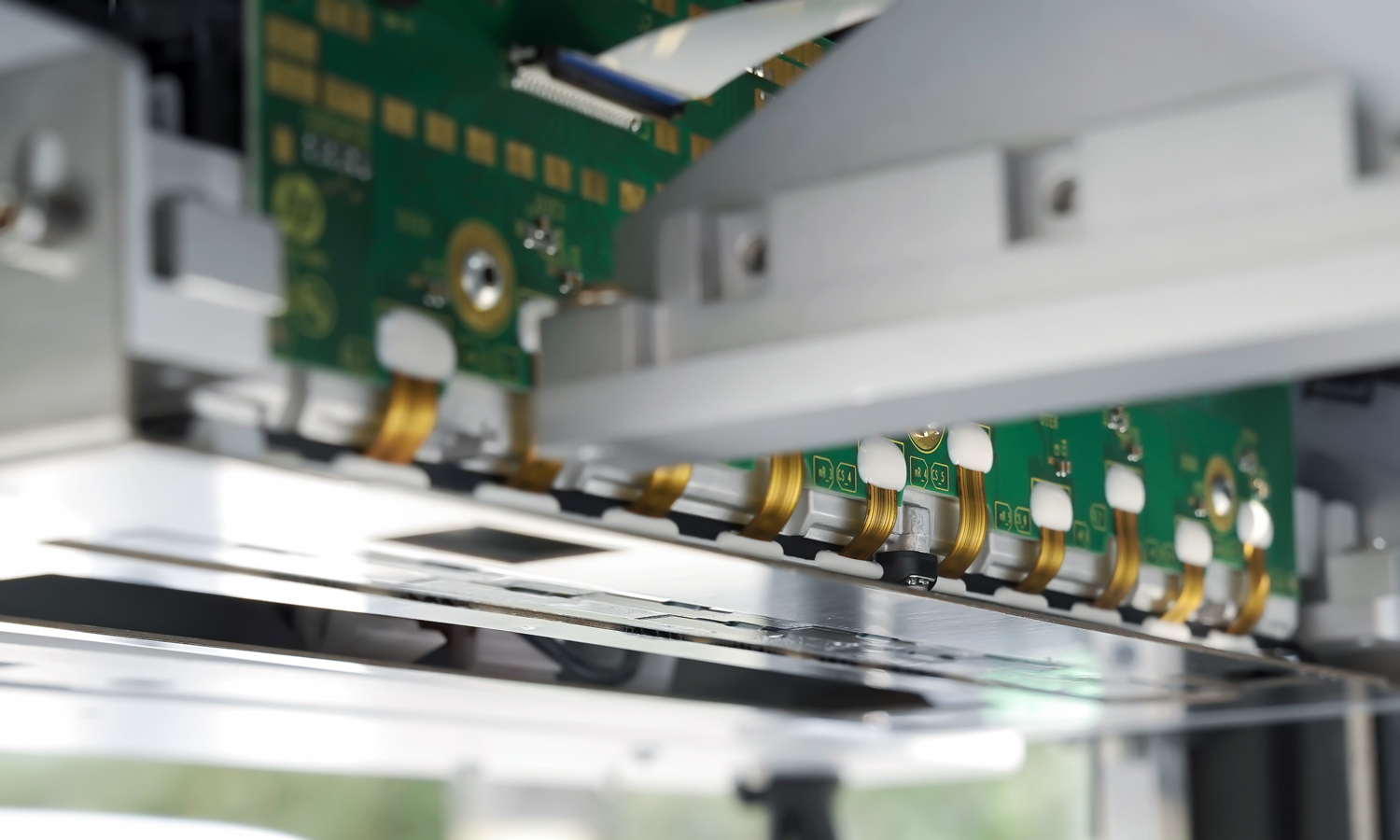
A thermal bubble-jet head fires ink by heating a thin-film resistor inside the nozzle chamber. The ink vaporises into a bubble, the bubble expands and pushes a droplet out, then collapses and the chamber refills. Because the ejection energy is delivered as heat to the fluid, the ink must be engineered to tolerate repeated thermal cycling.
That is why the documented ink list for HP PageWide single pass models is water-based: aqueous, dye and pigment on Cobra-691S, Cobra-691S AS B, Cobra-1209S and Cobra-1815S; edible ink added on Cobra-1209S, Cobra-1815S, Falcon-491S and Falcon-491S Pro; and water-based ink specified for Cobra-691S Max.
The resolution grid is consistent across these packaging models: 1200 × 300, 1200 × 400, 1200 × 600 and 1200 × 1200 dpi, with 1200 dpi as the highest cross-web figure. Speeds are quoted on a linear scale — 10–40 m/min on Cobra-691S AS B and Viper-391S, 10–35 m/min on Cobra-1209S and Cobra-1815S, 20–40 m/min on Cobra-691S Max and 10–17 m/min on Falcon-491S Pro.
Piezo (EPSON Micro Piezo and PrecisionCore)
A piezo head fires ink with a piezoelectric element that deforms when voltage is applied, displacing ink in the chamber. No vapour bubble is created and the fluid is not heated, which widens the range of chemistry the head can handle.
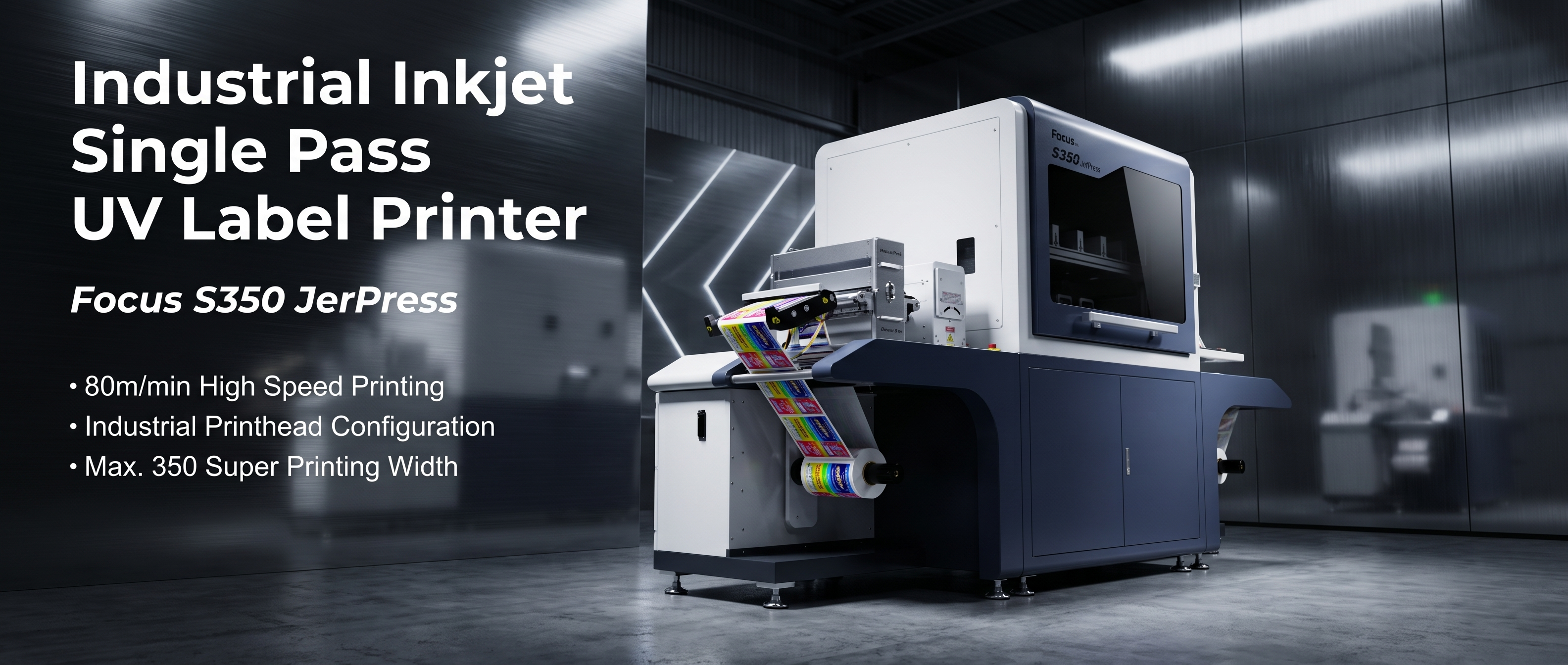
That latitude shows in the documentation. The Vesa-830A runs two EPSON i3200 U1 Micro piezo heads and lists UV curing ink alongside aqueous, dye, pigment and edible inks. The S350 Jetpress is specified for UV curing ink with LED UV curing and water cooling, running 10 or 15 EPSON S3200U1 or S3200U3 heads with inner recirculation. The NEXUS-350J takes UV type ink or water-based ink through 1–4 EPSON i3200-U1 heads. The Hydra-360S uses an EPSON i3200-U1HD head with UV curing or aqueous ink. The Acaleph-891S series is built around a head menu — SEIKO RC1536 and 2560, RICOH G5 and G6, XAAR 2002, TOSHIBA CF3 and CF6, EPSON i3200 U1, and KONICA — running UV curing ink, aqueous, pigment, dye and DTF ink.
Resolution follows a different pattern. Piezo models in this set use a 720 dpi cross-web grid but push higher in the feed direction: 720 × 1200, 720 × 1800 and 720 × 2400 dpi on Vesa-830A; 720 × 720, 720 × 1080 and 720 × 1440 dpi on NEXUS-350J; and 600 × 300, 600 × 600 and 600 × 1200 dpi on the Acaleph-891S series. Droplet control is variable — 3.5–12.5 pl with 2–4 greyscale on the i3200 family, at a jetting frequency of 21.6–43.2 kHz.
What the difference means on the shop floor
- Substrate first. Absorbent board, kraft paper and uncoated stock work with water-based chemistry. Non-absorbent BOPP, PET and PVC film needs UV curing ink that is fixed instantly by LED UV lamps, which is why UV appears on the piezo film, label and IML machines such as S350 Jetpress, Vesa-830A and NEXUS-350J.
- Compare like units. Thermal packaging machines are quoted in metres per minute. Piezo machines are quoted in metres per minute (S350 Jetpress, 20–80 m/min), in square metres per hour (Vesa-830A, 12–17 m²/h at 4-pass) or in pieces per hour (Hydra-360S, 40–120 pcs/hour). A 12–17 m²/h figure and a 40 m/min figure describe very different production realities.
- Resolution direction. 1200 dpi cross-web on a thermal array suits large-format graphics on board. 720 dpi cross-web with up to 2400 dpi in the feed direction suits fine text, barcodes and small-format labels.
- Inline finishing. Because UV ink cures on contact, piezo UV lines can carry inline die-cutting, lamination, foil transfer and slitting — as documented on NEXUS-350J with 0.05 mm die-cutting precision, 0–100 °C adjustable lamination temperature and 5 slitting knives.
The Five Parameters That Decide the Match
1. Print resolution
Set resolution from the artwork, not from the maximum in the brochure. Large carton graphics with solid brand colour and bold type are comfortable at 1200 × 300 or 1200 × 600 dpi. Barcodes, QR codes, batch codes and small-format label text need the finer end — 1200 × 1200 dpi on a thermal array, or 720 × 1200 dpi and above on a piezo array. Running a machine at its top resolution costs speed, so the real question is which resolution your worst-case artwork requires.
2. Print speed, and the unit it is quoted in
Speed is resolution-dependent on every model listed here, and the documentation says so explicitly: 10–40 m/min on Cobra-691S AS B and Viper-391S according to resolution; 10–25 m/min on Falcon-491S; 10–35 m/min on Cobra-1209S and Cobra-1815S according to resolution and configuration; and 20–40 m/min on Cobra-691S Max. Ask for the speed at your resolution and your ink coverage, not the headline maximum.
3. Ink compatibility
Ink chemistry is the hardest constraint in the entire specification. Build the list of inks your product genuinely needs — food-contact edible ink, water-based pigment for kraft board, UV curing ink for film and synthetic labels — and then filter machines by documented ink support. A catalogue that lists aqueous, dye, pigment, edible and UV across different models is not a licence to run all five in one machine.
4. Nozzle count and array width
Nozzle count tells you two things: how much redundancy the array carries, and how many heads must be stitched to cover the substrate. A single HP A4 PageWide head carries 42,240 nozzles and covers 210 mm; an HP A3 head carries 59,136 nozzles and covers 304 mm. Covering a 900 mm corrugated board therefore means stitching multiple A3 heads, as Cobra-1209S does with 1–3 A3 heads and Cobra-1815S with 1–5 A3 heads.
5. Head protection, media handling and support equipment
The head is the most expensive consumable in the machine, so protection architecture matters as much as raw specification. Documented protection and maintenance features include carriage anti-scratch kits across the HP PageWide models, automatic keep-wet cap stations with clean-flashing during printing and idle on Vesa-830A, NEXUS-350J and Hydra-360S, and ink circulation with white ink heating on S350 Jetpress.
Around the head, the supporting systems do the rest of the work: vacuum adsorption platforms, laser margin alignment (4–6 guideline marks on Cobra-691S, Cobra-691S AS B and Viper-391S Pro), automatic tension unwinding and rewinding, plasma or corona pretreatment for low-surface-energy film, and electronic web correction.
Step-by-Step: Matching a Print Head to a Packaging Job
- Classify the substrate by absorbency and thickness. Uncoated kraft board and corrugated paper absorb water-based ink readily; BOPP, PET, PVC and coated label stock do not. Documented media thickness ranges give a fast sanity check — Falcon-491S and Falcon-491S Pro accept up to 180 mm, Cobra-691S and Cobra-691S AS B up to 250 mm, and the Acaleph-891S series up to 300 mm.
- Shortlist the head family by ink chemistry. If your job needs UV curing ink, shortlist piezo configurations such as Vesa-830A, S350 Jetpress, NEXUS-350J, Hydra-360S or the Acaleph-891S series. If your job runs water-based pigment, dye, aqueous or edible ink on board and paper, the HP PageWide thermal bubble-jet models are the documented fit.
- Fix the resolution from the worst-case artwork. Take the smallest barcode, the finest rule line and the smallest type in the job, then choose the resolution step that renders them cleanly. Only then read the speed figure for that resolution step.
- Size speed, nozzle count and print width to throughput. Convert your daily output target into metres or pieces per shift, then check whether the configuration matches: a single A4 head covering 210 mm, a single A3 head covering 304 mm, or a stitched array covering 900 mm or 1800 mm.
- Confirm protection, pretreatment and post-press support. Verify head protection, cap station routine, tension control, margin laser alignment, and whether the line needs plasma, flame or corona pretreatment. If the process includes die-cutting, lamination, foil transfer or slitting, confirm whether those modules are inline or handled separately.
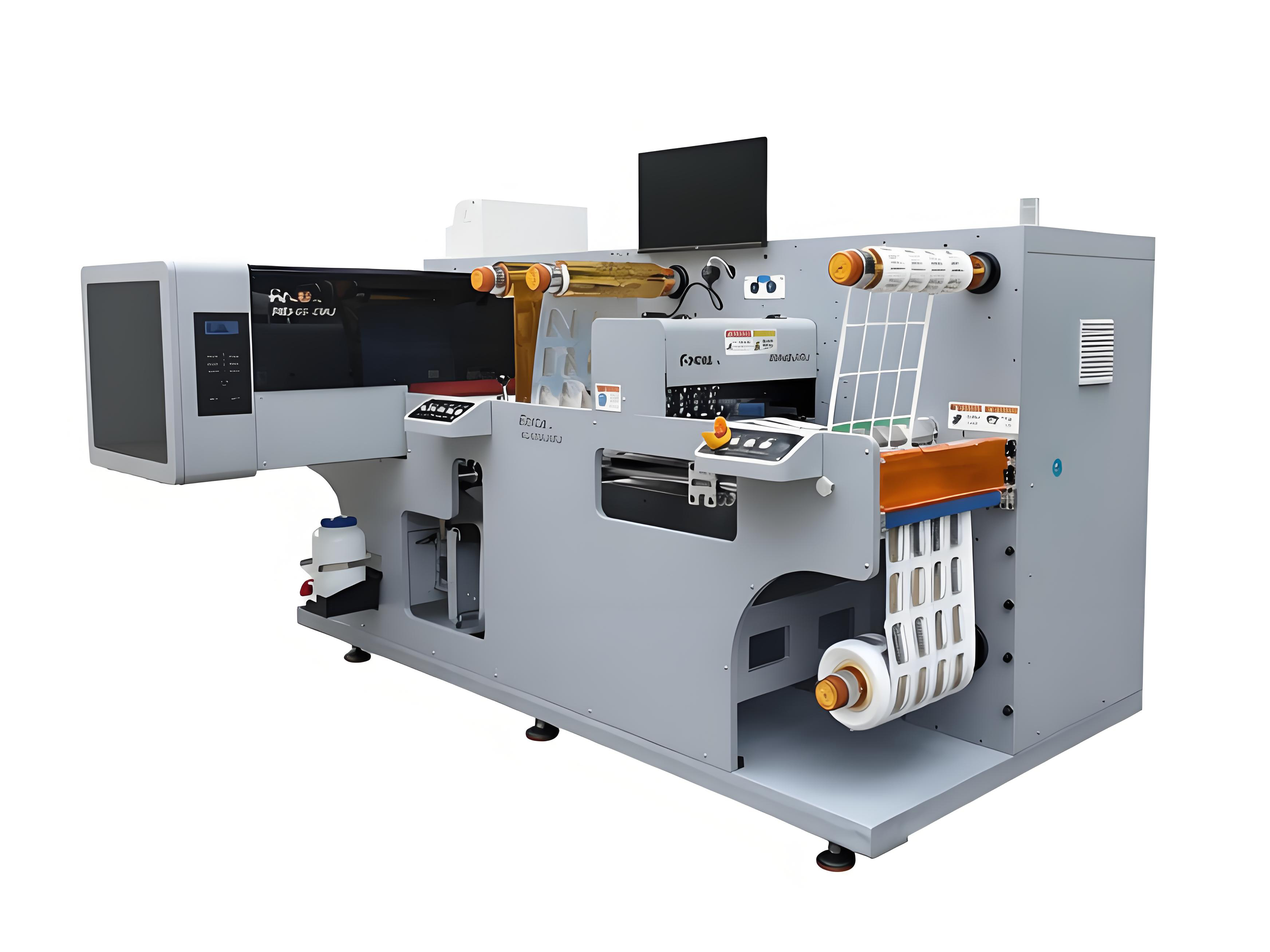
Verified Single Pass Printer Comparison: Thermal Bubble-Jet vs. Piezo
The table below sets out only documented model facts. Read it as a specification map, not a ranking: the right column depends on your substrate, artwork and output target.
| Model | Head technology | Documented print head | Documented max resolution | Documented print speed | Documented ink types |
|---|---|---|---|---|---|
| Viper-391S / Viper-391S Pro | HP PageWide Thermal Bubble-Jet | 1 × HP A4 or A3 PageWide | 1200 × 2200 dpi | 10–40 m/min | Aqueous, dye, pigment, edible |
| Cobra-691S AS B | HP PageWide Bubble-Jet | 1–2 × HP PageWide | 1200 × 1200 dpi | 10–40 m/min | Aqueous, dye, pigment |
| Cobra-691S | HP PageWide Bubble-Jet | 1–2 × HP PageWide | 1200 × 1200 dpi | 10–40 m/min | Aqueous, dye, pigment |
| Cobra-691S Max | HP thermal bubble, HP A3/A4 heads | 1–3 × HP A3 or A4 | 1200 × 1200 dpi | 20–40 m/min | Water-based ink |
| Cobra-1209S | HP PageWide Bubble-Jet | 1–3 × HP A3 | 1200 × 1200 dpi | 10–35 m/min | Aqueous, dye, pigment, edible |
| Cobra-1815S | HP PageWide Bubble-Jet | 1–5 × HP A3 | 1200 × 1200 dpi | 10–35 m/min | Aqueous, dye, pigment, edible |
| Falcon-491S Pro | HP PageWide Bubble-Jet | HP A4 / A3 / 841 PageWide | 1200 × 1200 dpi | 10–17 m/min | Aqueous, dye, pigment, edible |
| Vesa-830A | EPSON MEMS PrecisionCore Micro Piezo | 2 × EPSON i3200 U1 | 720 × 2400 dpi | 4-pass 12–17 m²/h | UV curing, aqueous, dye, pigment, edible |
| S350 Jetpress | EPSON piezo with inner recirculation | 10 or 15 × EPSON S3200U1 / S3200U3 | 1200 × 600 dpi | 20–80 m/min | UV curing ink |
| NEXUS-350J | EPSON piezo | 1–4 × EPSON i3200-U1 | 720 × 1440 dpi | 1–2 m/min | UV type ink, water-based ink |
| Hydra-360S | EPSON Micro Piezo | EPSON i3200-U1HD | 720 × 1200 dpi | 40–120 pcs/hour | UV curing ink, aqueous ink |
| Acaleph-891S series | Micro Piezo, multi-head menu | SEIKO RC1536/2560, RICOH G5/G6, XAAR 2002, TOSHIBA CF3/CF6, EPSON i3200 U1, KONICA | 600 × 1200 dpi | 10–40 m/min | UV curing, aqueous, pigment, dye, DTF |
The nozzle geometry behind those resolutions is just as decisive when you plan a stitched array:
| Configuration | Documented nozzle count | Documented print width / format |
|---|---|---|
| HP A4 PageWide head (Viper-391S A4, Falcon-491S, Falcon-491S Pro, Cobra-691S, Cobra-691S AS B) | 42,240 nozzles (4,224 × 10 rows) | 210 mm per head |
| HP A3 PageWide head (Viper-391S / Pro A3, each head of Cobra-1209S and Cobra-1815S) | 59,136 nozzles (4,224 × 14 rows) | 304 mm per head |
| EPSON i3200-U1 (NEXUS-350J) | 3,200 nozzles (400 × 8 rows) per head | Roll media up to 350 mm wide |
| EPSON i3200 U1 × 2 (Vesa-830A) | 6,400 staggered nozzles (400 × 16 rows) | 420 mm × unlimited length |
Two observations follow directly from the documented facts. First, cross-web resolution is higher on the thermal arrays (up to 1200 dpi) while feed-direction resolution is higher on the piezo arrays (up to 2400 dpi on Vesa-830A). Second, UV curing ink appears on piezo-head configurations in this data set, while the HP PageWide packaging models are documented with water-based chemistry.
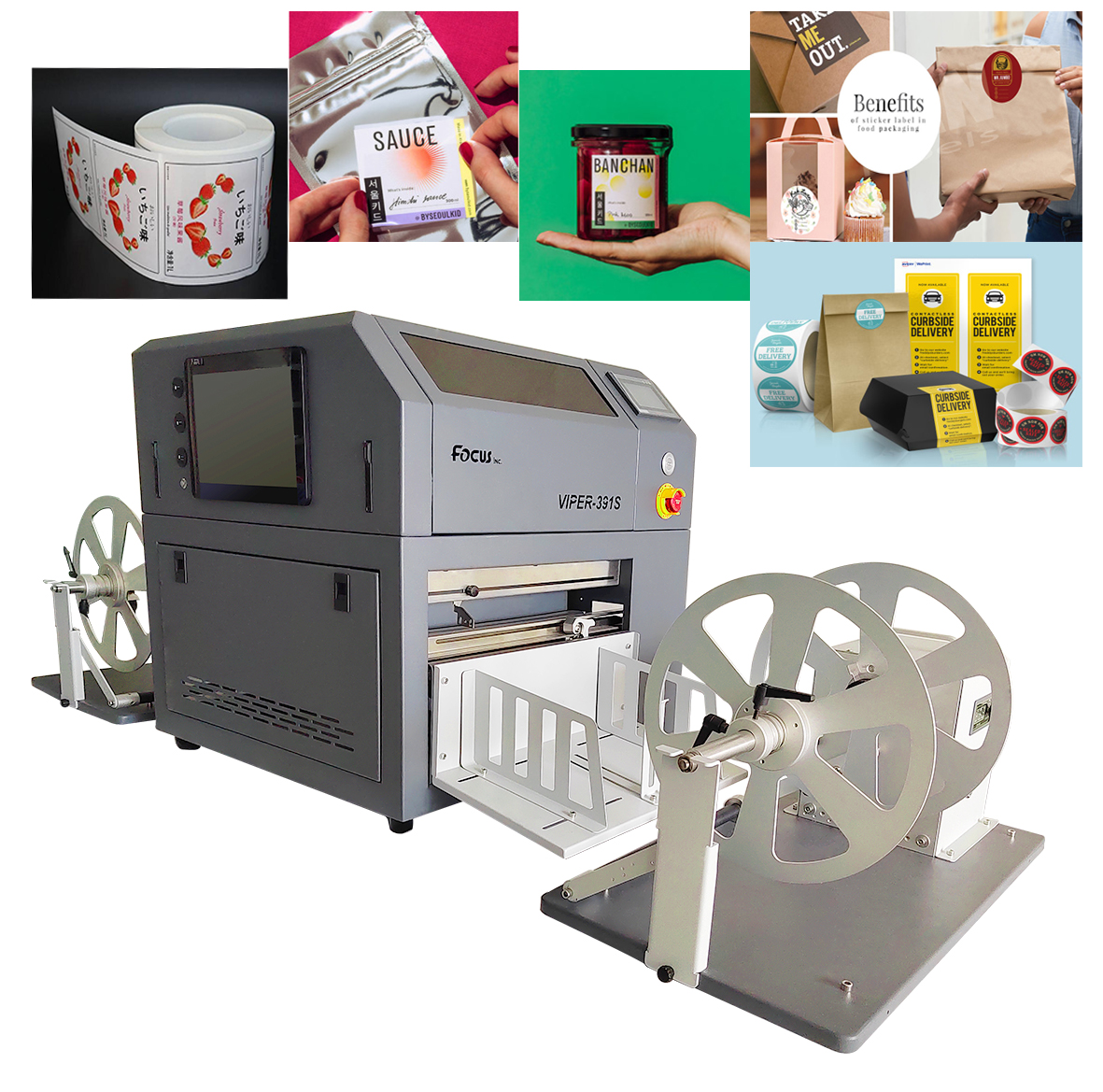
Use Cases: Which Head Family Fits Which Packaging Format
Corrugated board, cartons and honeycomb panels
Wide, absorbent and often printed with bold brand graphics, corrugated is the natural territory of thermal bubble-jet arrays. Cobra-1209S handles 1230 mm load width with 1–3 A3 heads and up to 60 mm board thickness; Cobra-1815S extends load width to 1800 mm with 1–5 A3 heads; both are documented at 10–35 m/min with aqueous, dye, pigment and edible inks and automatic media feeding.
Paper bags, cups and food packaging
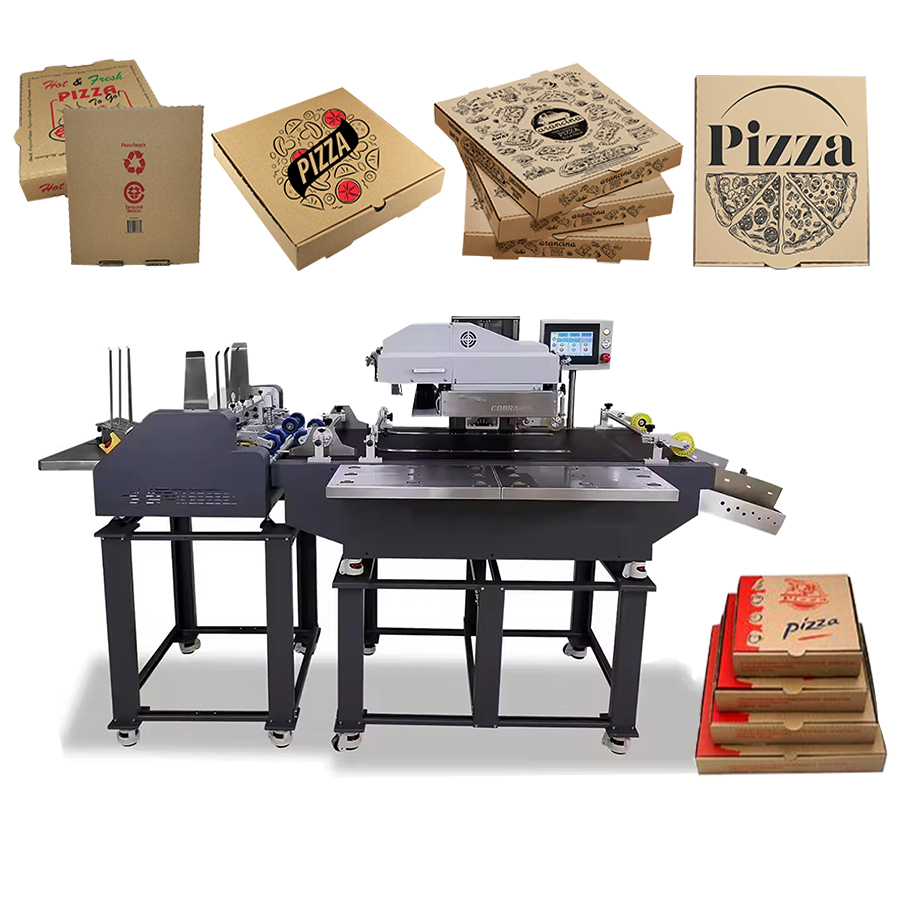
Paper bag, cup sleeve, coffee bag and pizza box work suits mid-format thermal machines that accept a wide range of uncoated and coated paper. Cobra-691S AS B is documented across corrugated paper, paper bags, cup fans, cups sleeves, postcard, breads, cookies, cake pads, coated paper, shopping bags, coffee bags, paper cups, envelopes, cards, napkins and tissue, at 10–40 m/min with up to 1200 mm load width when side flanks are fitted.
Labels, film and IML
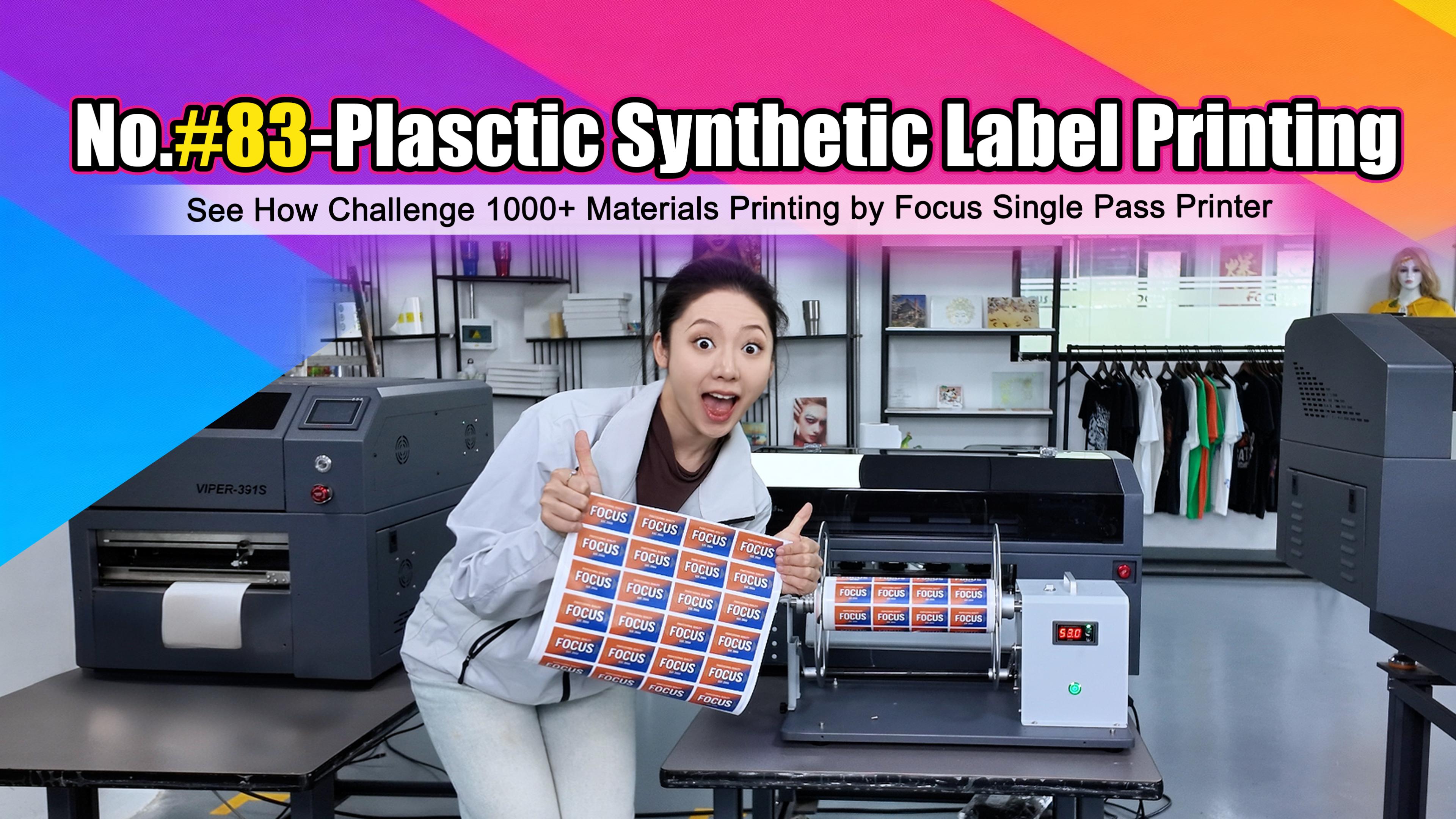
Non-absorbent label and film stock points to piezo with UV curing ink. Vesa-830A prints roll film, paper, canvas and leather with PE, PP, PET and PVC label and film media, BOPP and vinyl synthetics, up to 420 mm print width. S350 Jetpress targets in-mould label manufacturing with 235 mm print width and media thickness from 0.02 mm to 0.8 mm, extendable to 3 mm. NEXUS-350J adds inline lamination, die-cutting and slitting for finished label production. For paper sticker work that does not need UV, Viper-391S and Viper-391S Pro run inkjet-coated paper and synthetics at 10–40 m/min with 500 ml refillable tanks per colour.
Containers and cylindrical packaging
Printing on the side wall of cups, bottles and containers uses a different mechanical logic but the same head families. Hydra-360S handles cylinders and tapers of 42–135 mm diameter and up to 240 mm length with an EPSON i3200-U1HD piezo head at 720 × 900 or 720 × 1200 dpi and 40–120 pieces per hour, using UV curing or aqueous ink. The Acaleph-891S Side Printer covers side-wall printing with a documented effective print area from 33.8 mm to 108 mm, extendable with customised configurations, at 10–40 m/min.
Frequently Asked Questions
Which inks are compatible with thermal bubble-jet and piezo single pass print heads?
In this documented range, HP PageWide thermal bubble-jet models are specified for water-based chemistry: aqueous, dye and pigment on Cobra-691S, Cobra-691S AS B, Cobra-1209S and Cobra-1815S; edible ink added on Cobra-1209S, Cobra-1815S, Falcon-491S and Falcon-491S Pro; and water-based ink on Cobra-691S Max. UV curing ink is documented on piezo-head models: Vesa-830A (which also lists aqueous, dye, pigment and edible), S350 Jetpress, NEXUS-350J (UV type or water-based) and Hydra-360S (UV curing or aqueous). The Acaleph-891S series adds pigment, dye and DTF ink on piezo heads. The practical rule is substrate-led: absorbent paper and board run well on water-based chemistry, while non-absorbent film and synthetic label stock need UV curing ink that is fixed instantly.
What resolution and speed can a single pass printer realistically reach?
Thermal bubble-jet packaging models are documented at 1200 × 300, 1200 × 400, 1200 × 600 and 1200 × 1200 dpi, with speeds of 10–40 m/min on Cobra-691S AS B and Viper-391S, 20–40 m/min on Cobra-691S Max, 10–35 m/min on Cobra-1209S and Cobra-1815S, and 10–17 m/min on Falcon-491S Pro. Piezo models use a different resolution grid: 720 × 1200 to 720 × 2400 dpi on Vesa-830A, 720 × 720 to 720 × 1440 dpi on NEXUS-350J, and 1200 × 600, 900 × 600 or 600 × 600 dpi on S350 Jetpress at 20–80 m/min. Because every one of those speed figures is resolution-dependent, confirm the speed at your target resolution rather than at the machine maximum.
What drives the running cost of a single pass printer?
The documented cost drivers are ink volume, ink tank capacity and head consumption. Cobra-691S Max lists a consumable cost of 0.1–0.2 RMB per square metre with 2.5 L of water-based ink per colour across four colours. Viper-391S uses 500 ml refillable tanks per colour; Cobra-1209S and Cobra-1815S use 1500 ml per colour; Falcon-491S and Falcon-491S Pro use 250 ml per colour; the Acaleph-891S series uses 1500 ml per colour with a dual-filter negative pressure ink supply. Ink yield for colour inkjet systems is standardised under ISO/IEC 24711 and ISO/IEC 24712, so cost per square metre should be calculated from measured ink consumption at your real coverage — not from a brochure figure.
Can I validate the print head technology on my own packaging material before ordering?
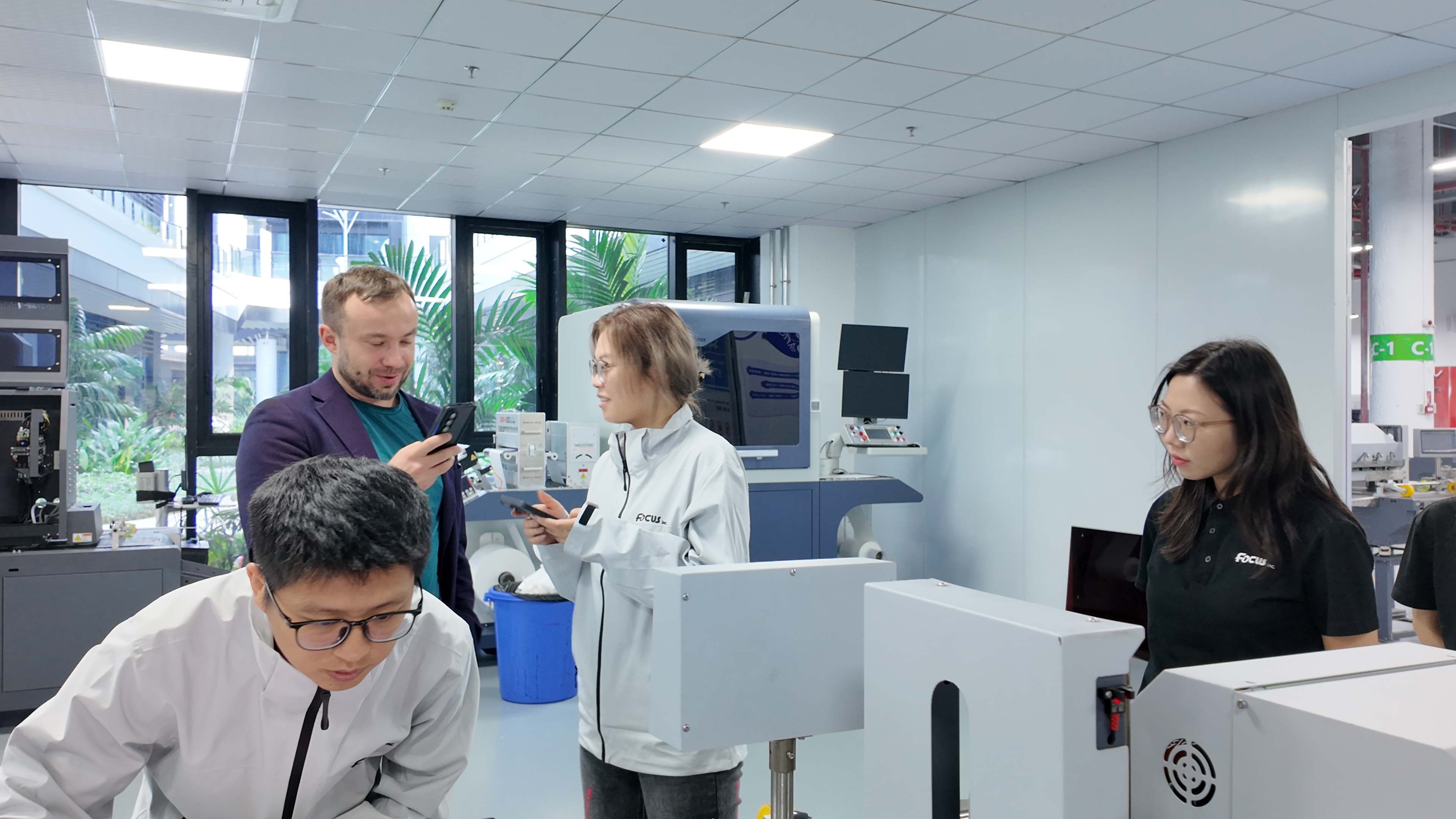
Yes, and testing on real material is the only reliable validation. Because the two head families accept different ink chemistry and behave differently on absorbent versus non-absorbent stock, a sample run should use your actual substrate: corrugated or kraft board, coated label stock, BOPP or PET film, kraft bags, or non-woven fabric. Ask for printed samples and, where possible, on-site testing so that ink adhesion, colour reproduction and registration are confirmed on the material the machine will actually run — FocusInc receives customer visits for sample testing at its facility for exactly this purpose.
Who are the single pass printer manufacturers in China, and what should be verified?
China produced more than 88 billion square metres of corrugated board in 2024 (China Packaging Federation / Dataintelo), and that volume supports a deep manufacturing base for single pass printer production. Shanghai Focus Industrial Co., Ltd. (FocusInc) is one such manufacturer: established in 2008, operating a 35,000 m² facility owned since 2018, with roughly 45 staff, a 6-engineer R&D team, 800 units of annual capacity and 95% of sales exported to the EU, USA, Mexico, Brazil, Chile, Australia, Canada and the UK. When screening any Chinese supplier, verify five things: the documented head model and its supply channel; ink chemistry matched to your substrate; the actual CE technical file if the machine ships to the EU, covering the Low Voltage Directive 2014/35/EU and the EMC Directive; spare head and consumable availability; and whether the supplier will print samples on your own material before the order. To start that validation, send your substrate specification and artwork to info@focusdgt.com.
Next Step: Test the Head on Your Own Substrate
Print head technology is not a brand preference — it is a compatibility decision between an ink, a substrate and a production target. Thermal bubble-jet gives you high cross-web resolution and a mature HP PageWide supply chain for water-based printing on board, carton and paper. Piezo gives you chemistry latitude, including UV curing ink, plus feed-direction resolution and greyscale droplet control for labels, film, containers and inline-finished work.
Shortlist one machine from each family, print the same artwork on the same substrate on both, and compare ink adhesion, resolution at the smallest type in the job, and real output per shift. That single test answers more than any specification table.
Talk to FocusInc about your packaging project
FocusInc builds single pass printing systems for corrugated, carton, paper bag, label, film, container and decorative board applications, with documented models for both HP PageWide thermal bubble-jet and EPSON piezo configurations. Share your substrate, artwork and daily output target, and the team will recommend the configuration that fits.
Email: info@focusdgt.com | Tel / WhatsApp: +86 177 6513 2139 | Web: www.focusincprinter.com
Full factory and capability overview (PDF): Download the FocusInc Factory Intro brochure.
Have Questions or Need More Details?
Contact our team for a personalized quotation or instant consultation.
Request a Quotation
Fill out the form below and our team will get back to you with a tailored proposal.
WhatsApp Direct Chat
Prefer to chat in real-time? Message us on WhatsApp for instant assistance & quick answers.
- Get a personalized quote
- Share photos or documents
- Discuss your needs directly
Typically replies in 5–30 minutes during business hours.