
Single Pass Printer 101: What to Compare Before You Buy
If your company prints packaging—corrugated boxes, paper bags, cartons, or labels—you have probably seen the phrase single pass printer and wondered what makes it different from a normal inkjet machine. A single pass printer is an industrial digital inkjet system in which the printhead is fixed across the material width while the substrate moves underneath at constant speed. The image is applied in one movement, unlike scanning printers, where the print carriage shuttles from side to side and builds the image over multiple passes.
Short answer: in packaging production, a single pass printer uses fixed, wide printheads to print complete color images in one pass of the substrate. This architecture is what makes high-speed, short-run, plate-free packaging printing practical for many factories. The technology is available in sheet-fed packaging printers, corrugated printers, roll-to-roll label machines, and UV industrial systems.
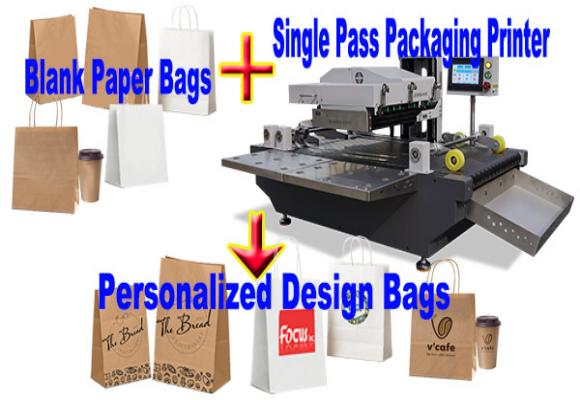
The Problem: Why Conventional Packaging Printing No Longer Fits Every Order
Most packaging converters grew up with flexographic or offset lines. These analog processes are efficient when a brand orders very large quantities of one design. But the same workflows create friction for short runs, seasonal packaging, regional versions, e-commerce packaging, and variable data such as serial numbers or QR codes. Plates must be made, cylinders stored, ink matched, and setups scheduled. If the buyer needs 500 boxes with a new design today and another 500 next week, analog printing is often slow and expensive per order.
Multi-pass inkjet solved part of this problem because it is plate-free and digital. It remains limited, however, by printhead travel: the carriage moves, stops, reverses, and repeats, so output speed is lower than most packaging lines need. That speed gap created commercial demand for single pass digital inkjet, where the material itself moves at a constant speed under a wide fixed printhead.
Industry Background: Digital Packaging Printing Is Projected to Grow Rapidly
Third-party market analysts connect digital finishing and printing with a structural shift in packaging purchasing. Zion Market Research estimated the global digital printing for packaging market at USD 31.64 billion in 2023, with a projection of USD 75.55 billion by 2032. Straits Research reported in 2025 that inkjet digital printers accounted for the largest segment share—42.5%—of the digital printer market. China alone produced more than 88 billion square meters of corrugated board in 2024, according to reporting cited by China Packaging Federation and Dataintelo. These numbers indicate that packaging converters, especially corrugated producers, now have both a reason and a scale to look seriously at high-speed digital inkjet.
This market context helps explain the second question buyers ask: why does the term “single pass” appear so often next to corrugated printing, paper bag printing, non-woven bag printing, and roll-to-roll labels? Because those applications all have one common need: continuous, repeatable output that follows the pace of packaging production.
Detailed Solution: How Single Pass Inkjet Is Built and Deployed
FocusInc, officially Shanghai Focus Industrial Co., Ltd., is a China-based manufacturer that has built its product strategy around this gap. Founded in 2008, the company began owning its factory in 2018 and was certified as a national high-tech enterprise in 2022. FocusInc states its annual production capacity at 800 units and employs roughly 45 staff, including 6 R&D engineers. Its product matrix spans from multi-pass scanning printers to high-speed single pass printers.
Core Architecture
In the packaging-focused Cobra models, FocusInc uses HP PageWide bubble-jet printing technology. The image is jetted through a fixed printhead assembly rather than a moving carriage. On the Cobra-691S packaging printer, each HP PageWide printhead contains 42,240 nozzles, arranged in rows of 4,224 nozzles across 10 rows per head. On wider A3-head machines such as the Cobra-1209S, one HP A3 PageWide printhead contains 59,136 nozzles (4,224 nozzles in 14 rows). Resolution options commonly start at 1200×300 or 1200×400 dpi and extend to 1200×1200 dpi, giving the operator freedom to favor speed or detail on any order.
Because the printhead does not scan, throughput comes from the conveyor. Cobra packaging printers run at 10–40 meters per minute, depending on model, resolution, and media. Paper bag and carton production can therefore be handled as a continuous flow of sheets rather than a start-and-stop movement.
Read the Width and Height Before Reading the Speed
The term single pass describes the printing action, but it does not describe how wide the machine can print. Buyers need to match print width, feed width, and material thickness to their actual products before comparing line speed.
- Print width: an HP A4 class PageWide head prints about 210 mm of width. An A3 class head prints about 304 mm of width. A Cobra-691S can be configured with a single head or two heads for 210 mm or 420 mm printing width respectively. Wide corrugated machines use multiple A3 heads to reach a 900 mm print area, for example in the Cobra-1209S and Cobra-1815S models.
- Feed width: material width is larger than printable width. Cobra-691S feeds up to 600 mm without side flanks and as wide as 1,200 mm with side flanks. Cobra-1209S feeds 1,230 mm-wide sheets; Cobra-1815S feeds 1,800 mm-wide sheets. If you buy corrugated board in European sizes, this is the specification to check first.
- Maximum material thickness: desktop packaging machines such as the Falcon-491S accept up to 180 mm thick products. Cobra-691S accepts up to 250 mm. Cobra-691S Max accepts 0–55 mm with a customizable range. Wide corrugated printers accept up to 60 mm, which protects the fluting structure of the board.
Inks Are Part of the Specification
Single pass digital printers are not limited to one ink chemistry. FocusInc packaging and label printers specify aqueous, dye, pigment, or edible inks depending on the application:
- Aqueous and pigment inks are common for paper substrates, including corrugated stock, kraft paper bags, cardboard, and food packaging paper.
- Edible inks are supported on select single pass printers used for direct food printing. This is not a marketing claim; these configurations are intended for bakery and food-contact scenarios and must respect FDA and EU food contact safety rules.
- UV-curing inks are used in roll-to-roll label and industrial single pass systems, especially when the substrate is non-absorbent, such as BOPP, PET film, PVC sheet, or in-mold-label film.
Ink delivery also matters for uptime. Cobra packaging printers use refillable ink tanks rather than sealed cartridges. The Cobra-691S and Cobra-691S AS B use 500 ml tanks per color; Cobra-1209S and Cobra-1815S use 1,500 ml tanks per color; Cobra-691S Max carries 2.5 liters per color in a four-color CMYK configuration.
How to Match a Single Pass Printer to Your Production: Step by Step
Step 1: List the largest products you must print
Identify maximum print width and maximum board caliper. Measuring these two values first prevents the most common selection error: buying a machine that is fast enough but too narrow for the box blanks or bags in your order book. If your largest corrugated blank is 1,200 mm wide, a Cobra-1209S feeding 1,230 mm board is more appropriate than a 600 mm-feed model.
Step 2: Check whether the order book is mostly paper, film, or pre-made objects
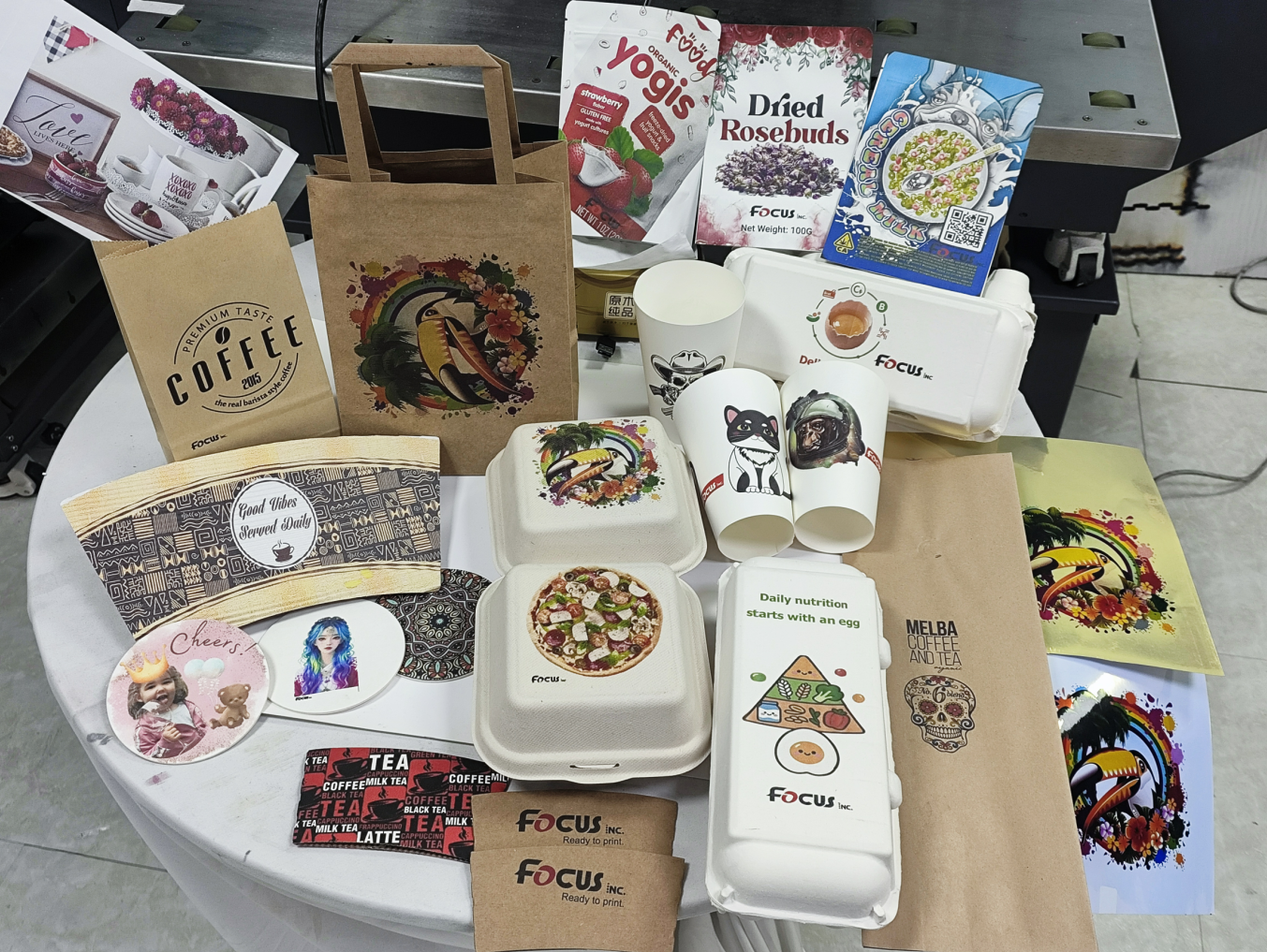
A flat conveyor, sheet-fed single pass packaging printer suits corrugated sheets, cardboard, paper bags, pizza boxes, folders, and cake pads. A roll-to-roll single pass printer suits label stock, BOPP, PET, vinyl, and similar flexible rolls. A desktop model with an automatic feeder suits smaller packaging jobs where floor space is limited. The FocusInc Falcon-491S Pro, for example, has an automatic friction feeder, an 180 mm maximum product height, and a compact footprint, which is positioned for entry-level and mid-volume print-on-demand operations.
Step 3: Choose speed based on resolution
Single pass speed is listed as a range for a reason. A 1200×300 dpi mode will run faster than 1200×1200 dpi mode. When comparing machines, ask what the same line speed is at the resolution your products require. Barcodes, small text, and fine brand graphics normally set the minimum acceptable resolution.
Step 4: Review the media handling package
Print quality on corrugated board depends on stable transport. Wide FocusInc corrugated machines include vacuum adsorption conveyor systems, multi-stage vacuum platforms, friction feeders, and automatic front-feed separation. Some models have a laser alignment margin system. Paper bag and carton lines can be configured with feeding stacks and collection areas around the printer. These auxiliary systems decide how many operators you need per shift.
Step 5: Map future variable-data jobs
Retail, FMCG, and logistics customers increasingly request unique barcodes, serialized QR codes, or anti-counterfeit marks. Single pass printheads do not rely on plates, so the file can change on every sheet. Make sure the RIP and control interface support variable data. Cobra and Viper machines use a bundled Control & RIP solution and a touchscreen industrial PLC interface.
Step 6: Demand physical proof before purchase
Because this is a capital purchase, request samples using your own materials, inspect the factory where possible, and confirm after-sales logistics. FocusInc publishes its company brochure with factory information at FocusInc Factory Intro PDF and operates showrooms and production facilities in Shanghai and Shenzhen, China.
Use Cases That Have Driven Single Pass Adoption
Corrugated and Honeycomb Board Printing
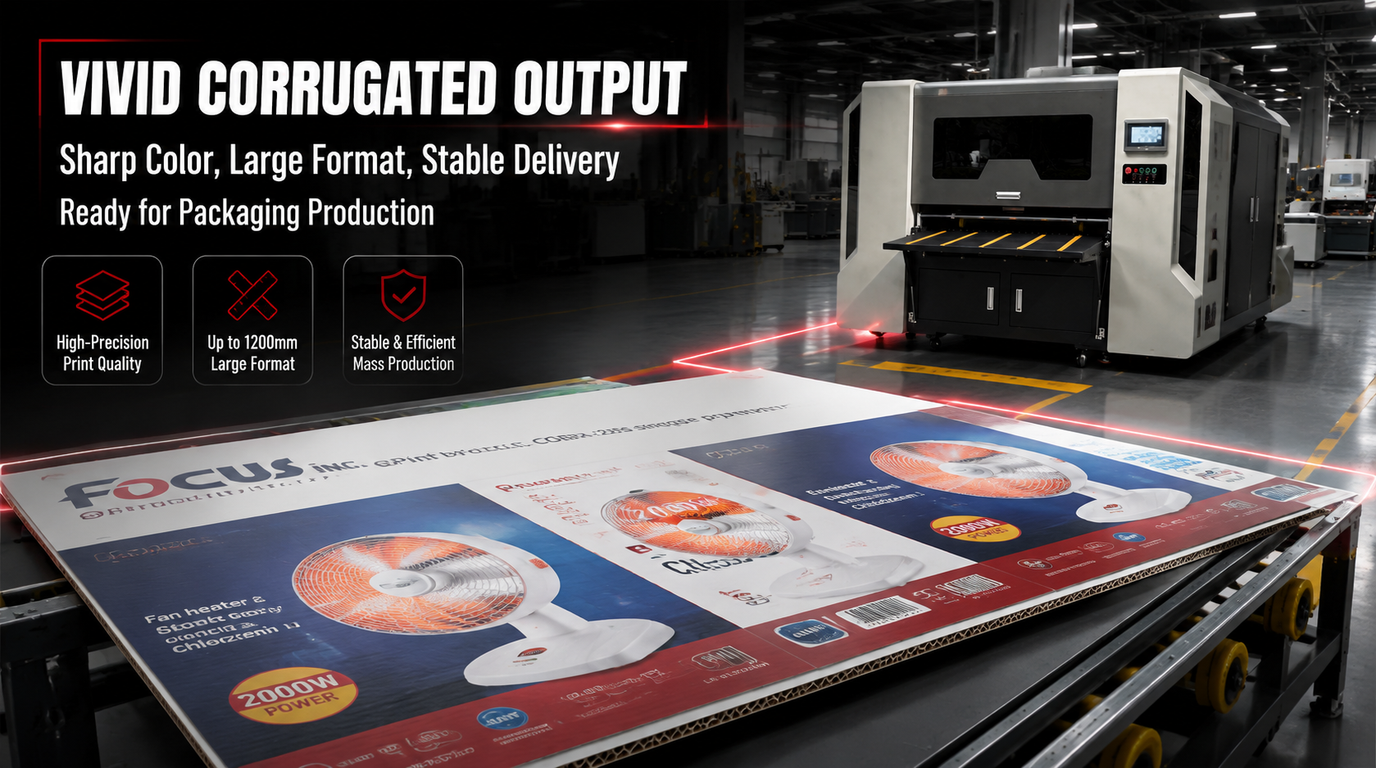
Large-format corrugated converters use single pass printers to replace plates for short-run shipping boxes, decorated e-commerce packaging, and industrial honeycomb board. Models such as the Cobra-1209S support 1,230 mm loading and 900 mm print width with 60 mm maximum thickness. At 10–35 meters per minute, this suits continuous batch production. The same machine family has an 1,800 mm-loading variant, the Cobra-1815S, whose gross weight is 1,880 kg and which requires 220 V single-phase 50 Hz power.
Paper Bags, Shopping Bags, and Food Packaging Blank Stock
Single pass paper bag printers can print on pre-made kraft punch bags, shopping bags, coffee bags, pizza boxes, and other folded packaging in a single pass. The Cobra-691S specification lists corrugated paper, pizza boxes, shopping bags, coffee bags, paper cups, envelopes, cards, napkins, and tissue among supported media. Because the process is digital, a converter can accept one design and immediately switch to the next without physical plates.
Non-Woven Shopping Bags
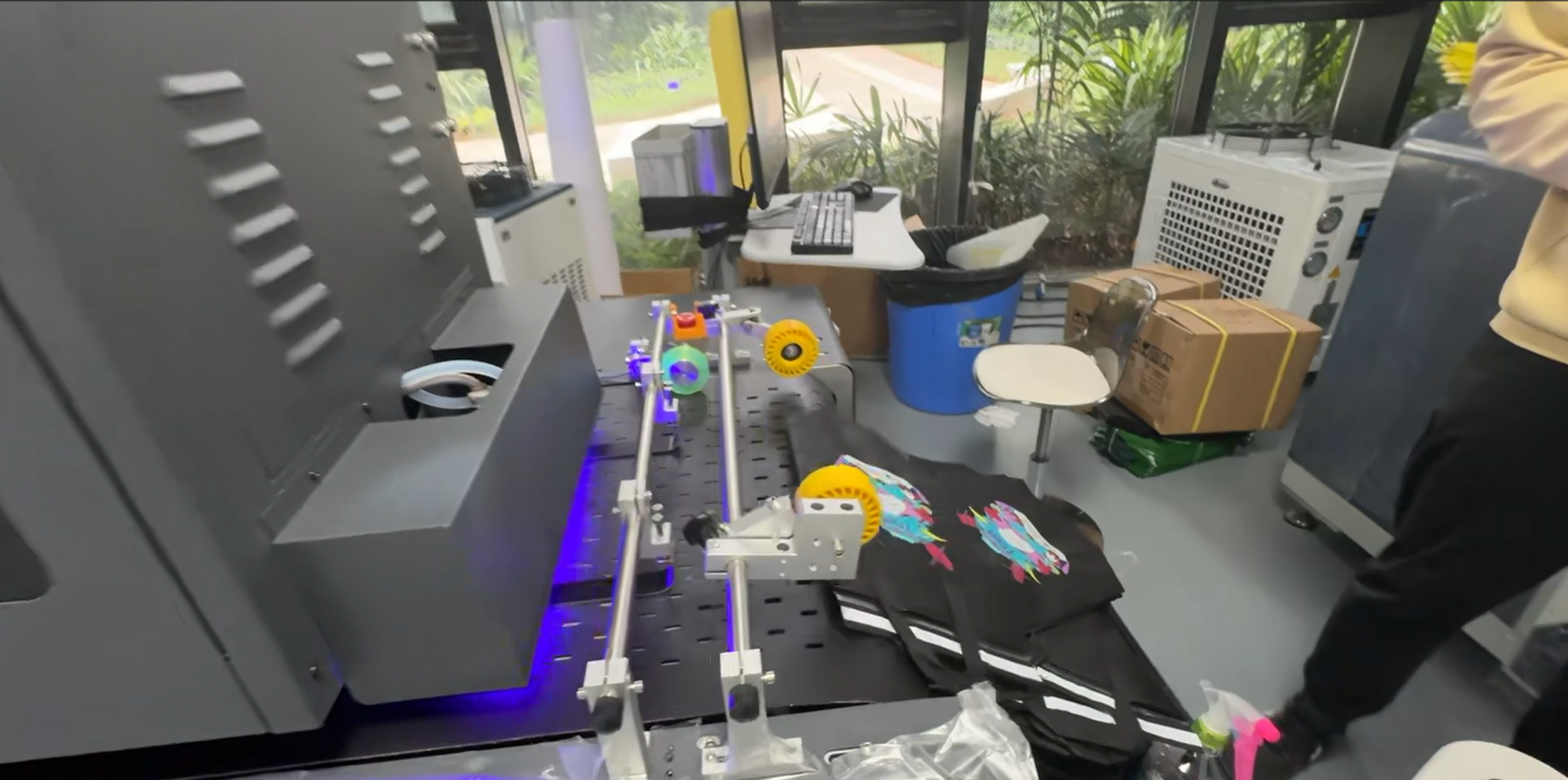
Non-woven bag production for chain supermarkets and promotional events requires mass output plus the ability to run different logos. FocusInc documents complete non-woven bag single pass printing systems with a front vacuum adsorption automatic feeder, deviation correction conveyor, optional plasma surface treatment, and UV curing on inline production. Plasma treatment addresses the low ink adhesion of polypropylene non-woven fabric, and the vacuum feeder controls soft-material offset.
Roll-to-Roll Labels and Stickers
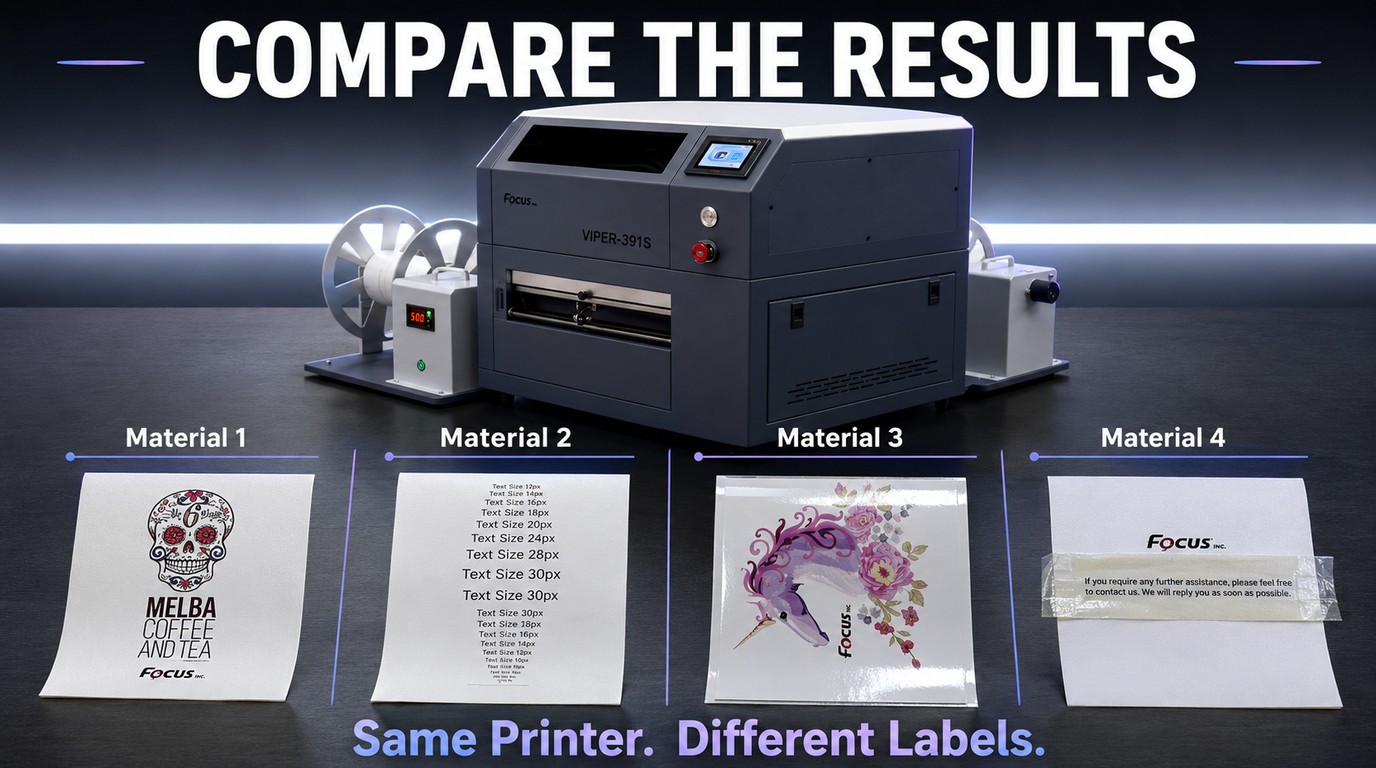
For label converters, the Viper-391S Pro and Viper-391S are roll-to-roll single pass label printers using HP PageWide thermal bubble-jet technology. They handle inkjet-coated paper and synthetics such as BOPP, vinyl, and PET, glossy or matte. The A4 version prints 210 mm wide; the A3 version prints 304 mm wide. Both specify speeds of 10–40 m/min depending on resolution. For higher-speed UV film label and IML work, the S350 Jetpress uses EPSON S3200 printheads and is rated at 20–80 m/min with 235 mm of print width, UV LED curing, and water circulation cooling.
Food-Contact and Edible Printing
In bakery and food-processing settings, FocusInc documents configurations for direct printing on finished food with edible ink and for printing cake pads or food trays. These jobs run on food-grade conveyor platforms and require the selected ink system to comply with FDA and EU food-contact rules. A single pass model makes this commercially attractive because decoration can be applied inline without cutting continuous sheets or mounting printing plates. For napkin producers, single pass printers can print roll tissue or sheet napkins through an automatic feeding arm, with downstream collection, counting, and stacking systems.
Industrial Panels and Containers
Beyond packaging, the same one-pass logic applies to PVC decorative panels, door skin sheets, skirting boards, and container side walls. The Acaleph-891S series and its Side Printer variant are UV single pass industrial systems used for sheets and formed containers. Important in these cases is pre-treatment: plasma, corona, or flame units may be installed upstream when the substrate has low surface energy.
Comparison Table: FocusInc Single Pass Packaging Configurations
The table below summarizes documented FocusInc models commonly researched under “single pass printer,” “single pass carton printer,” “single pass printer for corrugated printing,” and “single pass box printer.” All values come from published FocusInc specifications; compare them against your required print area and material thickness.
| Parameter | Cobra-691S | Cobra-691S Max | Cobra-1209S | Cobra-1815S |
|---|---|---|---|---|
| Positioning | Packaging sheets, bags, boxes, and board | Paper bag, paper cup, and packaging print-on-demand | Corrugated / cardboard / honeycomb board | Wide corrugated / honeycomb production |
| Printhead | 1 or 2 HP PageWide heads; 42,240 nozzles per head | 1–3 HP A3/A4 printheads | 1–3 HP A3/A4 PageWide heads; 59,136 nozzles per A3 head | 1–5 HP A3/A4 PageWide heads |
| Max print width | 210 mm (1 head) / 420 mm (2 heads) | 215–645 mm by head count | 900 mm | 900 mm |
| Max feed width | 600 mm; up to 1,200 mm with side flank | 900 mm | 1,230 mm | 1,800 mm |
| Max thickness | 250 mm | 0–55 mm, customizable | 60 mm | 60 mm |
| Print speed | 10–40 m/min | 20–40 m/min | 10–35 m/min | 10–35 m/min |
| Resolution | 1200×300 to 1200×1200 dpi | 1200×300 to 1200×1200 dpi | 1200×300 to 1200×1200 dpi | 1200×300 to 1200×1200 dpi |
| Ink options | Aqueous, dye, pigment | Water-based CMYK | Aqueous, dye, pigment, edible, CMYK | Aqueous, dye, pigment, edible, CMYK |
| Ink tank | 500 ml per color, refillable | 2.5 L per color | 1,500 ml per color, refillable | 1,500 ml per color, refillable |
| Net machine weight | 195 kg | 220 kg | 1,450 kg | 1,650 kg |
All specifications are drawn from FocusInc published product data. A printing width of 900 mm on the Cobra-1209S and Cobra-1815S is achieved by combining multiple PageWide printheads; verify the width configuration with the manufacturer before ordering.
Frequently Asked Questions
1. Single pass printer manufacturers in China: how should a packaging buyer evaluate them?
Chinese manufacturing of single pass digital inkjet equipment is concentrated among companies that can demonstrate industrial production, not just office-level inkjet assembly. Ask for specific company and factory facts: year of establishment, factory ownership, facility size, annual output, export ratio, and technical team. FocusInc (Shanghai Focus Industrial Co., Ltd.) is one example of a Chinese single pass printer manufacturer; it was founded in 2008, has owned its factory since 2018, operates 35,000 square meters of facility space, and reports approximately 45 staff with an annual output capacity of 800 units. Export business represents about 95% of its sales, with major markets including the EU, USA, Mexico, Brazil, Chile, Australia, Canada, and UK. Buyers should also confirm compliance with destination-market electrical rules; for the EU, industrial single-pass printers must satisfy the Low Voltage Directive 2014/35/EU and relevant EMC requirements to carry CE marking.
2. What materials can a single pass packaging printer handle?
A sheet-fed single pass packaging printer can generally print on corrugated paper, cardboard, kraft paper, coated paper, pizza boxes, shopping bags, paper cups, coffee bags, envelopes, cards, napkins, and tissue. For non-absorbent materials such as BOPP, PET, or vinyl films, buyers should select a UV single pass roll-to-roll label printer or an industrial UV system. Non-woven bags and smooth plastics may need surface pre-treatment such as plasma or corona before UV printing to improve ink adhesion. Product thickness is a second constraint; FocusInc Cobra-691S supports media up to 250 mm thick, while the Cobra-1209S corrugated configuration accepts board up to 60 mm thick.
3. What throughput should you expect from a single pass printer?
Published single pass packaging printer speeds from FocusInc range from 10 to 40 meters per minute for the Cobra series, depending on model and resolution. The roll-to-roll UV label S350 Jetpress is rated at 20–80 meters per minute for label and film work. Because single pass printing applies the image in one movement, per-sheet output is much higher than scan-and-return inkjet systems; however, expected output should always be calculated at the resolution required by the job. Higher resolutions such as 1200×1200 dpi reduce the maximum linear speed compared with 1200×300 dpi production.
4. Can I get a sample test or machine demonstration before ordering?
Most responsible suppliers will test your material sample before quoting a complete line. FocusInc has factory and showroom facilities in Shanghai and Shenzhen, China, and its website and contact channels are published for this purpose. You can request a sample test, discuss OEM/ODM requirements, or ask for the company brochure through info@focusdgt.com or by phone/WhatsApp at +86 177 6513 2139. A downloadable company introduction is available at FocusInc Factory Intro PDF. For project-specific lead time and pricing, provide your substrate type, maximum size, product thickness, and required daily volume.
Conclusion
Single pass digital inkjet is no longer a narrowly used specialty technology; it is a mainstream route for packaging converters needing fast, plate-free, variable-data printing on corrugated board, paper bags, cartons, labels, and more. The technology removes the waiting time and setup cost of analog print cylinders while retaining production speeds that multi-pass scanning printers cannot match.
When you begin your buying evaluation, compare four technical facts first: printable width through the available printheads, maximum feed width of the line, maximum substrate thickness, and the speed range at the resolution your customers require. Check ink chemistry against your packaging material and food-contact obligations. Then verify the manufacturer’s own industrial proof—factory ownership, workforce, output history, test results, and service process—before treating a quoted price as comparable.
Want to test your material on a real single pass packaging line? Download the FocusInc factory and capability brochure, or contact the team directly for sample printing and quotation.
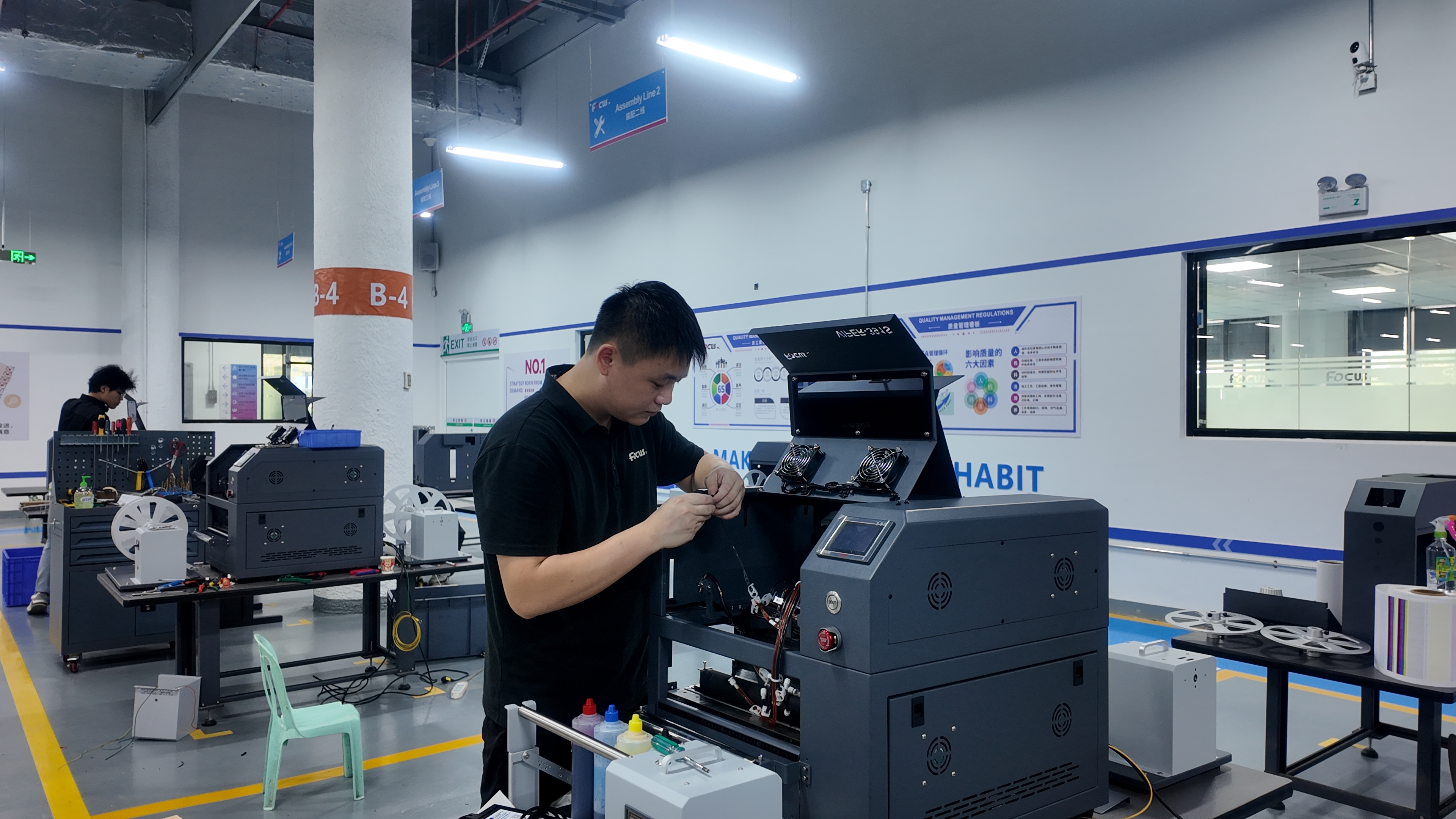
Download FocusInc Factory Intro (PDF)
Shanghai Focus Industrial Co., Ltd. — www.focusincprinter.com — info@focusdgt.com — +86 177 6513 2139
Have Questions or Need More Details?
Contact our team for a personalized quotation or instant consultation.
Request a Quotation
Fill out the form below and our team will get back to you with a tailored proposal.
WhatsApp Direct Chat
Prefer to chat in real-time? Message us on WhatsApp for instant assistance & quick answers.
- Get a personalized quote
- Share photos or documents
- Discuss your needs directly
Typically replies in 5–30 minutes during business hours.