
Single Pass Printer Application Guide: Matching Systems to Projects
A single pass printer is an application platform, not a single product. Two buyers with the same budget can need completely different machines: one is printing 1,230 mm wide corrugated board at 10–35 m/min, the other is printing soft non-woven bags where the real constraint is feeding, not width. This application guide is written for the research and evaluation stage — the point where a packaging or printing operation has already decided it wants one-pass digital inkjet output, but has not yet worked out which configuration fits its production floor.
FocusInc (Shanghai Focus Industrial Co., Ltd., founded in Shanghai in 2008) manufactures single pass printers across four application families: sheet-fed packaging printers, roll-to-roll label and film printers, industrial UV printers for rigid and soft pieces and rolls, and a cylinder printer. Everything below is drawn from published FocusInc specifications, its certification records and documented customer projects.
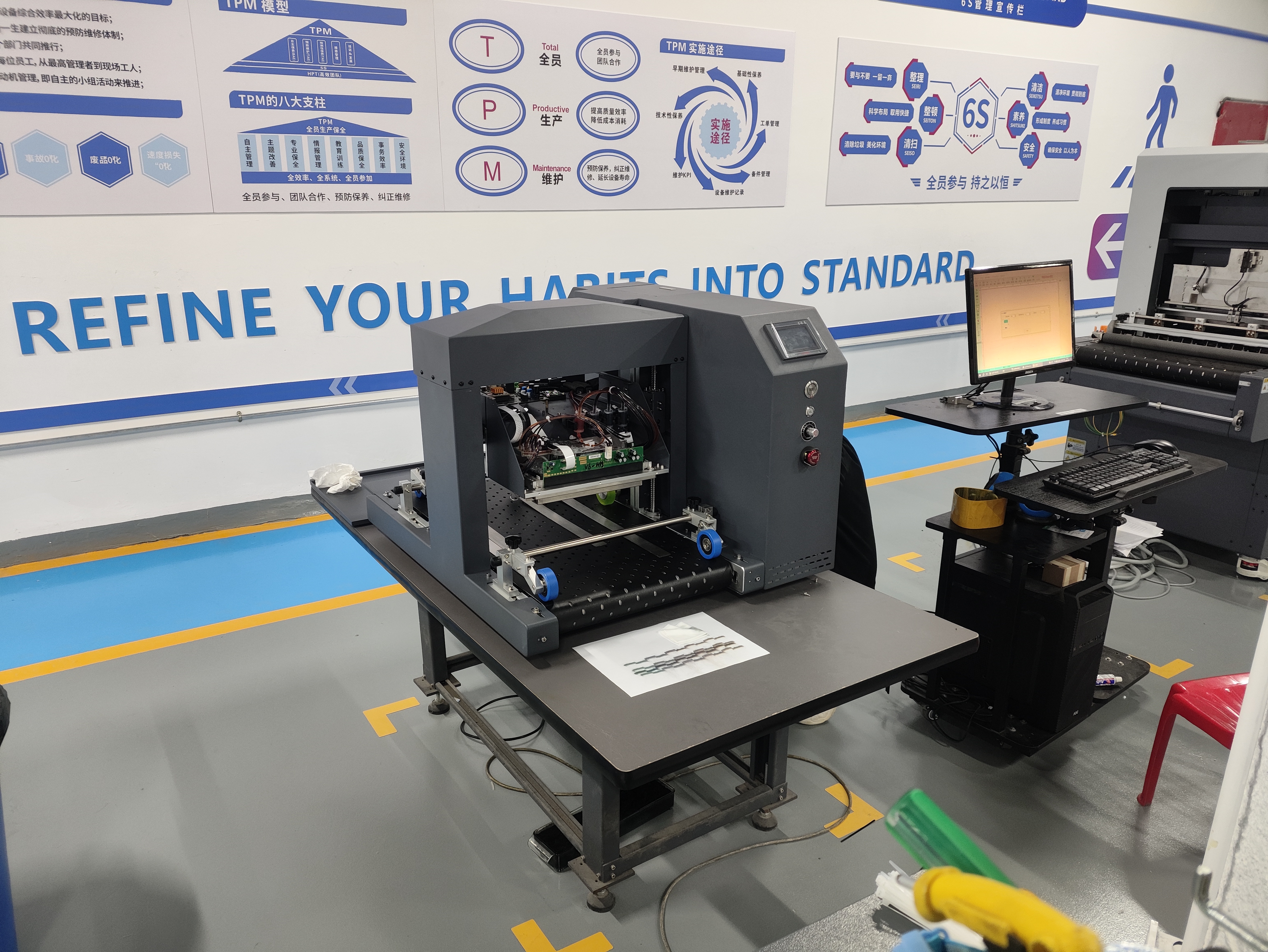
The short answer: match the substrate first, the format envelope second, the feed principle third, the ink and curing chemistry fourth, and the downstream finishing step last. Once those five variables are fixed, the model usually selects itself.
Problem Definition: The Five Mismatches That Break a One-Pass Project
Most failed single pass printer projects are not print-quality failures. They are specification failures, and they cluster into five recurring patterns.
1. Media and surface mismatch
A one-pass print head array lays down the entire image in a single pass, so ink behaviour on the surface matters more than it does on a multi-pass machine that can re-scan the same area. Absorbent kraft paper, coated label stock, low-surface-energy BOPP film and high-reflection film all behave differently. On low-energy plastics and reflective substrates, plasma, flame or corona pre-treatment is required to reach the ink adhesion needed for a scratch-resistant result. FocusInc specifies optional plasma / flame / corona pre-treatment on the Acaleph-891S e, Acaleph-891S-i and Acaleph-891S Side Printer for exactly this reason.
2. Format-envelope mismatch
Buyers compare printers by “print width” and forget that loading width and maximum thickness are separate numbers. A Cobra-691S prints 210 mm wide with one HP Pagewide head and 420 mm with two heads, but it loads material up to 600 mm wide as standard and up to 1,200 mm once the side wing plates are fitted. If the job is a 900 mm corrugated board, a 420 mm print-width machine will never be the answer — the Cobra-1209S or Cobra-1815S is.
3. Feed-principle mismatch
Rigid corrugated boards, soft non-woven fabric, thin BOPP film and cylindrical cups cannot share one feeding mechanism. Corrugated and honeycomb boards need stack feeding with friction separation; very soft material such as plastic film or soft bags needs an air-vacuum feeder; film and label stock need tensioned roll unwinding with web guiding. The feed principle is the most expensive element to change after installation.
4. Ink and curing mismatch
Water-based aqueous inks are the natural fit for absorbent kraft and corrugated surfaces. UV-curing inks are needed where the substrate does not absorb — BOPP, PET, PVC film, coated panels, cups — and wherever a white ink base must stay opaque. White ink also settles, which is why FocusInc fits automatic white ink stirring and circulation systems to the Vesa-830A, the NEXUS-350J and the Acaleph series.
5. Finishing mismatch
If the printed piece goes straight into die-cutting, lamination, foil enhancement and slitting, an integrated system removes an entire handling step. The NEXUS-350J combines printing, lamination, digital die-cutting (0.05 mm precision, up to 4 cutting knives), gold or silver foil stamping and 5-knife slitting in one inline machine; a stand-alone printer would need a separate converting line.
Industry Background: Why Application Fit Is Now the Deciding Question
The economics of packaging print have shifted toward short runs, versioned artwork and variable data — all of which favour plate-free digital inkjet over analogue processes.
- The global digital printing for packaging market was valued at USD 31.64 billion in 2023 and is projected to reach USD 75.55 billion by 2032 (Zion Market Research). Estimates within the industry do vary, with some research houses modelling slower growth.
- Inkjet digital printers accounted for the largest segment share — 42.5% — of the digital printer market as of 2025 (Straits Research).
- China produced more than 88 billion square metres of corrugated board in 2024, which is one reason wide-format corrugated digital printing is a fast-moving equipment category (China Packaging Federation / Dataintelo).
- On the compliance side, industrial single-pass printers placed on the EU market must comply with the Low Voltage Directive (2014/35/EU) and the EMC Directive for CE marking, while colour inkjet ink yield is standardised for transparent reporting under ISO/IEC 24711 and ISO/IEC 24712.
FocusInc’s own profile reflects that shift: founded in Shanghai in 2008, operating its own factory since 2018, certified as a national high-tech enterprise from 2022, with a 35,000 m² facility, six R&D engineers, an annual output of 800 units, and a 95% export ratio across the EU, USA, Mexico, Brazil, Chile, Australia, Canada and the UK.
The Application-Matching Framework
Five variables decide the configuration. Work through them in order and the shortlist narrows quickly.
Variable 1 — Substrate and surface energy
Identify the exact material: kraft paper, coated label stock, corrugated board, honeycomb board, BOPP / PET / PVC film, PVC panel, non-woven fabric, reflective film, leather, glass or metal. Materials with low surface energy need pre-treatment (plasma, flame or corona); absorbent paper generally does not.
Variable 2 — Format envelope
Record four numbers: maximum print width, maximum material loading width, maximum length (or unlimited length), and maximum thickness. Thickness is where many projects are lost — the Falcon-491S and Falcon-491S Pro accept up to 180 mm, the Cobra-691S and Cobra-691S AS B up to 250 mm, the Cobra-1209S and Cobra-1815S up to 60 mm of board, and the Acaleph-891S e and Acaleph-891S-i up to 300 mm.
Variable 3 — Feed principle
Choose between friction stack feeding for rigid boards, electronic automatic media feeding for mixed sheet jobs, air-vacuum feeding for very soft material, roll-to-roll unwinding with tension control for film and labels, or jig-based positioning for cylinders, cups and containers.
Variable 4 — Ink and curing chemistry
Aqueous, dye or pigment inks for absorbent paper and board; edible ink for direct food-surface work; UV-curing ink with LED curing for non-absorbent substrates, white-ink opacity and varnish effects. The Acaleph series supports UV curing ink, aqueous, pigment, dye and DTF ink from the same platform, and the NEXUS-350J runs UV or water-based ink in one machine.
Variable 5 — Downstream and finishing integration
Decide whether the printer must deliver a printed sheet or a finished product. Labels that need die-cutting, waste removal, lamination and slitting are better served by an integrated line.
How the FocusInc lineup maps to the framework
- Sheet-fed packaging printers — Falcon-491S, Falcon-491S Pro, Cobra-691S, Cobra-691S AS B, Cobra-691S Max: paper bags, pizza boxes, cartons, coffee bags, paper cups, cup fans, napkins and book-edge printing.
- Roll-to-roll label and film printers — Viper-391S, Viper-391S Pro, S350 Jetpress, Vesa-830A, NEXUS-350J: stickers, labels, IML film and BOPP / PET / PE roll stock.
- Industrial UV printers — Acaleph-891S e, Acaleph-891S-i, Acaleph-891S Side Printer: non-woven bags, PVC panels and skirting, decorative boards, book edges, cup and container side walls, reflective and anti-counterfeit labels.
- Cylinder printer — Hydra-360S: bottles, cans, tumblers and tapered cylindrical items.
Step-by-Step Breakdown: Specifying a Single Pass Printer in Seven Steps
- Describe the printed piece, not the machine. Write down the finished product, its material, its size, and the batch pattern — one design per shift, or a different design on every order.
- Fix the format envelope. Convert the product range into maximum print width, loading width, length and thickness. Example: 900 mm-wide honeycomb panels map to a Cobra-1209S with a 1,230 mm loading width, while 1,800 mm corrugated boards map to the Cobra-1815S.
- Choose the feed principle. Rigid boards use friction or stack feeding; soft bags and film use air-vacuum feeding or tensioned roll feeding; cups and cylinders use jig and rotary positioning.
- Select ink and curing. Absorbent paper and board take aqueous, dye or pigment ink. Non-absorbent film, panels and cups take UV with LED curing. Direct food-surface printing uses edible ink.
- Balance resolution against speed. FocusInc one-pass platforms run at 1200×300, 1200×400, 1200×600 and 1200×1200 dpi. Higher resolution means lower linear speed; the S350 Jetpress covers 600×600 up to 1200×600 dpi and 20–80 m/min depending on print mode and image quality.
- Plan the finishing step. If the next operation is die-cutting, lamination, foil enhancement or slitting, decide whether it should be inline. The NEXUS-350J performs all four plus rewinding in a single pass.
- Verify compliance and service for your market. Confirm CE certification for the EU, WEEE registration for Germany, and the availability of installation, training and spare parts before signing.
Use Cases: Nine Production Scenarios and Their Configurations
1. Corrugated boxes, carton board and honeycomb panels
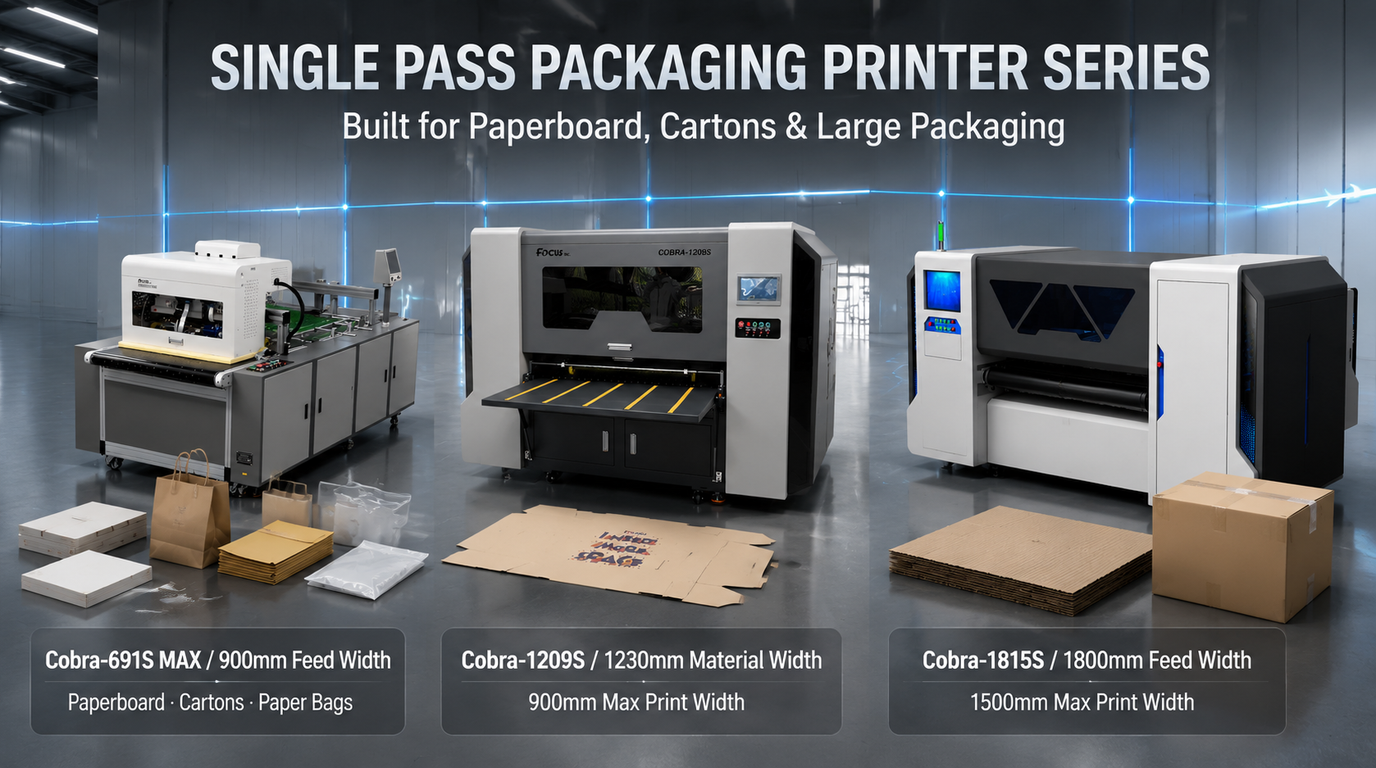
Wide-format board printing is the classic one-pass application: outer packaging logos, shipping marks, variable QR codes and short-run branded cartons with no plate making. The Cobra-1209S covers a 900 mm print width with a 1,230 mm loading width and up to 60 mm board thickness at 10–35 m/min; the Cobra-1815S extends loading to 1,800 mm. A documented FocusInc customer — a corrugated and honeycomb board manufacturer working across Colombia, Saudi Arabia, Turkey, Chile and Poland — has run 18 units over four years, using them for multi-batch personalised packaging and variable-data QR code printing on corrugated turnover boxes.
2. Roll-to-roll labels, stickers and anti-counterfeit film
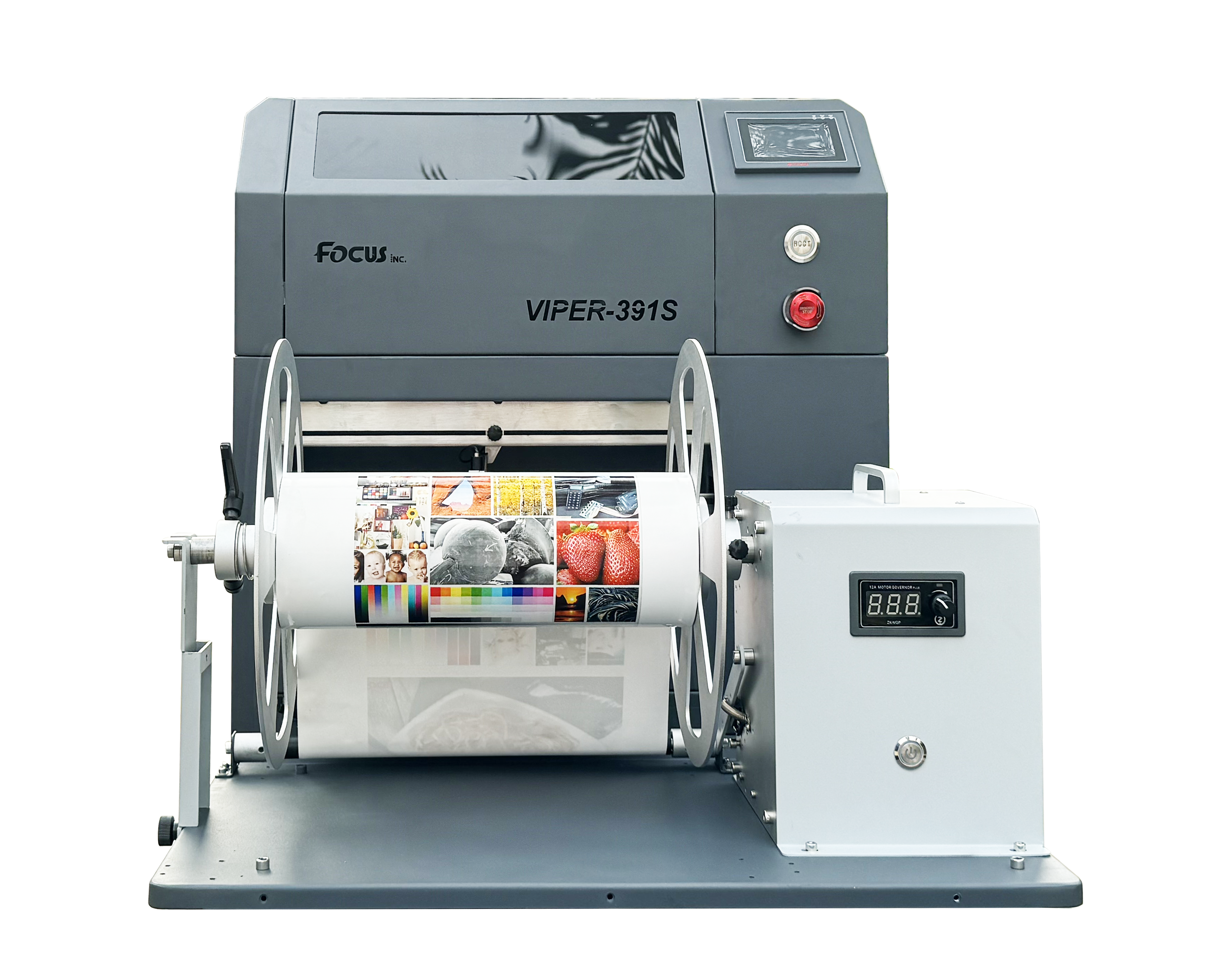
Label work needs tension control more than it needs width. The Viper-391S prints 210 mm (A4 head) or 304 mm (A3 head) at 10–40 m/min from a 320 mm roll; the Viper-391S Pro reaches 1200×2200 dpi; the S350 Jetpress is the UV option at 20–80 m/min. Reflective film and anti-counterfeit vehicle-inspection labels add a surface-energy problem: high-reflection, smooth, low-ink-absorbing media that needs high-precision dot control, uniform ink layering and repeatable fine-line or invisible UV hidden patterns. The Acaleph-891S-i, S350 Jetpress and NEXUS-350J are the configurations mapped to that job. In Vietnam, a label manufacturer running a single S350 Jetpress for two years reports no minimum order quantity, variable-data QR code printing without plate making, and a combined printing-plus-converting workflow.
3. IML and thin packaging film
In-mould labels use thin film that must not stretch during printing, and the printed label must survive high-temperature injection moulding without ink peeling. The S350 Jetpress accepts media from 0.02 mm to 0.8 mm (up to 3 mm), supports W+CMYK, and offers corona treatment, dust removal and electric alignment as optional pre-processing. A plastic injection moulding and daily-chemical container producer in the UAE, running the S350 Jetpress for two years, reports a 40% reduction in manual labelling cost and no ink peeling during high-temperature moulding.
4. Paper bags, coffee bags, cup fans and food paper packaging
This is the highest-volume sheet-fed scenario. The Cobra-691S AS B lists paper bags, cup fans, cup sleeves, postcards, breads, cookies, cake pads, coated paper, pizza boxes, shopping bags, coffee bags, paper cups, envelopes, cards, napkins and tissue as supported media. Where 900 mm-wide bag blanks are involved, the Cobra-691S Max prints 215–645 mm wide with a 900 mm feeding width, runs at 20–40 m/min, and lists a consumable cost of 0.1–0.2 RMB per square metre with 2.5 L refillable ink tanks. Napkin producers can add an automatic feeding arm upstream and a collecting, counting and stacking conveyor downstream.
5. Non-woven and fabric bags
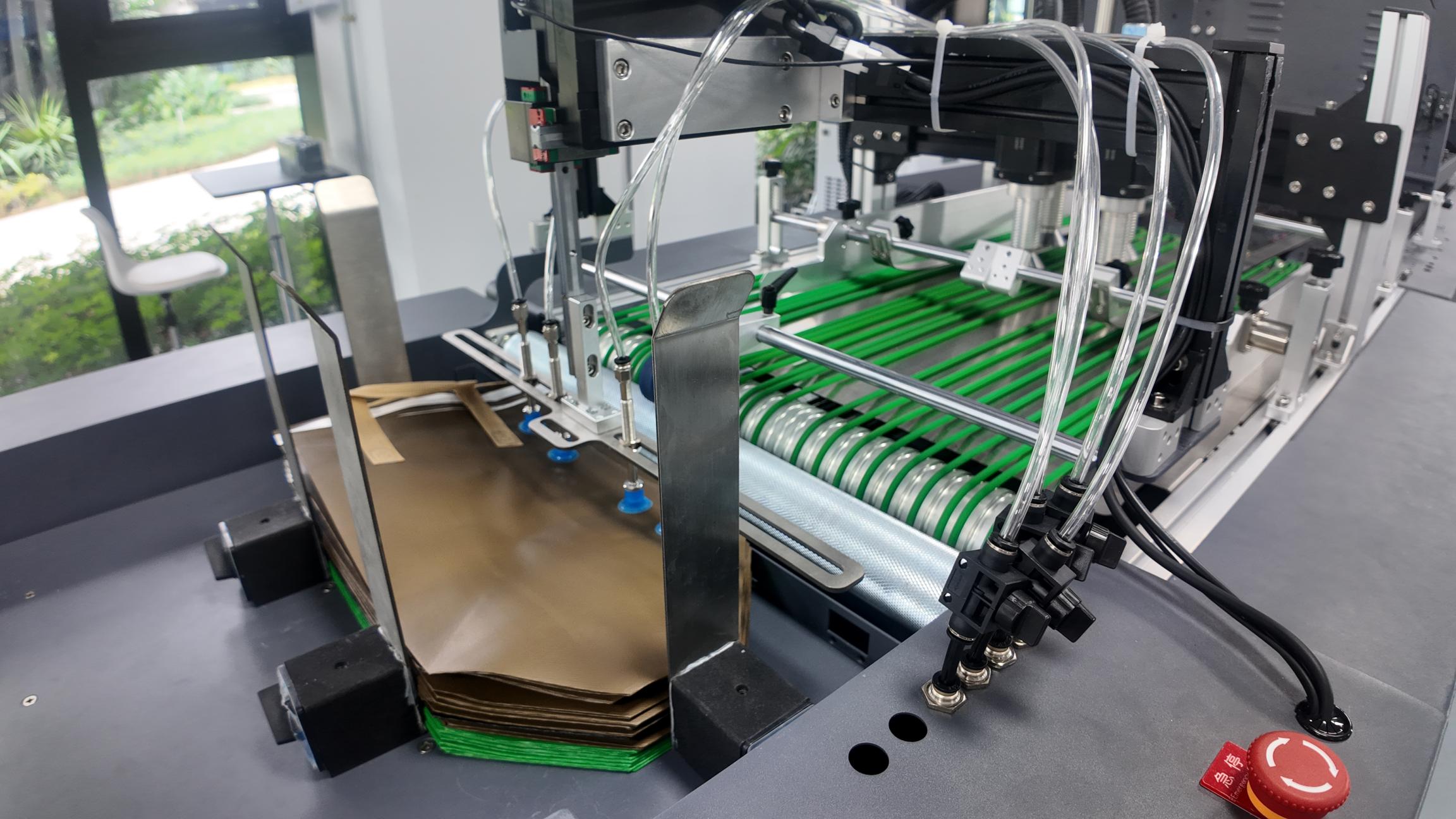
Soft woven material shifts sideways easily, so the feed and correction system matters more than the print head. The Acaleph-891S e accepts pieces up to 600 mm wide and 300 mm thick and runs at 10–40 m/min, with an air-vacuum feeder for extra-soft material and plasma pre-treatment for ink firmness. A bag and packaging manufacturer in Brazil running three units over three years uses the platform for on-demand custom printing with no plate making and instant job switching.
6. Book edges and notebook edges
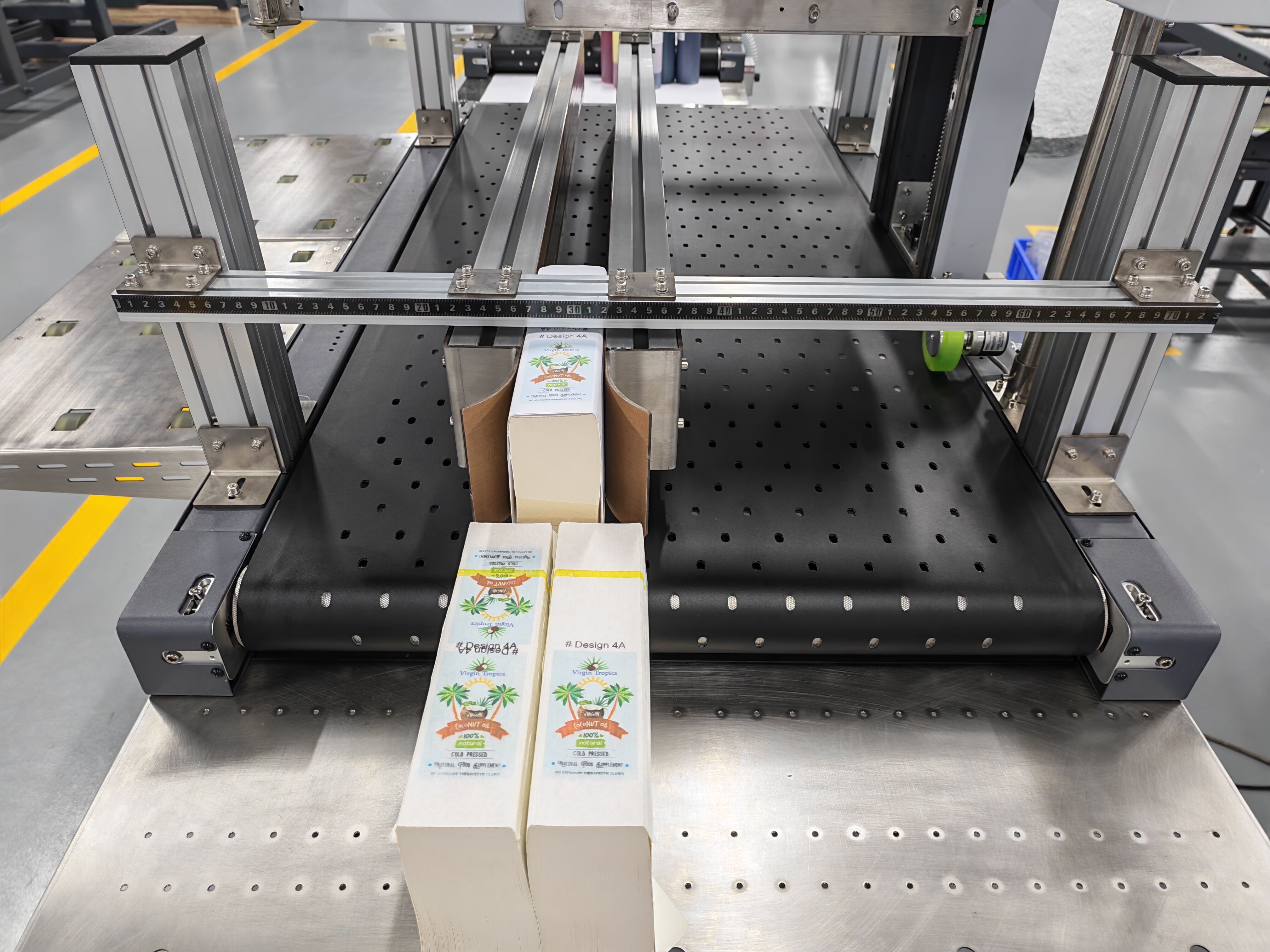
Edge printing turns a plain book block into a premium product. On the FocusInc setup the book-edge fixture mounts on the Cobra-691S AS B, printing one edge per pass — the documented cycle is around one second per book. A Spanish and Philippine book manufacturer running two units for two years reports the ability to print more than 2,500 book or notebook spines per hour, supporting single-copy, plate-free and instant-switch production.
7. PVC panels, skirting boards and decorative boards
Wood-grain, stone-grain and custom patterns on blank PVC board replace film lamination. The Acaleph-891S e and Acaleph-891S-i print 53–500 mm of effective width, handle media up to 300 mm thick and run at 10–40 m/min with LED UV curing; a plasma pre-treatment unit raises ink adhesion so printed panels pass cross-hatch adhesion testing after cutting and drilling. A decorative panel producer in Portugal, Spain, Mexico and Poland has run three units for three years, and a baseboard and moulding producer in Turkey and Portugal has run two units for 1.5 years.
8. Cups, containers and bottle side printing
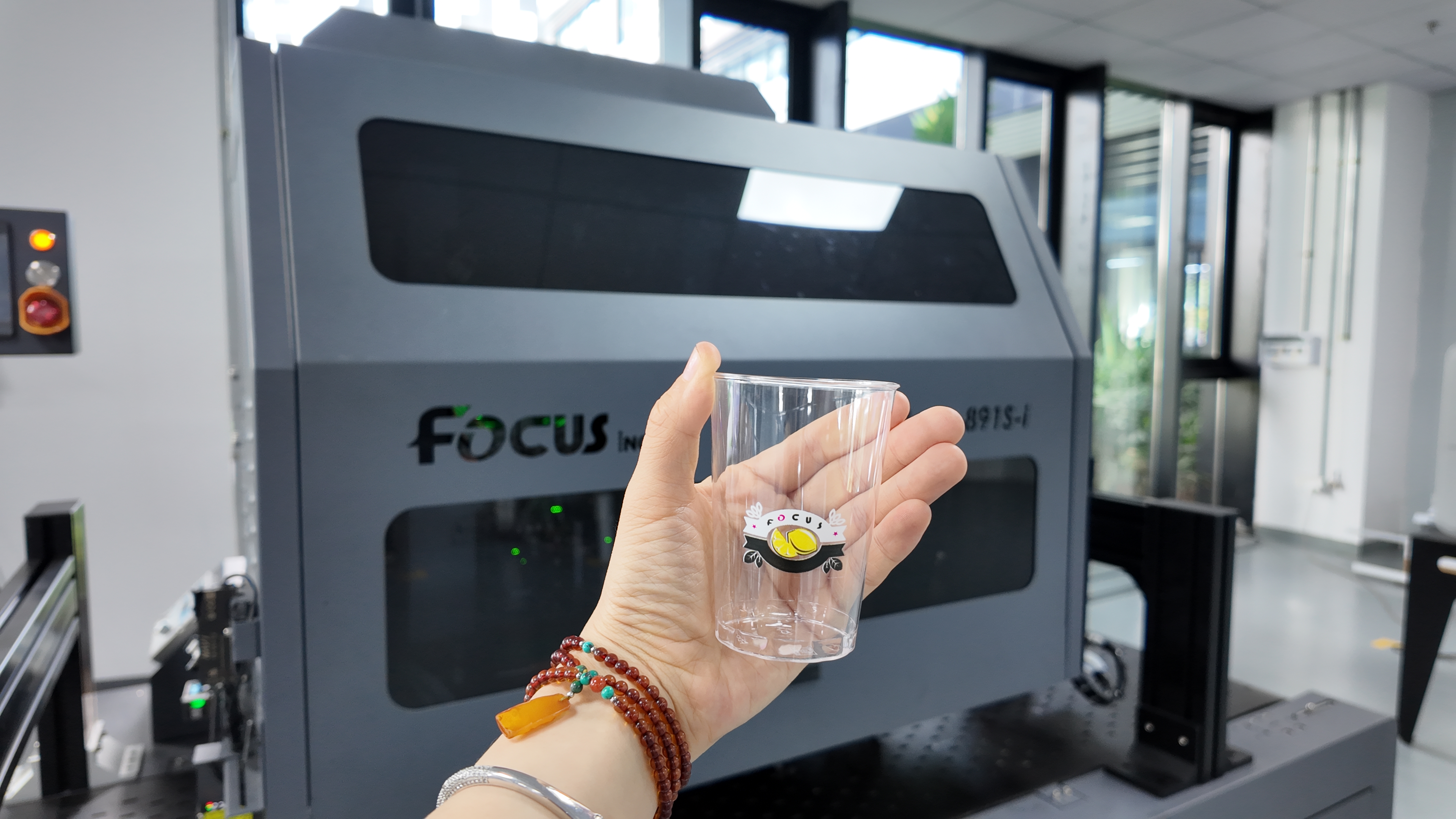
Cylindrical and tapered walls are printed by the Acaleph-891S Side Printer, which covers an effective printing area of 33.8–108 mm (customisable up to 350 mm) at 10–40 m/min, with plasma, flame or corona pre-treatment available and LED UV curing in a sectional configuration. A disposable food container manufacturer operating in Turkey, Poland, Saudi Arabia, Chile and Mexico has run 12 units for two years, printing logos and designs on paper cups, plastic cups and paper bowls.
9. Cylindrical and tapered objects
Bottles, cans, tumblers, vases and cosmetic tubes with a taper of up to 13° are handled by the Hydra-360S, which uses a 360° helix print motion, an EPSON I3200-U1HD head, 720×900 and 720×1200 dpi resolution, and a rated output of 40–120 pieces per hour, with UV curing adjustable from 0 to 480 W.
Comparison Table: FocusInc Single Pass Printers by Application
| Model | Best-fit application | Print / loading format | Max media thickness | Throughput | Ink & curing |
|---|---|---|---|---|---|
| Falcon-491S | Desktop start-up: kraft bags, pizza boxes, cards, envelopes, napkins | 210 mm (A4 head) / 300 mm (A3 head) print; 400 mm loading | 180 mm | 10–25 m/min | Aqueous, dye, pigment, edible; CMYK; 250 ml per colour |
| Falcon-491S Pro | Same range with automatic friction feeder | 210 / 300 mm print; 430 mm loading | 180 mm | 10–17 m/min | Aqueous, dye, pigment, edible; 250 ml per colour |
| Cobra-691S | Paper bags, pizza boxes, shopping bags, coffee bags, paper cups | 210 mm (1 head) / 420 mm (2 heads) print; 600 mm loading, 1,200 mm with side wing plates | 250 mm | 10–40 m/min | Aqueous, dye, pigment; CMYK; 500 ml per colour |
| Cobra-691S AS B | Same media plus cup fans, sleeves, cake pads and book-edge / box-side printing | 210 / 420 mm print; 600 mm loading, 1,200 mm with side wing plates | 250 mm | 10–40 m/min | Aqueous, dye, pigment; 500 ml per colour |
| Cobra-691S Max | 900 mm-wide paper bag, cup and packaging sheet printing | 215–645 mm print; 900 mm feeding, unlimited length | 0–55 mm printing height (customisable) | 20–40 m/min | Water-based CMYK; 2.5 L per colour; 0.1–0.2 RMB per m² consumable cost |
| Cobra-1209S | Corrugated board, honeycomb board, carton board | 900 mm print; 1,230 mm loading, unlimited length | 60 mm | 10–35 m/min | Aqueous, dye, pigment, edible; 1,500 ml per colour |
| Cobra-1815S | Wide corrugated and honeycomb board | 900 mm print (1–5 A3 heads); 1,800 mm loading | 60 mm | 10–35 m/min | Aqueous, dye, pigment, edible; 1,500 ml per colour |
| Viper-391S | Roll-to-roll sticker and label rolls | 210 mm (A4) / 304 mm (A3) print; 320 mm loading; roll core 75 / 40 / 25 mm | Roll outer diameter ≤ φ350 mm | 10–40 m/min | Aqueous, dye, pigment, edible; 500 ml per colour |
| Viper-391S Pro | High-resolution roll-to-roll sticker and label rolls | 210 / 304 mm print; 320 mm loading | Roll outer diameter ≤ φ350 mm | 10–40 m/min | Aqueous, dye, pigment, edible; up to 1200×2200 dpi |
| S350 Jetpress | IML labels, thin film, high-speed UV label rolls | 235 mm print width (120 mm per row); roll diameter up to 650 mm | 0.02–0.8 mm (max 3 mm) | 20–80 m/min | UV curing with W+CMYK; LED UV, optional corona / dust removal / alignment |
| Vesa-830A | UV labels and BOPP / PET / PE sticker rolls | 420 mm print; roll outer diameter ≤ φ350 mm | Roll-fed film and label stock | 4-pass 12–17 m²/h; 6-pass 10–12 m²/h | UV curing; white ink stirring and circulation; 405 nm UV-LED × 2 |
| NEXUS-350J | Integrated label printing, die-cutting, lamination and slitting | Roll ≤ 350 mm; max label print size 330 × 300 mm | Roll-fed label stock | 1–2 m/min | UV or water-based; W + W + KCMY + varnish; 0.05 mm die-cutting precision |
| Acaleph-891S e | Non-woven bags, PVC panels, decorative boards, book edges, rigid and soft pieces plus film rolls | 53–500 mm effective print; 600 mm loading, unlimited length | 300 mm | 10–40 m/min | UV, aqueous, pigment, dye, DTF; 1,500 ml per colour; sectional 405 nm LED curing |
| Acaleph-891S Side Printer | Cups, containers, bottles and cup side-wall printing | 33.8–108 mm effective print (customisable up to 350 mm); 600 mm loading | 300 mm | 10–40 m/min | UV, aqueous, pigment, dye, DTF; 1,500 ml per colour; plasma / flame / corona optional |
| Hydra-360S | Cylindrical and tapered items: bottles, cans, tumblers, cosmetic tubes | Length ≤ 240 mm; diameter φ42–135 mm; taper ≤ 13° | Cylinder / taper media | 40–120 pcs per hour | UV curing ink or aqueous; 405 nm LED UV, 0–480 W adjustable |
FAQ
Are FocusInc single pass printers CE certified for the EU market?
Yes. The Cobra-1815S single pass packaging printer is CE certified to EN 1010-2:2006+A1:2010 under certificate number SCT260301170121, issued by ANXIN PRODUCT TEST SERVICE CO., LTD. The Acaleph-891S e multi-functional digital inkjet printer holds CE certificate SCT260301170122 to EN 55011:2016+A2:2021, EN IEC 61000-6-2:2019 and EN IEC 61000-6-4:2019. For EU market access, industrial single-pass printers must also comply with the Low Voltage Directive (2014/35/EU) and the EMC Directive. FocusInc additionally maintains an EC authorised representative appointment (EUREPSTAR GmbH, EUREP-2025082013532502482) and German WEEE documentation, including WEEE-Reg.-Nr. DE 87336785 for the Cobra-691S AS B.
Can one single pass printer handle both rigid pieces and roll materials?
Yes, but only on the industrial UV platforms. The Acaleph-891S e and Acaleph-891S-i accept pieces such as bags, carton, plastic, glass, ceramic and metal, and roll materials including BOPP, POPP, PET and PVC film and label paper, with up to 600 mm loading width and 300 mm thickness. The sheet-fed Cobra and Falcon models are piece-fed only, while the Viper-391S, Viper-391S Pro, S350 Jetpress and Vesa-830A are dedicated roll-to-roll machines.
What determines the running cost of a single pass printer?
Print width, ink type, ink volume, coverage and material waste. FocusInc publishes ink tank capacities from 250 ml per colour on the Falcon-491S and Falcon-491S Pro, 500 ml on the Cobra-691S and Viper-391S, 1,500 ml on the Cobra-1209S, Cobra-1815S and Acaleph series, and 2.5 L per colour on the Cobra-691S Max, which lists a consumable cost of 0.1–0.2 RMB per square metre. UV platforms that use white ink require automatic stirring and circulation, which the Vesa-830A, NEXUS-350J and Acaleph series include.
Can we print on our own material before placing an order?
Yes. FocusInc works from a minimum order quantity of one unit and provides sample evaluation and material testing before commitment, with third-party SGS or CE inspection available on request. Every machine also undergoes a 100% continuous running aging test before delivery.
What is the lead time, and how do we start?
Lead time is 15–45 days depending on the solution. FocusInc runs OEM and ODM programmes: OEM covers housing colour, brand logo and multi-language operation systems with a monthly capacity of 120 sets, while ODM covers custom printing workflows, structural design and custom print width with a monthly capacity of 40 sets. After-sales covers global online remote technical support, overseas on-site installation and training, a 3-year machine warranty on ODM projects and a 13-month free warranty on OEM configurations, plus lifelong technical consultation and spare parts supply. To start, send your material, format and batch pattern to info@focusdgt.com or message +86 177 6513 2139 on WhatsApp.
Conclusion: Match the Machine to the Job, Not the Job to the Machine
A single pass printer is a family of configurations, and the deciding factors are practical: what material you print, how wide and how thick it is, how it must be fed, which ink chemistry will actually adhere and cure on that surface, and what the next production step requires. Work through those five variables and a shortlist emerges quickly — sheet-fed Cobra and Falcon platforms for bags, cartons and board; Viper, S350 Jetpress, Vesa-830A and NEXUS-350J for roll-to-roll labels and film; Acaleph-891S e, 891S-i and Side Printer for non-woven bags, panels, book edges and containers; and the Hydra-360S for cylindrical and tapered objects.
FocusInc builds all of these from a 35,000 m² factory in Shanghai, with six R&D engineers, an annual output of 800 units and a 95% export ratio to the EU, USA, Mexico, Brazil, Chile, Australia, Canada and the UK. The next practical step is a material test: send a sample of your substrate and your target format, and validate the print on the actual material before committing to a configuration.
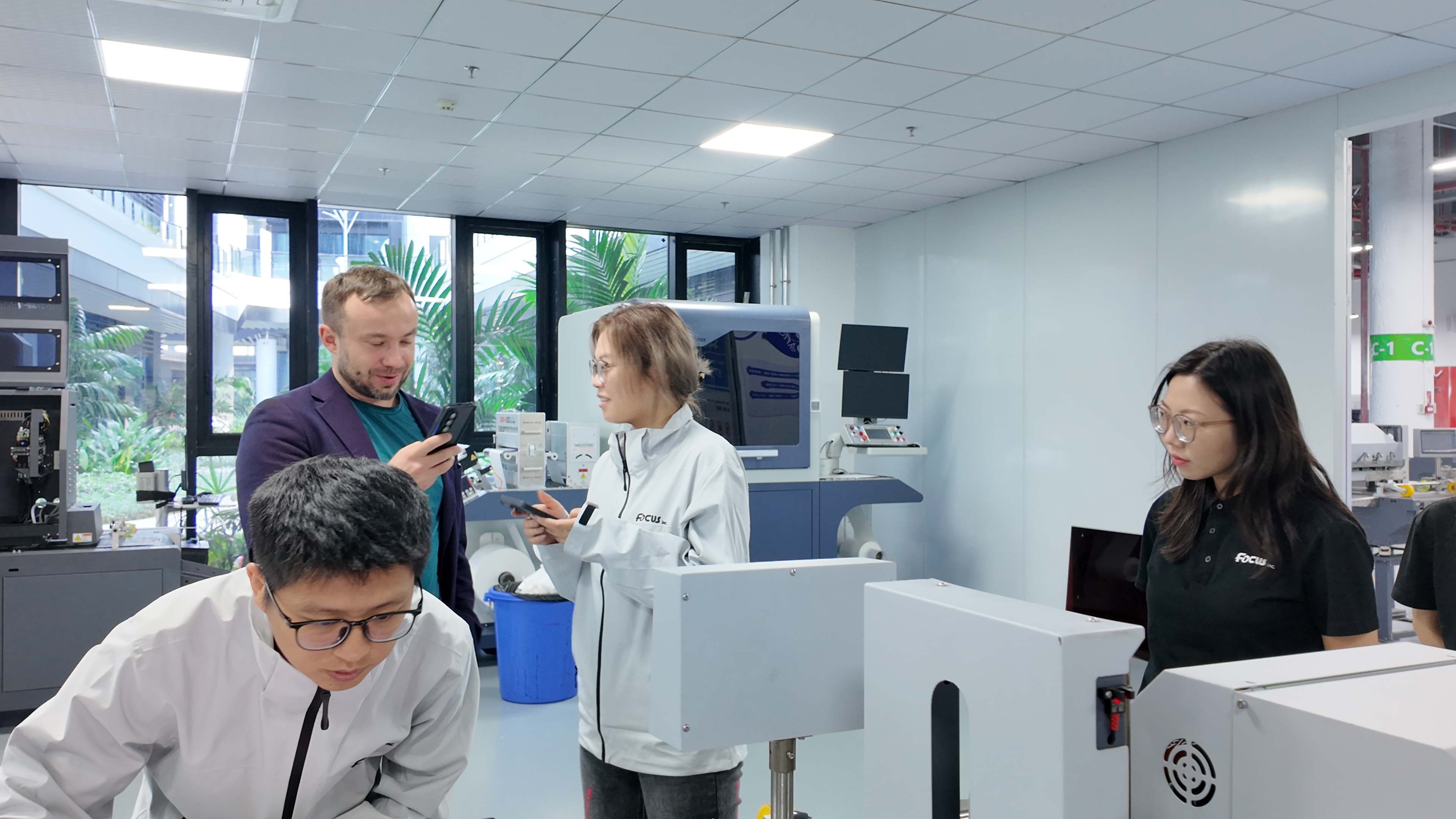
Next step — sample, quote or factory brochure
Send your material, format and target design to FocusInc (Shanghai Focus Industrial Co., Ltd.) for a print sample and configuration recommendation. Contact Linda Tang at info@focusdgt.com, telephone or WhatsApp +86 177 6513 2139. Website: www.focusincprinter.com. You can also download the factory introduction brochure here: FocusInc Factory Intro (PDF).
Addresses: Room 801, Sitong Road No.246, Songjiang District, Shanghai, China, 201601; and 1st Floor, Building 10, Phase 2, Pingshan Biopharmaceutical Industry Accelerator Park, No. 6 Linhui Road, Jinsha Community, Kengzi Subdistrict, Pingshan District, Shenzhen City, Guangdong Province, China, 518118.
Have Questions or Need More Details?
Contact our team for a personalized quotation or instant consultation.
Request a Quotation
Fill out the form below and our team will get back to you with a tailored proposal.
WhatsApp Direct Chat
Prefer to chat in real-time? Message us on WhatsApp for instant assistance & quick answers.
- Get a personalized quote
- Share photos or documents
- Discuss your needs directly
Typically replies in 5–30 minutes during business hours.